How to Keep a Dog Cool and Safe in Hot Weather
Master dog hot weather safety with practical steps for hydration, cooler walks, safe summer outings, and recognizing heat emergencies.
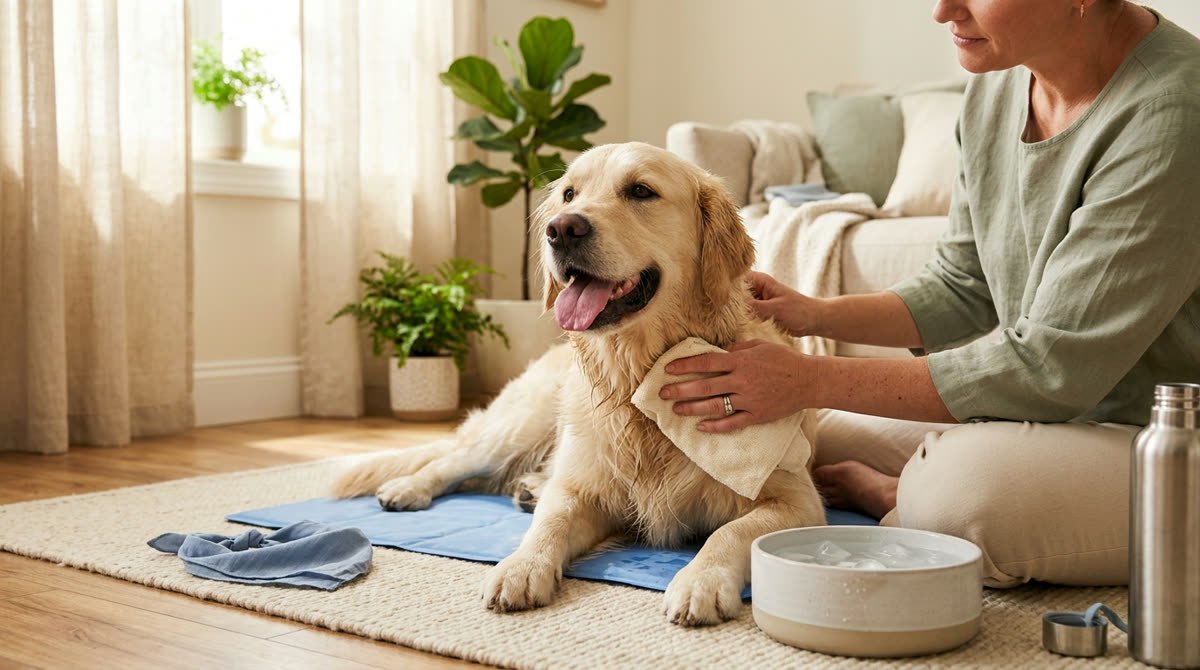
A calm, safety-first approachThis guide provides general education. Contact your veterinarian when symptoms are painful, persistent, or unusual.
- 1
Assess Your Dog’s Heat Risk Before Making Plans
Start your dog hot weather safety routine by checking the hourly temperature, humidity, direct sun, and overnight low, rather than relying on the day’s headline forecast. Dogs primarily release heat by panting, and humid air makes that cooling system less effective, so a breezy-looking afternoon can still be dangerous. Short-nosed dogs such as Bulldogs and Pugs, overweight dogs, puppies, seniors, and dogs with heart, breathing, or mobility problems need especially conservative plans because they may overheat with relatively little activity. Treat temperatures around 75–80°F (24–27°C) as a prompt to reassess exertion, not as a universal danger threshold or a guarantee that cooler conditions are safe. Ask your veterinarian for an individualized summer activity plan if your dog has a medical condition, previously overheated, or takes medication that could affect heat tolerance or hydration. Before leaving home, identify a genuinely cool retreat, save the nearest emergency veterinary hospital’s number, and make sure everyone handling your dog recognizes early heat-stress signs. If the forecast includes a heat advisory or your dog is already panting heavily at rest, replace the outing with indoor activities rather than trying to make the original plan work.
- Check humidity and hourly conditions.
- Account for breed, age, weight, and health.
- Choose a cool retreat and a short return route.
- Save your regular and emergency veterinary contacts.
Good to know: A dog that handled summer well last year may have different limits now. Changes in weight, fitness, age, or health can significantly reduce heat tolerance.
- 2
Set Up a Reliably Cool Resting Area
Prepare an indoor resting space with air conditioning when available, close sun-facing curtains before the room heats up, and place a thermometer near your dog’s resting height rather than beside a cooling vent. A room around 72–78°F (22–26°C) is a reasonable starting point for many healthy dogs, but adjust to your dog’s comfort and veterinary advice because there is no single safe indoor temperature for every animal. Provide access to tile or another cool surface alongside a dry bed, and let your dog move between them instead of confining them to thick bedding or a covered crate. A fan can improve airflow, particularly over a damp coat, but it does not cool dogs as effectively as people and should not be the only protection in a hot room. If you use a pet cooling mat, choose the correct size, inspect it for damage each day, and supervise dogs that chew because even products labeled nontoxic are not intended to be swallowed. Outdoor shade is useful for brief supervised breaks, but enclosed doghouses, garages, sheds, and sunrooms can trap heat and are not substitutes for a cool indoor space. During extreme weather, arrange for someone to check on your dog and have a backup air-conditioned location ready in case the power or cooling system fails.
- Block direct sunlight before peak heat.
- Keep water beside the resting area.
- Leave cooling choices accessible.
- Protect fan cords from chewing.
- Plan a backup location for power outages.
Good to know: Heavy panting, drooling, or difficulty settling in a warm room means the setup is not adequately protecting your dog. Move them somewhere cooler immediately and contact a veterinarian if the signs are pronounced or do not promptly improve.
- 3
Make Fresh Water Easy to Reach
Keep fresh drinking water available throughout the day, using at least two stable bowls in separate, accessible locations so a spill or closed door does not leave your dog without water. As a rough baseline, many healthy dogs consume about 1 fluid ounce per pound of body weight daily, or roughly 60–65 mL/kg, but food moisture, weather, activity, and health can substantially change that amount. For a 40-pound dog, that estimate is about 5 US cups a day, but it is a planning reference—not a target to force or a reason to ration water. Wash bowls daily with dish soap, rinse thoroughly, and replace water whenever it becomes warm or dirty, checking outdoor bowls several times a day because they can empty or heat up quickly. Carry potable water and a collapsible bowl on every warm-weather outing, offering a calm drinking break approximately every 10–15 minutes during gentle activity and sooner if your dog seeks water. Plain water is the best routine choice; avoid sports drinks, salty broths, and flavored products that may contain onion, garlic, or xylitol, and use canine electrolyte products only if your veterinarian recommends them. If your dog refuses water while appearing unwell, repeatedly vomits after drinking, or shows a sudden major increase or decrease in thirst, stop the activity and contact a veterinarian rather than forcing fluids.
- Provide multiple clean water bowls.
- Carry water for the return journey and delays.
- Offer frequent, unhurried drinking breaks.
- Use plain water without unnecessary additives.
Good to know: Never squirt water into a panting or struggling dog’s mouth. Forcing fluids can cause choking or aspiration and does not safely correct overheating.
- 4
Move Walks to Cooler Times and Surfaces
Schedule walks around the coolest actual conditions, often near dawn, and remember that an evening sidewalk can remain hot long after the air begins to cool. Start with a 5–10-minute easy toilet or sniffing walk during warm conditions, then assess your dog rather than committing to a familiar route or distance. Favor shaded grass or woodland paths, and check the surface repeatedly because asphalt, artificial turf, sand, and decking can absorb enough heat to injure paw pads. Holding the back of your hand against a surface for about 7 seconds is a useful warning check—if it feels too hot for you, avoid it—but passing that check does not prove it is safe for prolonged paw contact. Well-fitted dog boots can provide some protection if your dog is already accustomed to them, but they do not prevent whole-body overheating and should never justify a longer outing. Use a comfortable harness or properly fitted collar, keep the pace relaxed, and turn back at the first signs of slowing down, seeking shade, unusually heavy panting, or reluctance to continue. If your dog starts limping or has red, blistered, or peeling pads, stop walking, move them off the hot surface, and contact your veterinarian for advice rather than applying human burn creams.
- Choose the coolest available walking window.
- Use short routes with frequent shade.
- Check pavement, turf, sand, and decking.
- Carry small dogs across unavoidable hot sections.
Good to know: If a muzzle is necessary, it must allow a full pant and drinking, such as an appropriately fitted basket muzzle. A tight fabric muzzle can dangerously restrict cooling during a walk.
- 5
Replace Strenuous Exercise With Gentle Cooling Activities
On hot days, replace running, cycling alongside a bike, repetitive fetch, and vigorous dog-park play with low-effort enrichment in a cool room because working muscles generate substantial additional body heat. Try a 5-minute scent search using part of your dog’s normal meal, a supervised food puzzle, or several 2–3-minute reward-based training sessions separated by rest. For a comfortable dog that enjoys water, a shallow paddling pool or gentle rinse with cool tap water can provide relief, provided the dog can step out easily and is never restrained in the water. Run a garden hose away from your dog first and test the temperature with your hand, since water sitting in a sun-heated hose can become hot enough to burn. A cooling vest may help under suitable conditions, but follow its wetting instructions, check that it stays cool, and remove it if it becomes warm, dries out, or causes discomfort. Brush out loose undercoat and mats to improve coat condition, but do not assume shaving a double-coated dog makes summer safer, since it can remove sun protection and affect normal coat function. Finish each activity while your dog is still comfortable, allowing unrestricted rest afterward instead of waiting for exhaustion or using enthusiasm for a toy as proof that continued play is safe.
Good to know: Do not aim sprinklers or hoses into your dog’s mouth or encourage prolonged water biting. Swallowing excessive water can cause a dangerous water imbalance, even when the activity looks playful.
- 6
Plan Car Trips Without Parked-Car Waiting
Never leave your dog alone in a parked vehicle during warm or hot weather, even for a brief errand, because interior temperatures can rise rapidly and cracked windows or shade do not provide reliable protection. Do not depend on an idling engine, remote climate control, or a vehicle’s pet mode as a fail-safe substitute for supervision, since mechanical faults, settings, or power loss can leave the dog exposed. Cool the cabin before loading your dog, then secure them with a suitable crash-tested harness or travel crate positioned where conditioned air can reach them without blocking vents. Check airflow in the rear seating or cargo area yourself because a comfortable front seat does not necessarily mean the dog’s location is cool, especially in direct sunlight. For longer drives, carry more water than you expect to need and plan stops roughly every 1–2 hours, choosing shaded toilet areas while keeping breaks short if outdoor conditions are oppressive. If you are traveling alone, use drive-through services or dog-welcoming stops; if you have a companion, one person should remain with the dog in a safely cooled setting during necessary stops. If you see a dog in a hot vehicle showing heavy panting, weakness, or distress, call emergency services or local animal control immediately, give the exact location and vehicle details, and follow their directions and local law.
- Pre-cool the cabin before departure.
- Confirm cool airflow reaches your dog.
- Pack water, a bowl, a leash, and towels.
- Avoid plans that require unattended car time.
Good to know: Keep your dog’s head inside the moving vehicle. An open window is not a substitute for cooling and exposes the eyes and face to debris and injury.
- 7
Make Beach, Pool, and Backyard Time Safer
Choose outdoor destinations with drinking water, dependable shade, and an easy exit, and avoid a long beach or lakeside outing when you cannot quickly reach a cool indoor space. Set up shade before your dog needs it, check its position at least every 30 minutes as the sun moves, and remember that a beach umbrella does not cool the surrounding air or sand. Near deep or moving water, use a properly fitted canine life jacket with a handle and supervise continuously, even if your dog is an experienced swimmer, because fatigue and currents can overwhelm them. Teach your dog where the pool steps or exit ramp are, prevent unsupervised pool access, and interrupt swimming before breathing becomes labored rather than treating water exercise as heat-proof. Prevent drinking from pools, the sea, stagnant ponds, or unfamiliar freshwater, and avoid water with official algae warnings, discoloration, surface scum, or dead fish because hazardous contamination is not always obvious. For exposed pink skin or sparsely furred areas, ask your veterinarian about a dog-specific sunscreen and follow its label, avoiding human products containing zinc oxide or salicylates that may be harmful if licked. Afterward, rinse off salt, chlorine, and sand with fresh water, dry the outer ears without inserting cotton swabs, and inspect the paws, belly, and skin for irritation.
- Bring separate drinking water.
- Provide shade and a quick exit plan.
- Use a life jacket where appropriate.
- Check local water-quality advisories.
- Rinse and inspect your dog afterward.
Good to know: If your dog may have contacted harmful algae, prevent licking, rinse the coat with clean water, and contact an emergency veterinarian immediately. Do not wait for symptoms to appear.
- 8
Recognize Overheating and Start Emergency Cooling
Stop activity immediately if your dog develops excessive or persistent panting, heavy drooling, unusual restlessness, shade-seeking, or slowing down, and treat weakness, confusion, vomiting, diarrhea, abnormal gum color, collapse, or seizures as an emergency. Move the dog into shade or air conditioning, call the nearest emergency veterinarian, and begin cooling immediately while arranging transport rather than waiting for a callback or a temperature reading. Pour cool tap water over the body so it reaches the skin, including the belly, armpits, and groin, keeping it out of the nose and mouth, and use a fan or air conditioning to increase airflow across the wet coat. Do not delay effective cooling while searching for lukewarm water, and avoid rubbing alcohol, covering the dog with wet towels that can trap heat, or forcing a weak or struggling dog into an ice bath. If the dog is fully alert and swallowing normally, allow voluntary drinks of water, but give nothing by mouth if they are confused, collapsing, vomiting, or unable to swallow safely. Transport the dog promptly with air conditioning and, if possible, another adult continuing safe cooling, while following the veterinary team’s instructions about when to reduce or stop active cooling. A dog that appears to recover after a suspected heat emergency still needs urgent veterinary assessment because serious internal injury can develop even after panting and body temperature improve.
- Stop exercise and move out of the heat.
- Call an emergency veterinarian.
- Apply cool tap water and airflow immediately.
- Keep water away from the airway.
- Arrange prompt transport without waiting for recovery.
Good to know: Do not give human fever reducers or painkillers, and do not attempt an enema or other invasive cooling method. These actions can cause harm and delay the care your dog needs.
- 9
Monitor Recovery and Adjust Your Summer Routine
After an ordinary warm-weather outing, let your dog rest in a cool room with water available and observe breathing, alertness, walking, and general comfort for at least 30–60 minutes. Panting should clearly ease with rest and cooling; contact a veterinarian promptly if it remains unusually heavy, does not begin settling within several minutes, or is accompanied by coughing, distress, weakness, or abnormal behavior. Recheck the paw pads that evening and the next morning because redness, tenderness, blisters, or persistent licking can become more noticeable after the walk. After suspected overheating, do not substitute home observation for veterinary assessment, and follow the clinic’s discharge instructions for rest, water, meals, and any recommended repeat examinations or blood tests. Seek urgent veterinary advice for new vomiting, diarrhea, marked lethargy, reduced urination, dark urine, breathing difficulty, or appetite changes after a heat episode, even if your dog initially seemed better. Resume activity only as your veterinarian advises after a heat emergency, starting with brief, easy outings in cool conditions rather than immediately returning to your dog’s previous workload. Keep a simple record of the weather, route, activity duration, and your dog’s response so your dog hot weather safety plan becomes more individualized throughout the summer.
Good to know: Share your dog’s summer limits and emergency plan with walkers, sitters, and family members. Consistent decisions about walks, water, and cooling are safer than expecting each caregiver to judge the risk independently.
Ask about this guide
Leave a comment or a question about your own pet and the Pawlito assistant replies right away with practical next steps.