How to Keep a Pet-Care Log for Your Hamster
Build a simple hamster care log that tracks food, water, weight, and behavior without disturbing sleep or turning observations into diagnoses.
- Written by
- Pawlito Editorial Team · AI-assisted guide
- Professional review
- Not yet reviewed by a veterinarian
- Published
- Last updated
In this guide (7 steps)
Step 1: Choose a manageable format
Use a notebook, spreadsheet, or phone note with dated entries, accessible but outside chewing reach. Record name, known species, approximate age, diet, enclosure, and veterinary contacts. State uncertainty honestly instead of guessing exact birthdays. Shared households should use one central log and initials to show completed tasks, reducing duplicated feeding. Keep the format short enough for consistent everyday use rather than building an elaborate system you abandon.
Good to know: Brief consistent notes are more useful than a detailed template used rarely.
Step 2: Record daily essentials
Check water, measured usual food, enclosure safety, and removal of spoiled perishables. Record offers and treats without assuming missing food was eaten; hamsters carry food into stores. Distinguish bottle leaks and blocked spouts from drinking changes. Maintain normal portions unless veterinary advice changes them. Bowl observations alone cannot measure intake, and one ambiguous entry should not trigger drastic feeding changes.
- Record food and treats with approximate amounts.
- Record water access and equipment problems separately.
Step 3: Observe during natural waking hours
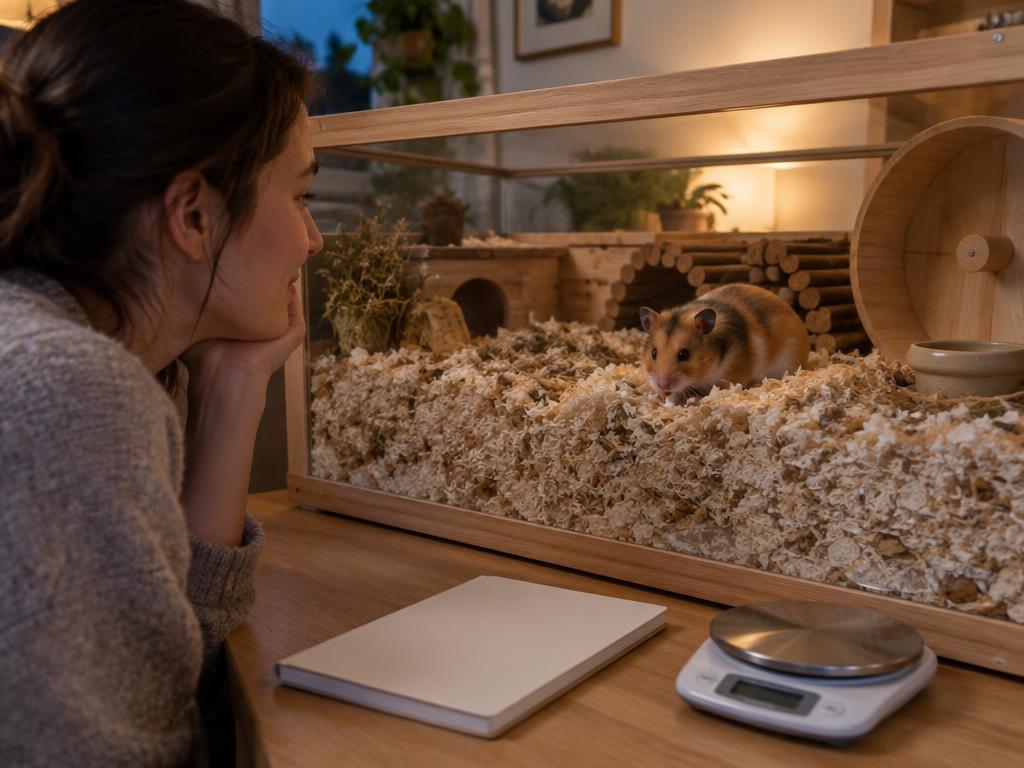
Record exploration, digging, grooming, wheel use, and collecting food when your hamster is normally awake, often evening or night. Do not wake for the log or call daytime hiding inactivity. Note observation time and possible effects of visitors, noise, or handling. Quiet viewing or a safely placed external camera can help shy animals. Describe what actually occurred instead of using broad labels such as fine.
Good to know: Write walked normally to water rather than seemed fine.
Step 4: Track weight with low stress
Weigh consistently, commonly weekly for stable adults unless veterinary advice differs. Use a gram scale and secure container, subtracting container weight. Encourage entry with a familiar tunnel or tiny usual food portion and keep low over a protected surface. Record time and obvious cheek-pouch fullness, which affects comparisons. Avoid repeated measurements merely to obtain a preferred number and seek advice about unexplained trends.
- Use the same scale and record grams.
- Note pouch fullness and timing differences.
Step 5: Log cleaning without needless disruption
Record spot cleaning, bedding changes, and accessory washing. Note damp bedding, spoiled food, and accessible stores, removing contamination while preserving safe dry stores where practical. Retain clean familiar bedding during routine care and avoid dismantling nests just for notes. Record substrate and layout changes that may explain temporary behavior. Do not preserve hazardous spoilage merely to avoid disturbing familiarity.
Step 6: Separate facts from interpretation
Record visible, audible, or measured facts rather than diagnoses: two sneezes during bedding replacement, not allergy; an untouched treat, not dental disease. Take photos or video only without restraint, flash, or distress. Copy prescribed instructions exactly with administration times. Never start human medicines, alter doses, or copy another pet's treatment because notes suggest similar symptoms. Clearly distinguish your observations from professional instructions.
Good to know: Keep prescribed directions in a separate labeled section.
Step 7: Review trends without delaying care
Review weekly for weight trends, activity changes, reduced eating, and repeated equipment issues, sharing useful records with your veterinarian. A log must never delay help while collecting more evidence. Breathing difficulty, collapse, significant bleeding, and unresponsiveness need urgent attention. Reduced appetite, diarrhea, discharge, or changed movement needs prompt advice. Bring recent entries and videos and report the last normal observation rather than guessing when illness began.
This guide was drafted with AI assistance and published by the Pawlito team. It has no formal source list yet. Spotted an error? Tell us and we'll correct it. Read our editorial policy.
Ask about this guide
Leave a comment or a question. Comments are public, so use a first name only and don't include emails, phone numbers or addresses. An automated assistant may reply straight away with general suggestions — it can't diagnose your pet.