How to Keep Small Pets Cool During a Heatwave
Make small pets heatwave care safer with practical cooling steps, species-specific precautions, and clear signs that mean it’s time to call a vet.
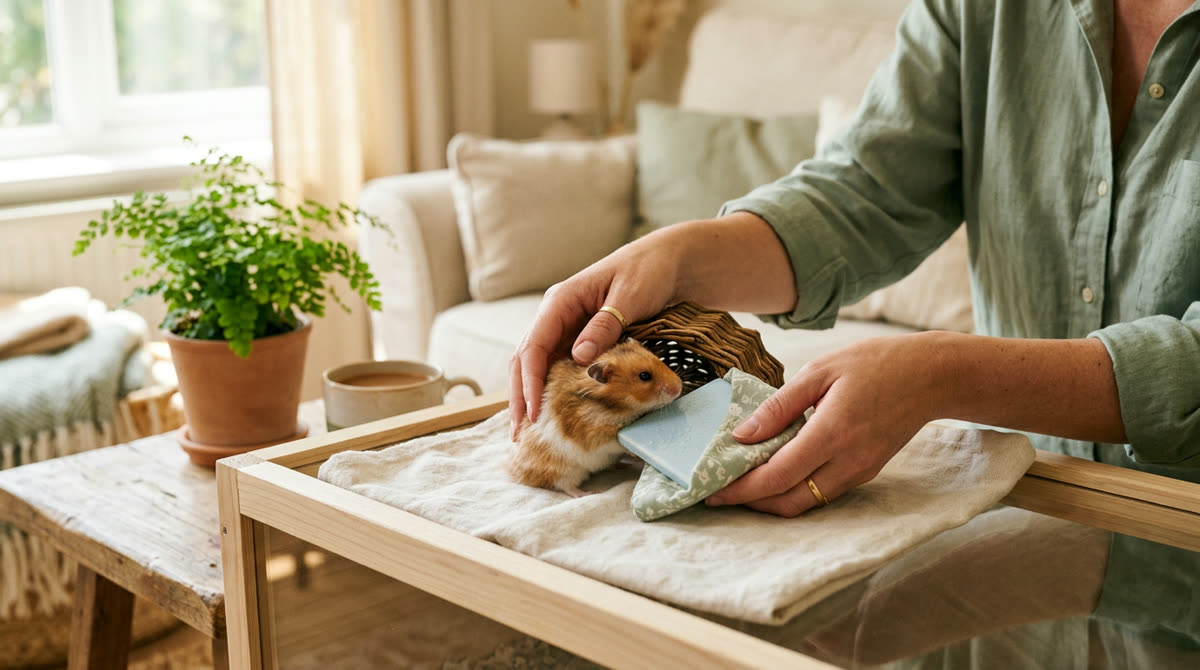
A calm, safety-first approachThis guide provides general education. Contact your veterinarian when symptoms are painful, persistent, or unusual.
- 1
Identify Your Pet’s Heat Risks
Start small pets heatwave care before the hottest day arrives: rabbits, guinea pigs, hamsters, gerbils, rats, mice, chinchillas, and ferrets cannot all tolerate the same conditions. Dense-coated chinchillas are particularly heat-sensitive, and temperatures around 24°C (75°F) can already be concerning, especially when humidity is high or ventilation is poor. Rabbits and guinea pigs also need close attention as temperatures climb into the mid-20s Celsius, while ferrets are especially vulnerable as conditions approach 27°C (80°F); these are warning points, not guaranteed safe limits below them. Ask your veterinarian for a suitable temperature range for your species, particularly if your pet is very young, elderly, overweight, pregnant, or living with heart or breathing problems. Write down each animal’s normal activity pattern, appetite, water intake, and droppings so that subtle changes are easier to recognize during the heatwave. Observe nocturnal pets at their usual waking time rather than repeatedly disturbing them during the day, but do not assume unusual difficulty waking is normal sleep. Save the number of an exotics-capable veterinarian and an emergency clinic now, because a heat-stressed small pet can deteriorate before you have time to search for help.
- Confirm a species-appropriate temperature range.
- Identify pets needing extra monitoring.
- Record normal eating, drinking, and droppings.
- Save daytime and emergency veterinary contacts.
Good to know: A comfortable room temperature for you does not necessarily mean a safe temperature for your pet, especially inside a sheltered enclosure.
- 2
Prepare a Reliably Cool Room
Choose the coolest secure room in your home, ideally away from west-facing windows, kitchens, conservatories, and upper floors that collect afternoon heat. Place a digital thermometer with a maximum-temperature memory at your pet’s level, outside chewing reach, and use a humidity display if possible because humid air makes heat loss more difficult. For many common small mammals, a stable room around 20–23°C (68–73°F) is a useful cooling goal during hot weather, but chinchillas generally need cooler conditions, often around 16–21°C (61–70°F), and individual needs vary. Run air conditioning early enough to prevent heat buildup rather than waiting until the enclosure is already hot, and confirm the actual enclosure temperature instead of relying on the thermostat setting. Close sun-facing blinds before direct sunlight reaches the room, keep ventilation openings clear, and open windows only when outdoor air is cooler and escape-proof screening is secure. A fan can help circulate cooler air, but it does not lower room temperature and should not be the only protection in a dangerously hot room. Keep cables and blades inaccessible, avoid a strong continuous draft across the enclosure, and do not cover the cage with towels or blankets that trap warm air.
- Measure temperature at enclosure height.
- Block direct sunlight before midday.
- Start air conditioning before peak heat.
- Protect pets from cords, blades, and open windows.
- Keep cage ventilation unobstructed.
Good to know: Evaporative coolers add moisture and may work poorly in humid weather; they are not a dependable substitute for air conditioning for a heat-sensitive chinchilla.
- 3
Move Outdoor Pets Before Peak Heat
If rabbits or guinea pigs live outdoors, prepare a secure indoor enclosure and move them into a cooler room before their hutch or run becomes hot. Shade alone is not reliable heatwave protection because hutches, sheds, and enclosed runs can retain heat even after direct sunlight has moved away. Transfer familiar hides, hay, litter trays, and water containers to reduce disruption, and keep compatible bonded companions together unless your veterinarian advises otherwise. Give the temporary enclosure enough space for each animal to stretch out fully, move away from companions, and choose between resting areas without competing for one cool spot. Check the floor for electrical cables, toxic houseplants, recliner mechanisms, and gaps behind appliances, and protect rabbits and guinea pigs from access by unfamiliar dogs or cats. Never use an unventilated storage box, a greenhouse, or a parked vehicle as temporary housing, and avoid repeatedly carrying animals between hot and cool spaces throughout the day. If moving indoors is genuinely impossible, arrange a reliably cooled alternative location before the heatwave peaks rather than expecting frozen bottles to make an overheated hutch safe.
- Set up temporary housing before moving pets.
- Bring familiar hides, hay, and litter trays.
- Keep bonded companions together.
- Provide several resting and drinking spots.
Good to know: Check where sunlight falls throughout the afternoon: a shaded enclosure at 10 a.m. may be in full sun by 2 p.m.
- 4
Offer Safe Cooling Choices
Create a cooling area with a smooth ceramic or stone tile laid flat and securely on the enclosure floor, ensuring it has no sharp edges and cannot fall onto a burrowing animal. Cool the tile in the refrigerator if needed, but do not freeze it, and leave ordinary bedding and another resting area available so your pet can choose its own comfort level. A sealed bottle of frozen water can provide another cool surface when positioned securely outside the enclosure beside a resting spot, with the plastic kept beyond chewing reach and condensation managed. For rabbits or guinea pigs that do not chew fabric, a bottle wrapped in a thin towel may be usable under supervision, but remove it immediately if the animal starts tearing the covering or biting the plastic. Avoid gel ice packs, exposed freezer packs, absorbent cooling mats, or electrical cooling products unless they are specifically suitable for that species and protected from chewing. Replace warmed cooling items as needed and check nearby bedding for dampness, since wet litter encourages skin irritation and poor hygiene rather than providing dependable cooling. Never bathe a small pet or wrap it in a wet towel as a routine cooling method, and never soak a chinchilla, whose dense coat dries poorly.
- Offer a stable tile plus an ordinary resting area.
- Keep frozen plastic bottles out of chewing reach.
- Check for condensation and damp bedding.
- Avoid chewable gel packs and cooling mats.
- Let pets move away from every cooling aid.
Good to know: Cooling accessories support a cool room; they cannot make an unsafe room temperature safe, especially for chinchillas.
- 5
Keep Water Accessible and Food Familiar
Provide fresh plain drinking water at all times, checking supplies at least morning, midday, and evening during a heatwave and more frequently if containers are small or several animals share them. Test every bottle by touching the metal ball and confirming that water flows, because a full bottle can still have a blocked spout or a leak that empties it unexpectedly. Where appropriate for the species and enclosure, offer a second water source, such as a stable shallow ceramic bowl for rabbits or guinea pigs, positioned away from litter and bedding that could contaminate it. Use fresh cool water rather than relying on large amounts of ice, and wash bowls and bottle components daily to limit buildup that may affect cleanliness or flow. Continue the normal balanced diet, including unlimited suitable grass hay for rabbits, guinea pigs, and chinchillas, because maintaining food intake is more important than introducing a special “summer diet.” Rabbits and guinea pigs that already eat leafy greens can have their usual suitable vegetables rinsed and served wet, but avoid suddenly increasing portions or introducing unfamiliar watery foods that may upset digestion. Do not offer chinchillas watery produce as a cooling treat, change a ferret’s meat-based diet to fruit, or add electrolyte powders, sugar, or supplements to drinking water without veterinary advice.
- Check bottle flow, not just water level.
- Provide an additional suitable water source.
- Clean drinking equipment every day.
- Keep normal hay and staple foods available.
- Remove uneaten fresh food before it spoils.
Good to know: Never force water into the mouth of a weak, drowsy, or breathless pet; fluid can enter the lungs, and the animal needs urgent veterinary help.
- 6
Reduce Activity and Check Comfort
Move handling, enclosure cleaning, grooming, and supervised exercise to the coolest parts of the day, using actual room readings rather than assuming evening is automatically cooler. Keep necessary handling brief, often around 5 minutes or less if your pet remains comfortable, and stop sooner if breathing becomes faster, the animal struggles, or it seems unusually tired. Leave familiar hiding places available, but replace sun-warmed plastic tubes or poorly ventilated shelters with secure, well-ventilated alternatives that do not trap heat. Preserve appropriate burrowing substrate for hamsters and gerbils instead of stripping the enclosure bare, and check that their sleeping area is not sitting against a sun-heated wall or window. Gently brush loose fur from rabbits and other pets accustomed to grooming, but do not shave, closely clip, or wet the coat without species-specific veterinary guidance. When the enclosure temperature is rising or approaching your pet’s agreed limit, check at least every 1–2 hours while you are home, watching breathing at rest, posture, responsiveness, eating, and drinking without repeatedly waking the animal. If safe conditions require constant intervention, arrange continuous cooling or move the pet to a safer location rather than leaving it alone with a fan and hoping the temperature holds.
Good to know: Resting stretched out can be a normal cooling posture, but lying flat alongside weakness, unusual breathing, or poor responsiveness is not something to watch and wait on.
- 7
Act Immediately on Heat-Illness Signs
Treat open-mouth breathing or panting in rabbits and rodents, marked breathing difficulty, drooling, staggering, severe weakness, collapse, seizures, or poor responsiveness as an emergency, whether or not you know the enclosure temperature. Stop exercise and handling immediately, move the animal into an air-conditioned or otherwise reliably cooler space, and call an emergency veterinarian while arranging transport. Explain the species, symptoms, approximate heat exposure, and any relevant health problems, and ask for species-specific cooling instructions while someone else prepares the carrier if possible. If the clinic advises dampening exposed areas, use cool tap water rather than ice water and follow its directions about where and how to apply it; do not improvise by soaking a chinchilla or immersing any small pet. Avoid direct ice contact, alcohol rubs, tightly wrapping the animal in damp towels, and attempting a rectal temperature unless a veterinarian specifically directs you, because these actions can cause injury or interfere with safe care. Offer access to water only if the pet is fully alert and able to drink normally, but never force drinking, syringe-feed, or give medication during a suspected heat emergency. Travel in a pre-cooled vehicle with a well-ventilated secure carrier, and continue to the veterinarian even if the pet appears to recover, because serious complications may not be immediately visible.
- Stop activity and move into a cooler space.
- Call an emergency veterinarian immediately.
- Follow species-specific first-aid instructions.
- Do not force fluids or give medication.
- Do not cancel care after apparent improvement.
Good to know: Do not delay departure to keep trying home cooling methods; veterinary guidance and prompt transport take priority.
- 8
Troubleshoot Cooling Failures Early
If the enclosure remains too warm despite closed blinds and cooling tiles, reassess the room itself rather than adding more frozen objects around the pet. Compare the enclosure thermometer with a second thermometer if readings seem implausible, and check for blocked air-conditioning filters, direct sun on one cage wall, or hot air entering from adjoining rooms. For a pet ignoring a cooling tile, place it near a familiar resting area while leaving an escape route, but never force the animal to sit on it or remove all other bedding to make it comply. If water intake appears lower, confirm that the spout works and is reachable, then offer a familiar alternative container rather than putting water on the nose or forcing the mouth open. Contact a veterinarian promptly for reduced appetite, fewer droppings, unusual quietness, or persistent breathing changes; rabbits and guinea pigs that stop eating or produce markedly fewer droppings need urgent advice rather than overnight monitoring. Prepare for a power cut with a named destination that has working cooling, transport carriers, sufficient normal food and water, and permission to bring every pet. During an outage or air-conditioning failure, move heat-sensitive animals before their enclosure becomes unsafe, and never operate a generator indoors, in a garage, or near doors and windows because of carbon monoxide risk.
- Check thermometer accuracy and airflow.
- Look for hidden sources of radiant heat.
- Keep a second drinking option available.
- Arrange a cooled backup destination.
- Keep carriers ready for immediate use.
Good to know: A remote temperature alarm is useful when you are away, but it only protects your pet if someone can respond quickly and move the animal.
- 9
Maintain Aftercare and Review the Setup
Continue temperature checks after the outdoor weather improves, because upper-floor rooms, brick walls, sheds, and hutches can remain warm well into the night or the following day. Check appetite, drinking, activity, and droppings morning and evening for the next 24–48 hours after a particularly hot period, and contact your veterinarian sooner if anything changes. If a pet received treatment or showed possible heat-illness signs, follow the veterinarian’s discharge and follow-up plan rather than assuming that normal-looking behavior means recovery is complete. Spot-clean wet bedding and spoiled food daily, and inspect rabbits’ rear ends at least twice daily in hot weather because soiled fur and warm conditions increase flystrike risk. Visible maggots, eggs attached to fur, wounds, or sudden distress require immediate veterinary attention, and do not bathe the rabbit or delay departure while attempting a full cleanup. Once conditions are consistently safe, return outdoor pets to their usual housing during a cooler part of the day, after checking shade, ventilation, water access, and the forecast for another hot spell. Record which room, cooling methods, and water arrangements worked best so your next small pets heatwave care plan is ready before temperatures rise again.
- Keep checking indoor and enclosure temperatures.
- Monitor eating, droppings, and activity.
- Follow all veterinary recheck instructions.
- Inspect rabbits for soiling and flystrike.
- Restock supplies and update the heatwave plan.
Ask about this guide
Leave a comment or a question about your own pet and the Pawlito assistant replies right away with practical next steps.