How to Set Up and Care for a Leopard Gecko
The complete beginner setup for a leopard gecko: heating, hides, feeding and gentle handling.
- Written by
- Pawlito Editorial Team · AI-assisted guide
- Professional review
- Not yet reviewed by a veterinarian
- Published
- Last updated
In this guide (8 steps)
Step 1: Set up the right enclosure
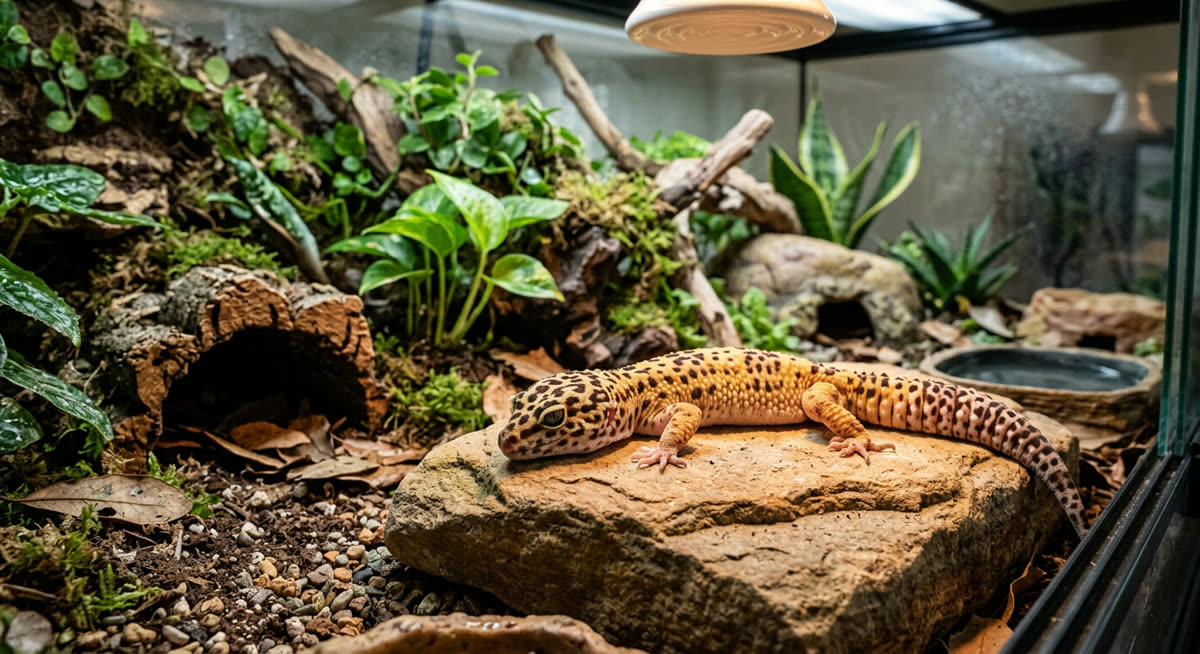
A single adult leopard gecko needs a terrarium of at least 90 by 45 centimetres — bigger is better. Glass or PVC enclosures with front-opening doors work well. Leopard geckos are ground-dwellers, so floor space matters more than height. Secure the lid properly; they are surprisingly good climbers when motivated.
Step 2: Get the heating right
Leopard geckos need a temperature gradient: a warm side of 30 to 32 degrees Celsius and a cool side around 24 to 26 degrees. Use a heat mat or deep heat projector controlled by a thermostat — an unregulated heat source can burn your gecko or overheat the tank. Measure temperatures with a digital thermometer at each end. Night-time drops to around 21 degrees are fine.
Good to know: A thermostat is not optional — it is the single most important safety device in the setup.
Step 3: Provide three essential hides
Your gecko needs a hide on the warm side, a hide on the cool side, and a humid hide filled with damp sphagnum moss to help with shedding. Without a humid hide, geckos often get stuck shed, especially on toes, which can cut off circulation. Check the humid hide weekly and re-dampen as needed. Hides should be snug — geckos feel safest in tight spaces.
Step 4: Choose a safe substrate
For beginners, paper towel, slate tile or a reptile-safe liner is safest — loose substrates risk impaction if swallowed, especially with young geckos. Experienced keepers sometimes use a proper soil and sand mix, but start simple. Avoid calcium sand entirely; it clumps in the gut. Spot-clean daily and deep-clean monthly.
Step 5: Feed the right insects correctly
Leopard geckos eat live insects: crickets, mealworms, dubia roaches and locusts. Gut-load insects with nutritious food for twenty-four hours before feeding, and dust them with calcium powder at most feeds and a vitamin supplement weekly. Feed juveniles daily and adults every two to three days. Remove uneaten crickets, which can nibble a sleeping gecko.
- Gut-load insects before feeding
- Calcium dust at nearly every feed
- Fresh water in a shallow bowl at all times
Step 6: Handle your gecko gently
Let a new gecko settle for two weeks before handling. Start with short sessions of a few minutes, letting the gecko walk over your hands near the ground or over a soft surface. Never grab the tail — leopard geckos can drop it, and while it regrows, it is stressful and the new tail looks different. Calm, regular handling produces a remarkably tame gecko.
Step 7: Understand shedding and common issues
Geckos shed their skin every few weeks, often eating it — this is normal. Check after each shed that no skin remains on toes or the tail tip; a warm, damp cotton bud removes stuck shed gently. A healthy gecko has a plump tail, clear eyes and a good appetite. Weight loss, lethargy or a thin tail need a reptile vet.
Step 8: Plan for a long commitment
Leopard geckos live fifteen to twenty years — they are a serious long-term pet, not a short-term novelty. Budget for electricity, insects, supplements and vet care. Find a reptile-experienced vet before you need one. With correct care, a leopard gecko is one of the most rewarding and handleable reptiles you can keep.
Good to know: Keep a simple care log of feeds, sheds and weights — it makes vet visits far more useful.
This guide was drafted with AI assistance and published by the Pawlito team. It has no formal source list yet. Spotted an error? Tell us and we'll correct it. Read our editorial policy.
Ask about this guide
Leave a comment or a question. Comments are public, so use a first name only and don't include emails, phone numbers or addresses. An automated assistant may reply straight away with general suggestions — it can't diagnose your pet.