How to Litter Train a Rabbit
Rabbits naturally pick a toilet corner — work with that instinct and you can have a reliably litter-trained, free-roam house rabbit.
A calm, safety-first approachThis guide provides general education. Contact your veterinarian when symptoms are painful, persistent, or unusual.
- 1
Work with your rabbit's natural habits
Litter training a rabbit is far easier than most people expect because rabbits are naturally clean animals that choose one or two toilet spots and stick to them. Your job isn't to teach the concept of a toilet — it's to put the litter box where the rabbit already wants to go and make that box the most attractive option. Watch your rabbit for a few days before setting anything up: almost every rabbit picks a corner, and that corner tells you exactly where the box belongs. Spayed or neutered rabbits train dramatically faster and more reliably because territorial dropping-scattering is driven by hormones, so if your rabbit isn't fixed yet, that single step will do more for litter habits than any training technique.
- Rabbits naturally choose one toilet corner — observe first
- Put the box where the rabbit already goes
- Spaying/neutering is the biggest training accelerator
- 2
Choose the right litter box
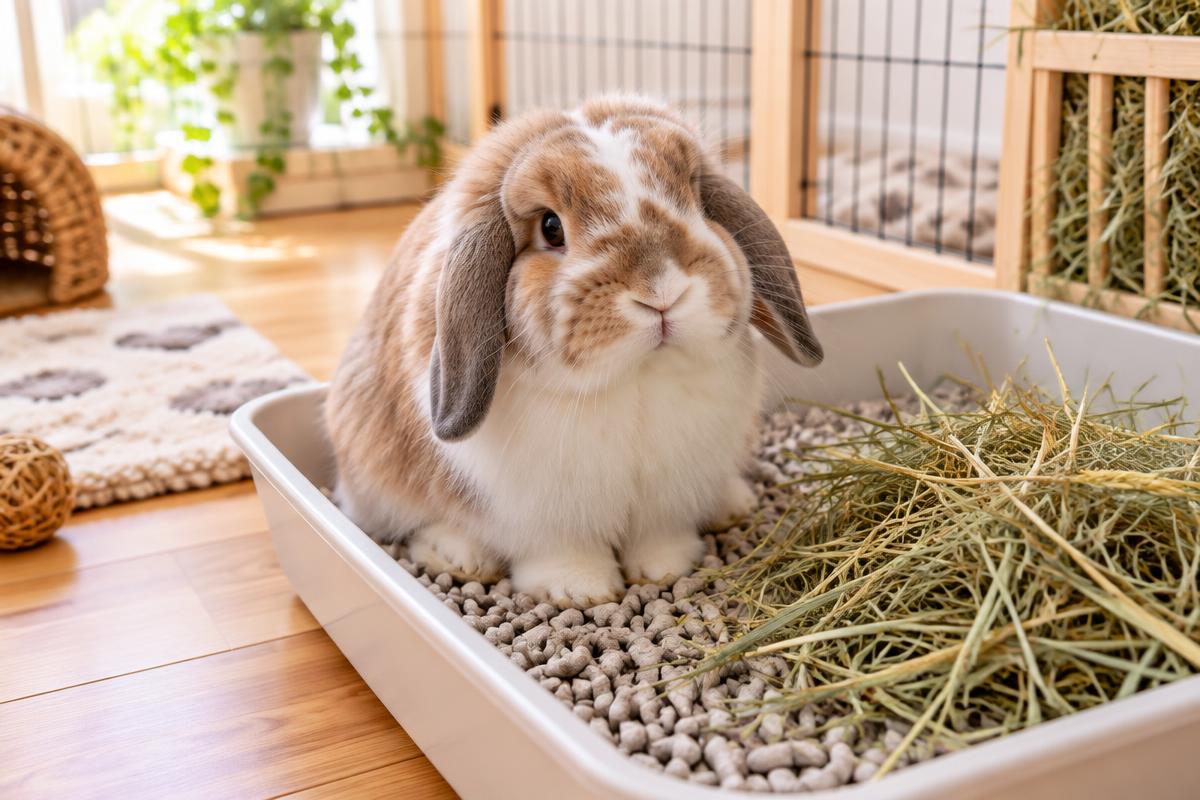
Skip the tiny corner boxes sold for hamsters — a rabbit needs a box big enough to sit in comfortably, turn around, and eat hay while using it. A medium or large cat litter tray works perfectly for most rabbits; high-backed trays help with rabbits that lift their tail and spray over the edge. The box should have a low entry side for easy hopping in, especially for young, old, or large rabbits. If you're setting up a large enclosure or plan to free-roam, provide multiple boxes at first — one per main corner the rabbit uses — and reduce them later as habits consolidate. A cheap, roomy box that the rabbit actually fits in beats an expensive small one every time.
- Cat-sized tray, not a small-pet corner box
- Low entry side; high back for sprayers
- Multiple boxes in large spaces at first
Good to know: Rabbits like to eat while they toilet, so pick a box big enough for a pile of hay at one end — this single trick drives most of your training success.
- 3
Pick a safe, absorbent litter
The right litter is paper-based or wood-stove pellets made from kiln-dried pine — absorbent, low-dust, and safe if nibbled. Avoid clumping clay cat litters entirely: rabbits nibble their litter, and clumping litter can cause dangerous intestinal blockages. Also avoid cedar and non-kiln-dried pine shavings, whose aromatic oils can damage the liver and respiratory system, and never use corn cob litter, which swells when eaten. A layer about an inch deep is plenty — rabbits don't bury waste like cats, so deep litter just gets wasted. Line the bottom with newspaper if you want easier cleanup, then add the litter, and top it all with a generous handful of hay.
- Paper-based litter or kiln-dried pine pellets
- Never clumping clay, cedar, or corn cob litter
- One inch deep is enough — no deep filling needed
- 4
Set up the box with hay inside
The hay trick is the engine of rabbit litter training: place a generous pile of fresh hay directly in the box, or in a hay rack mounted so the rabbit must sit in the box to reach it. Rabbits graze and toilet at the same time, so a rabbit eating hay in the box will naturally deposit droppings and urine there. Refresh the hay daily so it stays appealing — rabbits won't eat hay that's been soiled or sitting damp. Some owners worry this is unsanitary, but rabbits' digestive systems are built for exactly this arrangement, and they reliably avoid eating soiled hay themselves. Keep a water bowl or bottle nearby to complete the 'dining corner' setup that rabbits love.
- Fresh hay in the box or in a rack above it
- Replace hay daily — rabbits won't eat soiled hay
- Rabbits naturally eat and toilet simultaneously
- 5
Start in a small, enclosed space
Freedom comes after reliability, not before. Begin with your rabbit in a pen or small room — a space where every corner is close to a litter box and accidents are easy to manage. Place a box in the corner the rabbit chooses, and if it picks a different corner, move the box there rather than fighting the choice. Each time you find droppings outside the box, sweep them up and place them in the box — the scent tells the rabbit where droppings belong. Blot urine spots with a paper towel, place the towel in the box briefly, then clean the spot with diluted white vinegar to erase the smell completely. Most rabbits show clear improvement within the first week in a small space.
- Small pen first — expand freedom only after success
- Move the box to the rabbit's chosen corner
- Droppings go into the box; vinegar erases urine smell
Good to know: Plain white vinegar diluted 1:1 with water neutralizes urine odor far better than most pet sprays, and a rabbit won't re-mark a spot it can't smell.
- 6
Expand space gradually
Once your rabbit uses the box consistently for at least a week, expand its territory in stages — one additional room or a doubled pen area at a time. With each expansion, add an extra litter box to the new space at first, because a rabbit with a long distance to travel will often improvise a new toilet corner. Watch for the pattern: if accidents cluster in one spot in the new area, that spot needs its own box, at least temporarily. If reliability collapses after an expansion, shrink the space back down for another week before trying again — going backward is normal and not a failure. Over a few weeks, most rabbits can roam several rooms with just one or two well-placed boxes.
- One week of consistency before each expansion
- Add a box in each new area initially
- Shrink back if accidents return — that's normal
- 7
Accept the droppings you can't train away
Even a perfectly litter-trained rabbit will leave some dry droppings around — this is normal rabbit behavior, not a training failure. Rabbits produce two kinds of droppings, and while virtually all urine and most pellets end up in the box, a handful of stray pellets a day is typical, especially in the first months or when a rabbit is excited. Unneutered rabbits scatter droppings deliberately as territorial markers, which is why altering matters so much. The good news: rabbit droppings are dry, odorless, and sweep up in seconds. Judge success by urine — a rabbit that always urinates in the box is litter trained, even if a few pellets appear on the floor.
- A few stray dry pellets daily is normal
- Judge success by urine, not droppings
- Territorial scattering fades after spaying/neutering
- 8
Troubleshoot common setbacks
If a previously trained rabbit starts missing the box, work through the likely causes in order. First, rule out health: a rabbit that suddenly stops using the box may have a urinary tract infection, bladder sludge, or arthritis making the box hard to enter — a vet check is the right first move, especially for older rabbits. Second, check the box itself: a dirty box, stale hay, or a litter change can drive a rabbit elsewhere, so clean boxes every one to two days and keep hay fresh. Third, consider territory stress: a new pet, a moved enclosure, or reaching sexual maturity can trigger marking, which a thorough vinegar clean and (if not done) neutering usually resolve. Patience through setbacks pays off — nearly every rabbit can be reliably litter trained.
- Sudden misses → vet check for UTI or arthritis first
- Clean the box every 1–2 days; refresh hay daily
- New pets or maturity can trigger temporary marking
Good to know: Keep one 'backup' box in your rabbit's favorite non-box corner permanently — many rabbits insist on two toilet spots, and it's easier to serve the habit than fight it.


Ask about this guide
Leave a comment or a question about your own pet and the Pawlito assistant replies right away with practical next steps.