How to Make a Safe Indoor Digging Box for Your Rabbit
Offer a supervised outlet for digging with a sturdy box, safe filling, and a setup that keeps chewing hazards and damp materials out.
- Written by
- Pawlito Editorial Team · AI-assisted guide
- Professional review
- Not yet reviewed by a veterinarian
- Published
- Last updated
In this guide (7 steps)
Step 1: Choose a suitable box and location
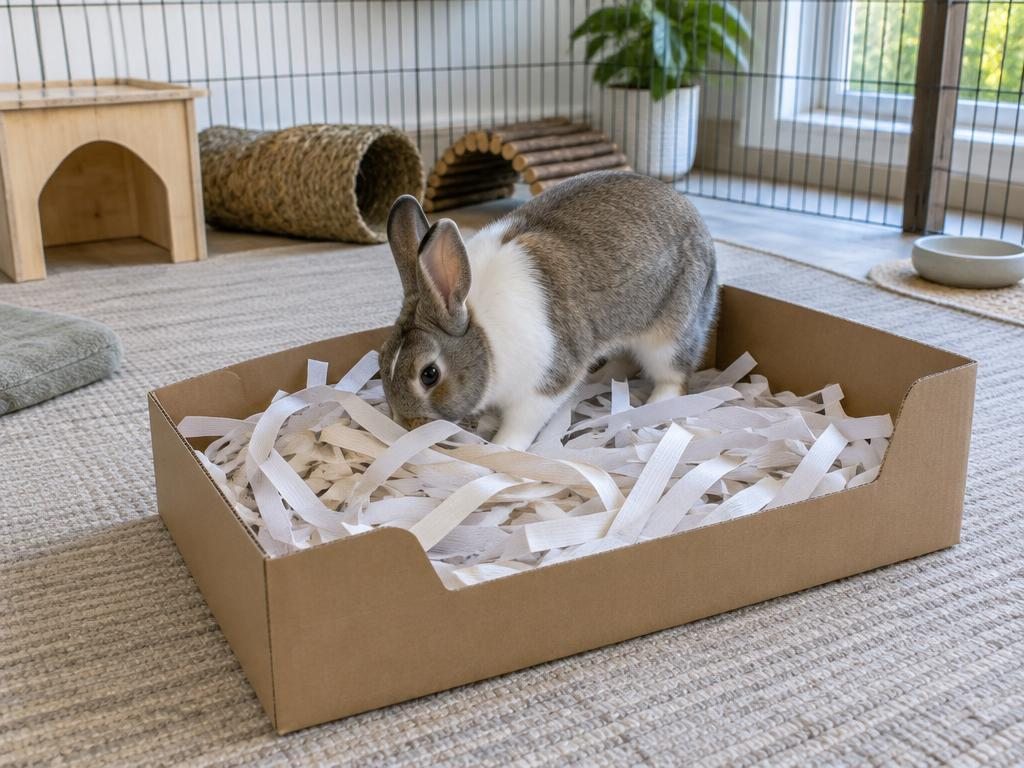
Digging is a normal rabbit behavior, and a designated box can provide a more suitable outlet than carpet or furniture. Choose a sturdy low-entry container large enough for your rabbit to turn comfortably. Put it on a non-slip surface inside a safe exercise area, away from litter, water spills, cables, and doors. Make sure your rabbit can enter and leave without jumping from a height.
Good to know: A digging box adds enrichment but does not replace space, hay, exercise, or appropriate companionship.
Step 2: Remove physical and chewing hazards
If using cardboard, remove staples, tape, plastic windows, handles, and loose labels. Avoid glossy, heavily printed, treated, or scented packaging. For a reusable tray, check that edges are smooth and watch for chewing damage. Do not use a closed box that could trap your rabbit or one that becomes unstable when they lean on a side. Inspect the base before adding any filling.
Step 3: Start with a simple safe filling
Try loose strips of plain unprinted paper or another rabbit-safe material recommended by your veterinarian. Avoid clumping cat litter, dusty powders, sharp pieces, scented bedding, and treated soil. Use a modest layer so you can observe what your rabbit does with it. Rabbits that eat large amounts of the filling need a different supervised enrichment option rather than unrestricted access.
Good to know: No filling is automatically safe for every rabbit; chewing and ingestion behavior matter.
Step 4: Let your rabbit investigate voluntarily
Place the box down during ordinary active time and allow your rabbit to approach. Do not lift them into it and block the exit. You can set a little of their usual hay near the entry, keeping it clean, but do not bury large amounts of food to encourage frantic digging. Some rabbits prefer scratching at an almost empty cardboard base before accepting deeper material.
Step 5: Observe the first sessions closely
Watch for relaxed digging, normal entry and exit, and comfortable movement. Stop access if your rabbit pulls off large pieces, swallows filling, becomes tangled, or slips. If they use the box as a toilet, remove wet material promptly and reconsider its location or distinguish it more clearly from the litter area. Do not punish digging elsewhere; restrict access to vulnerable surfaces and offer appropriate alternatives.
Step 6: Keep the box dry and maintain it
Check after each supervised session for damp areas, torn edges, hidden debris, or trapped food. Replace dirty filling rather than covering it with a fresh layer. Clean a reusable tray with an animal-safe method, rinse where appropriate, and dry fully before refilling. Replace cardboard when it becomes soft or heavily chewed. Keep water bowls far enough away that enthusiastic digging will not tip them over.
Step 7: Adapt enrichment and recognize warning signs
Rotate the box with tunnels, hay-based foraging, and open exercise space rather than leaving an unsafe setup because your rabbit once enjoyed it. Rabbits with mobility problems may need a shallower entry and different activity. Reduced appetite, fewer droppings, a hunched posture, or unusual lethargy needs prompt veterinary attention, particularly after possible ingestion. Never assume a rabbit is simply tired from playing if these changes appear.
This guide was drafted with AI assistance and published by the Pawlito team. It has no formal source list yet. Spotted an error? Tell us and we'll correct it. Read our editorial policy.

Ask about this guide
Leave a comment or a question. Comments are public, so use a first name only and don't include emails, phone numbers or addresses. An automated assistant may reply straight away with general suggestions — it can't diagnose your pet.