How to Offer Safe Chewing Materials to a Chinchilla
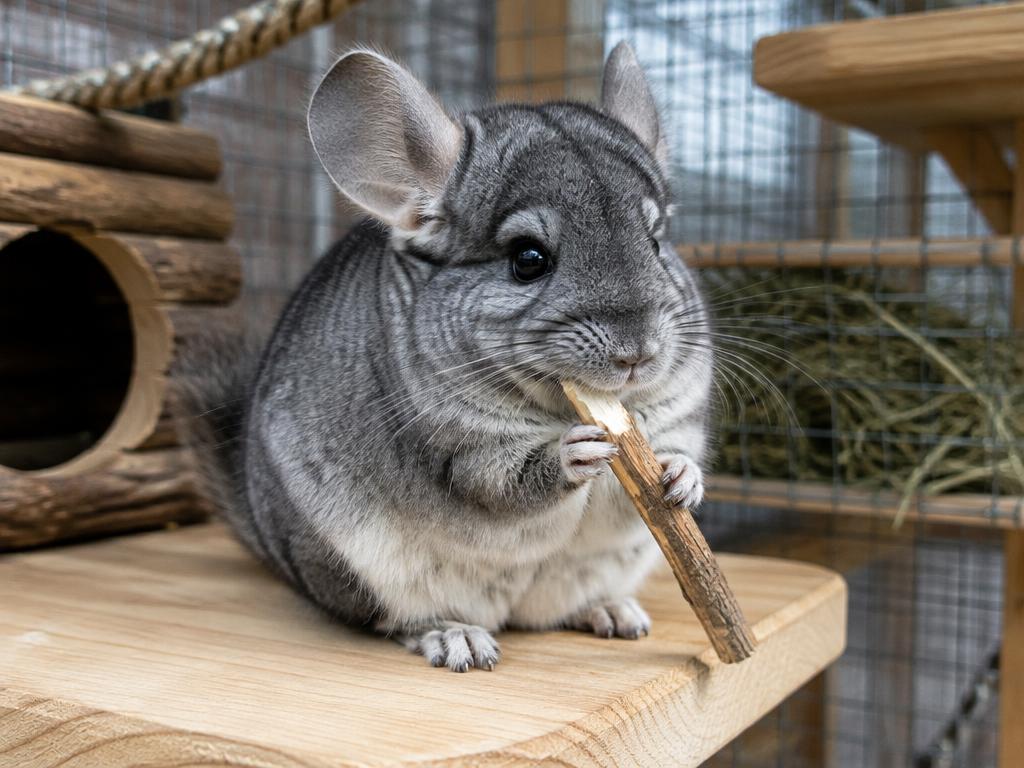
Choose suitable untreated woods for your chinchilla, introduce chews gradually, and spot damage or eating changes that need attention.
- Written by
- Pawlito Editorial Team · AI-assisted guide
- Professional review
- Not yet reviewed by a veterinarian
- Published
- Last updated
In this guide (7 steps)
Step 1: Start with hay and veterinary guidance
Provide unlimited suitable grass hay as the feeding foundation; chews are enrichment, not replacements. Ask a chinchilla-experienced veterinarian about appropriate woods and prepared materials, particularly with mouth problems or unusual chewing. Toys cannot correct dental disease or guarantee healthy teeth. Never clip or file teeth yourself or trust products claiming to replace professional dental assessment. Individual health needs may change which shapes and materials are suitable.
Step 2: Verify species and treatment
Choose identified untreated wood from reputable small-pet suppliers. Apple and willow are commonly offered, but species, source, and preparation still need verification with your veterinarian. Vague natural-wood labels are insufficient. Avoid painted, varnished, glued, pressure-treated, and scented pieces, unknown timber, driftwood, and potentially sprayed branches. A familiar-looking branch is not enough evidence of suitability or chemical history.
- Ask for exact wood species.
- Confirm absence of pesticides, preservatives, and coatings.
Step 3: Avoid uncertain home preparation
Washing, boiling, or baking does not make unknown wood appropriate or reliably remove pesticide residues. Before collecting, discuss exact species, source, and preparation with your veterinarian. Avoid roadsides, landscaping, and trees with uncertain spraying history. Verified prepared commercial chews can be simpler than garden cuttings. Keep source information accessible in case later questions or eating changes need investigation.
Good to know: Retain supplier information and packaging until a chew is finished.
Step 4: Inspect shape and fasteners
Check for manageable size, sharp points, crumbling sections, mold, and damp smells. Avoid bells, accessible wire, staples, loose cords, and trapping gaps. Household pencils, furniture offcuts, and craft wood are unsuitable substitutes. Fit mounted chews according to directions and ensure hardware cannot be loosened or reached. Reject uncertain coatings and exposed adhesive rather than hoping chewing will remove them harmlessly.
- Remove packaging, labels, and ties.
- Reject unknown coatings and exposed adhesive.
Step 5: Introduce one verified item
Offer one chew during natural active hours on a secure surface. Allow voluntary approach rather than pressing against the mouth or chasing. Observe whether chunks break off and are swallowed. Investigation may be slow; avoid sweet coatings or sticky treats to force interest. Count new materials carefully so any change can be traced instead of introducing a large assortment simultaneously.
Good to know: Record product and introduction date for accurate discussions of later changes.
Step 6: Rotate and remove deterioration
Inspect daily for dampness, urine, splinters, and loose fragments. Replace pieces that become unsafe to handle instead of waiting until they disappear. Rotate modest verified variety without blocking shelves or movement. Store spare chews dry and away from household chemicals. Do not use scented disinfectants or return contaminated porous wood merely because wiping improves its appearance.
Good to know: Rotate a few approved options gradually rather than an untraceable large collection.
Step 7: Watch eating and seek help
Observe hay intake, chewing, droppings, and body weight. Drooling, wet chin, dropped food, difficult chewing, reduced appetite, or fewer droppings needs prompt veterinary advice. Remove suspect new items but do not assume removal solves disease. Marked appetite loss or little stool needs urgent assessment. Keep hay and water available while arranging care unless the veterinarian directs otherwise. Never treat dental symptoms with harder chew toys.
This guide was drafted with AI assistance and published by the Pawlito team. It has no formal source list yet. Spotted an error? Tell us and we'll correct it. Read our editorial policy.

Ask about this guide
Leave a comment or a question. Comments are public, so use a first name only and don't include emails, phone numbers or addresses. An automated assistant may reply straight away with general suggestions — it can't diagnose your pet.