How to Care for a Pet Rat: A Beginner's Guide
Rats are intelligent, affectionate pets — here is how to house, feed, entertain and bond with them properly.
- Written by
- Pawlito Editorial Team · AI-assisted guide
- Professional review
- Not yet reviewed by a veterinarian
- Published
- Last updated
In this guide (8 steps)
Step 1: Always keep rats in pairs or groups
Rats are deeply social and a lone rat becomes depressed, however much human attention it gets. Keep at least two, ideally three or more of the same sex. Same-sex groups bond well, and neutered males can live with females. Introduce new rats carefully on neutral ground. A group of rats is genuinely more fun to watch than one.
Step 2: Choose a large, multi-level cage
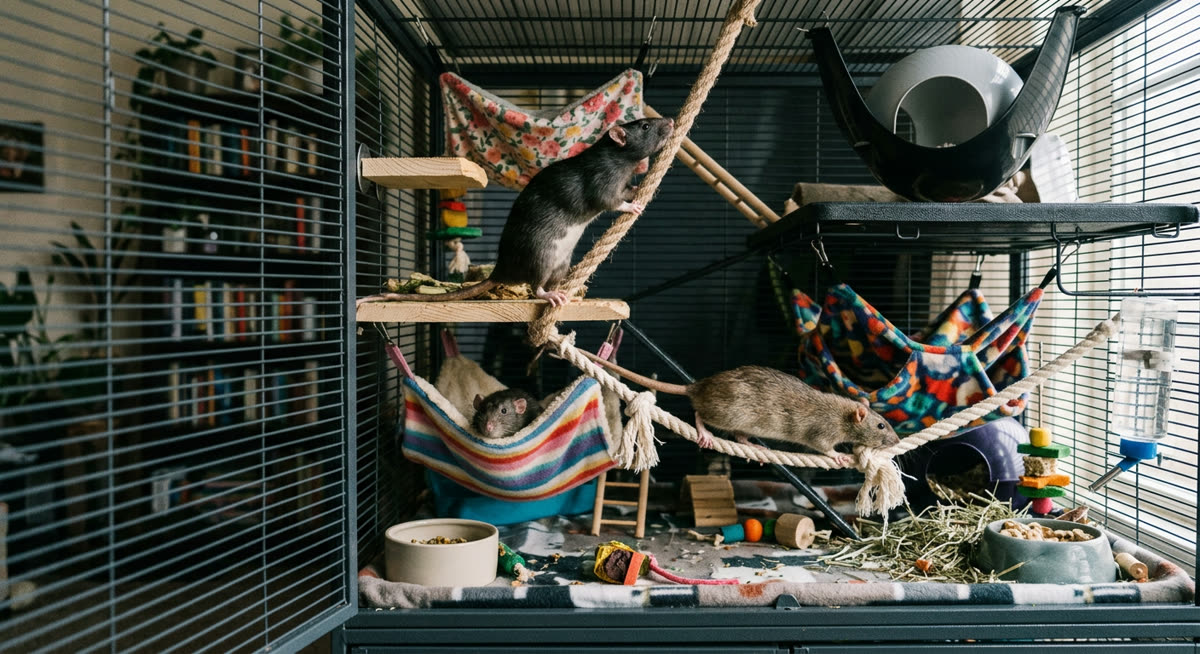
Rats need vertical space to climb — a tall cage with multiple levels, at least 60 by 60 by 90 centimetres for a pair, and bigger for groups. Bar spacing should be no more than 1.5 centimetres for adults and smaller for young rats. Avoid aquariums, which have poor ventilation. Solid floors or covered wire levels protect their feet.
Step 3: Furnish for climbing and hiding
Rats love hammocks, ropes, ladders, tunnels and hideouts — provide plenty of all of them. Hanging hammocks are usually the favourite sleeping spot. Use paper-based bedding or fleece liners, avoiding cedar and dusty pine. Rearrange furnishings weekly for enrichment. Rats are clean and often choose a toilet corner, which you can litter-train with a shallow tray.
Good to know: Old t-shirts make excellent hammock and nesting material — rats love soft fabric.
Step 4: Feed a proper rat diet
A quality rat block or pellet should form the diet's base, supplemented with small amounts of fresh vegetables, occasional fruit and the odd treat of cooked egg or pasta. Avoid sugary and fatty treats except in tiny amounts. Fresh water must always be available, ideally in a bottle checked daily. Rats hoard food, so check hiding spots for perishables.
Step 5: Give daily free-roam time
Rats need at least an hour outside the cage daily in a rat-proofed room or playpen. Cover or block gaps behind furniture, protect electrical cables, and remove toxic plants. Rats will explore, climb and eventually come to you for interaction. Supervise the whole time — rats chew fast and can vanish into surprisingly small spaces.
Step 6: Bond with your rats
Rats bond strongly with their humans and genuinely enjoy interaction. Start with treats from your hand, then gentle handling, letting them climb on you at their own pace. Many rats enjoy shoulder rides and will seek out your company. Daily handling from a young age produces confident, affectionate rats. They learn their names and can learn simple tricks.
Step 7: Keep their minds busy
Rats are as intelligent as small dogs and need mental stimulation. Foraging toys, puzzle feeders, dig boxes filled with safe substrate, and simple training sessions all work brilliantly. Teaching tricks with a clicker is genuinely achievable and great bonding. A bored rat becomes destructive or depressed, so variety matters.
Step 8: Watch their health closely
Rats typically live two to three years and are prone to respiratory issues and tumours. Red staining around the eyes or nose, sneezing, laboured breathing, lumps or weight loss all warrant an exotics vet visit. Weigh weekly and handle daily so you notice changes early. Find an exotics vet before problems arise. With good care, rats are among the most rewarding small pets of all.
Good to know: A rat who bruxes — grinds their teeth softly — and boggles their eyes while you stroke them is a very content rat.
This guide was drafted with AI assistance and published by the Pawlito team. It has no formal source list yet. Spotted an error? Tell us and we'll correct it. Read our editorial policy.


Ask about this guide
Leave a comment or a question. Comments are public, so use a first name only and don't include emails, phone numbers or addresses. An automated assistant may reply straight away with general suggestions — it can't diagnose your pet.