How to Potty Train a Puppy Fast Without Punishment
Make potty training a puppy faster with a practical schedule, well-timed rewards, and gentle strategies for accidents—no punishment needed.
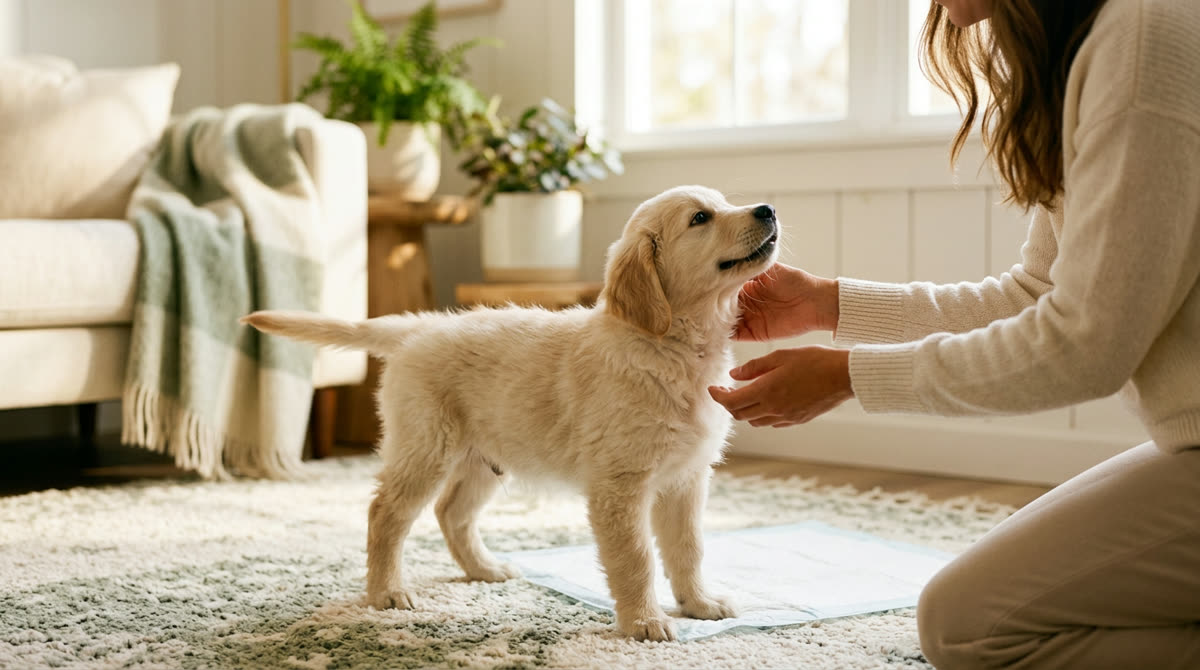
A calm, safety-first approachThis guide provides general education. Contact your veterinarian when symptoms are painful, persistent, or unusual.
- 1
Prepare a safe potty spot and training supplies
The fastest humane approach to potty training a puppy is to prevent avoidable accidents, reward the right location, and repeat a predictable routine—not to expect perfect bladder control within a weekend. Before training starts, choose one easy-to-reach toilet area, ideally a quiet patch of grass or another permitted surface, and use the same exit whenever possible so the route becomes familiar. For a puppy whose vaccinations are incomplete, ask your veterinarian which outdoor locations are appropriate locally; a private area that unfamiliar dogs cannot access is generally preferable to communal dog-relief areas. If safe outdoor access is unavailable, set up a secured indoor grass tray or puppy-pad station away from food and bedding, recognizing that switching from an indoor surface to outdoors will require additional practice. Keep a well-fitted harness or collar, a standard 4- to 6-foot leash, waste bags, pea-sized puppy-appropriate treats, and a flashlight beside the exit to make trips quick. Inside, prepare an easy-clean supervised area using baby gates or an exercise pen, and temporarily remove absorbent rugs that can encourage repeat accidents. Set a realistic expectation: you may see meaningful improvement within several days, but dependable house-training usually takes weeks to months, especially with very young puppies.
- Choose one consistent, accessible toilet location.
- Confirm safe outdoor options with your veterinarian.
- Stock tiny treats and a standard leash by the door.
- Block access to rugs and unsupervised rooms.
Good to know: Choose a potty route you can manage quickly in bad weather and at night; a spot that takes five minutes to reach may be impractical for a young puppy.
- 2
Build a schedule around your puppy’s needs
Start with a potty opportunity every 30 to 60 minutes while your puppy is awake, treating this as a starting point rather than a minimum interval the puppy must endure. Also go out immediately after waking, shortly after meals or a substantial drink, and during or after active play, because these transitions commonly trigger the need to eliminate. Some puppies need a break after only 10 to 15 minutes of vigorous activity, so body language and recent accidents should override the clock. For the first three days, record meal times, naps, drinks, potty trips, successful pees and poops, and accidents to uncover your individual puppy’s pattern. Offer meals at consistent times using the number of daily feedings appropriate for your puppy’s age and veterinary guidance, rather than leaving food available unpredictably throughout the day. Provide normal access to fresh drinking water, and do not withhold it to reduce accidents; sudden changes in thirst or urine output deserve a call to your veterinarian. When your log shows a recurring accident at a particular time, schedule the next day’s trip 10 to 15 minutes earlier instead of waiting for your puppy to prove they can hold it.
- Take a potty break immediately after every nap.
- Add trips after meals, drinking, and lively play.
- Start with 30- to 60-minute awake-time intervals.
- Log successes and accidents for at least three days.
Good to know: Do not use the common “age in months plus one hour” rule as a daytime target; activity, health, size, and individual development make holding times highly variable.
- 3
Prevent accidents with active supervision
When your puppy is indoors and awake, keep them in the same room with an adult who is actively watching, because unnoticed wandering creates opportunities to rehearse toileting indoors. Watch for sudden sniffing, circling, pacing, leaving a game, heading behind furniture, or moving toward the exit, and take your puppy to the potty spot immediately when any of these appear. A lightweight leash attached to a comfortable harness can help keep your puppy nearby during quiet activities, but only while you are directly supervising and able to prevent tangling or chewing. When you cannot watch closely, use a puppy-proofed pen or a positively introduced crate for a short interval after a successful potty trip rather than giving access to the whole house. A crate should allow your puppy to stand normally, turn around, and lie comfortably, and an adjustable divider can prevent an oversized crate from becoming a bedroom at one end and a toilet at the other. Build comfort with the crate through treats and brief, relaxed sessions before relying on it for management, and never leave a panicking puppy confined or use the crate as a consequence for an accident. If your absence will exceed your puppy’s demonstrated comfortable holding time, arrange a caregiver or an appropriate larger setup with a separate toilet area instead of expecting confinement to create bladder control.
- Keep an awake puppy within sight.
- Treat sniffing and circling as immediate potty signals.
- Use gates, a pen, or a positively introduced crate.
- Arrange help for absences your puppy cannot manage.
Good to know: Never leave a puppy tethered unattended. Remove collars and harnesses before crating to reduce snagging risk.
- 4
Make each potty trip calm and predictable
Take your puppy on leash directly to the designated spot, moving promptly enough that they do not stop to urinate in the hallway or beside the door. If stairs, an elevator, or a long corridor repeatedly lead to accidents, carrying a small puppy safely to the toilet area can temporarily bridge the gap while their control develops. Once there, stand quietly within a small area and allow about three to five minutes for sniffing and elimination, avoiding games, excited conversation, or a long exploratory walk before the task is finished. As your puppy begins to pee or poop, say a short cue such as “go potty” once in a calm voice, which gradually connects the words with the action without turning them into background noise. If nothing happens, return indoors for five to ten minutes of close supervision or brief comfortable confinement, then try the same spot again rather than offering unsupervised freedom. If your puppy pees but typically also needs to poop at that time, give them a few additional quiet minutes or a short, slow walk nearby before returning home. Keep the procedure consistent across caregivers, but end the outing sooner if heat, cold, fear, or another safety concern makes waiting inappropriate.
Good to know: Repeated squatting is not always a training issue: if your puppy strains, seems painful, or repeatedly tries to urinate with little or no output, stop training and seek urgent veterinary advice.
- 5
Reward immediately after your puppy finishes
The most important reward in puppy potty training happens at the toilet spot, immediately after your puppy finishes eliminating—not several minutes later in the kitchen. Keep treats ready and deliver one within about one to two seconds of completion, pairing it with a gentle “yes” or quiet praise so the location and behavior are clearly connected to something pleasant. Wait until the stream has stopped or your puppy has finished pooping, because excited praise or food offered mid-action can interrupt elimination and lead to an indoor accident shortly afterward. Use tiny, soft treats that your puppy can swallow easily, and count them toward the day’s food intake; treats should generally make up no more than 10 percent of daily calories. If your puppy ignores food outside, try a quieter location, a more appealing puppy-safe treat, or a reward they genuinely enjoy, such as a brief sniffing opportunity, rather than assuming they are being stubborn. When conditions are safe, follow a successful potty with two to five minutes of sniffing, gentle play, or a short walk so eliminating does not always mean outdoor fun ends immediately. Reward every correct potty during the early learning phase, and never withhold a reward because an earlier attempt failed or an accident happened that morning.
Good to know: Carry the reward outside in a pocket or treat pouch; walking back indoors to fetch it weakens the connection you are trying to build.
- 6
Handle accidents quietly and remove the odor
If you catch your puppy starting to eliminate indoors, calmly guide them outside, or gently carry them if it is safe and practical, without shouting, clapping, startling, or grabbing roughly. If the puppy has already finished, simply move them to a safe supervised area and clean up, because a delayed response cannot teach which earlier action you wanted them to change. Reward any elimination they complete at the correct spot, even if the trip began with an indoor accident, since finishing in the right place is still useful practice. Blot fresh urine with absorbent towels, remove solid waste, and apply a pet-urine enzymatic cleaner according to its label so you address lingering odor rather than merely covering it with fragrance. Use enough product to reach the affected material as directed, spot-test delicate surfaces, and keep your puppy away until the treated area is safe for reentry under the manufacturer’s instructions. Avoid rubbing your puppy’s nose in waste, scolding after the fact, or withholding affection, because punishment can teach a puppy to hide elimination from you instead of teaching where to go. Record what happened immediately beforehand—such as a nap, a 20-minute play session, or a missed door signal—and change that part of the routine before the next opportunity.
- Interrupt only gently if you catch the accident starting.
- Reward any finish at the designated potty spot.
- Use a labeled pet-urine enzymatic cleaner.
- Adjust the schedule instead of punishing the puppy.
Good to know: Never mix cleaning products, especially bleach with ammonia-containing cleaners or urine residues; hazardous fumes can result.
- 7
Plan nighttime breaks and daytime coverage
Give your puppy a final calm potty opportunity immediately before bedtime, and place their safe sleeping area close enough that you can hear waking, movement, or fussing. Very young puppies often need overnight toilet breaks, so use their age, recent nighttime pattern, and veterinary guidance to plan alarms rather than expecting an uninterrupted eight-hour night. If accidents have been happening around 2 a.m., for example, set an alarm for about 1:30 a.m. for the next few nights and adjust from the results. Keep each nighttime outing quiet and dimly lit, allowing roughly three to five minutes at the potty spot, rewarding success calmly, and returning to bed without a play session. Treat a puppy’s nighttime waking as a possible need to toilet first, especially early in training, rather than assuming it is attention-seeking behavior that should be ignored. For workdays or other absences, book help around your puppy’s actual needs, recognizing that a single midday visit may not be enough for a young puppy who needs frequent awake-time trips. After several dry, comfortable nights, shift a scheduled break later in small increments of about 15 to 30 minutes, returning to the previous timing if your puppy wakes distressed or has an accident.
Good to know: Make nighttime trips safer by preparing shoes, a leash, treats, and lighting before bed; do not rely on withholding drinking water to get a longer stretch of sleep.
- 8
Troubleshoot patterns and recognize medical warning signs
When progress stalls, review the last three days of records and first check for practical causes such as long intervals between trips, delayed rewards, too much indoor freedom, or distraction at the potty spot. If your puppy repeatedly eliminates just after coming inside, make outdoor trips quieter and use the five- to ten-minute supervised reset before another attempt instead of letting them roam immediately. For puppies reluctant to go in rain, snow, or darkness, choose a safe sheltered location, clear a small patch of familiar ground, and reward calm exploration without dragging or frightening them. If a pad-trained puppy targets rugs, remove those rugs temporarily and practice rewarded outdoor trips at predictable times rather than abruptly removing their only familiar toilet option during an unavoidable absence. Repeated crate soiling calls for reassessing break frequency, crate comfort, distress, bedding, and possible health concerns—not making the crate uncomfortably small or leaving the puppy longer. Contact your veterinarian promptly for a sudden loss of previously established control, blood in urine or stool, persistent diarrhea, genital licking with urinary changes, unusually frequent urination, increased thirst, or apparent pain. Stop training and seek urgent veterinary care for repeated straining with little or no urine, collapse, marked lethargy, or repeated vomiting, and consult a qualified reward-based trainer if a consistent routine is not improving matters after one to two weeks.
- Check timing, supervision, and reward delivery first.
- Reduce outdoor distractions and repeat unsuccessful trips.
- Investigate repeated crate accidents rather than extending confinement.
- Get veterinary advice for sudden changes or physical symptoms.
Good to know: Young puppies can become dehydrated quickly with vomiting or diarrhea, so call your veterinarian early rather than treating these signs as ordinary house-training setbacks.
- 9
Expand freedom gradually and maintain the habit
Once your puppy has stayed accident-free in the current setup for roughly seven to fourteen days, test a small increase in freedom rather than opening the entire home at once. Allow access to one additional puppy-proofed area for 10 to 15 supervised minutes immediately after a successful potty trip, then increase the time gradually if the puppy remains reliable. Extend daytime potty intervals separately, in increments of about 10 to 15 minutes after several successful days, so you can tell whether extra space or extra waiting time is causing difficulty. If an accident occurs, calmly return to the last reliable level of supervision and scheduling for several days rather than treating the setback as disobedience or starting punishment. You can teach a door signal by prompting a nose touch to a bell or button immediately before scheduled outings, but continue offering regular breaks because signaling does not replace physical bladder development. Maintain the routine during travel, visits, bad weather, and household changes, and assume that an unfamiliar building requires closer supervision even if your puppy is reliable at home. As the habit becomes well established, gradually vary food rewards while continuing praise and enjoyable post-potty time, and measure success by a relaxed puppy who consistently uses the right location—not by the fastest advertised training deadline.
- Add one supervised area at a time.
- Increase waiting time separately from indoor freedom.
- Return to the last successful routine after a setback.
- Reinforce potty habits in every new environment.
Good to know: A dry week under close management shows that your plan is working; it does not necessarily mean your puppy can yet recognize the urge, find the exit, and ask independently.
Ask about this guide
Leave a comment or a question about your own pet and the Pawlito assistant replies right away with practical next steps.