How to Prepare Your Dog for a Hotel Stay
Plan a calmer dog-friendly hotel stay with policy checks, familiar routines, travel practice, and considerate room management.
- Written by
- Pawlito Editorial Team · AI-assisted guide
- Professional review
- Not yet reviewed by a veterinarian
- Published
- Last updated
In this guide (7 steps)
Step 1: Confirm the hotel's actual rules
Contact the property before booking, even if the listing welcomes dogs. Confirm size and number restrictions, fees, designated rooms, and whether dogs may remain unattended. Ask about permitted entrances, toilet areas, elevators, and construction. Request written confirmation of important details and explain practical needs such as avoiding stairs. Choose another property if its rules conflict with your dog's needs rather than expecting exceptions.
Good to know: A room away from elevators may reduce noise, but availability and layouts vary.
Step 2: Pack for routine care and travel
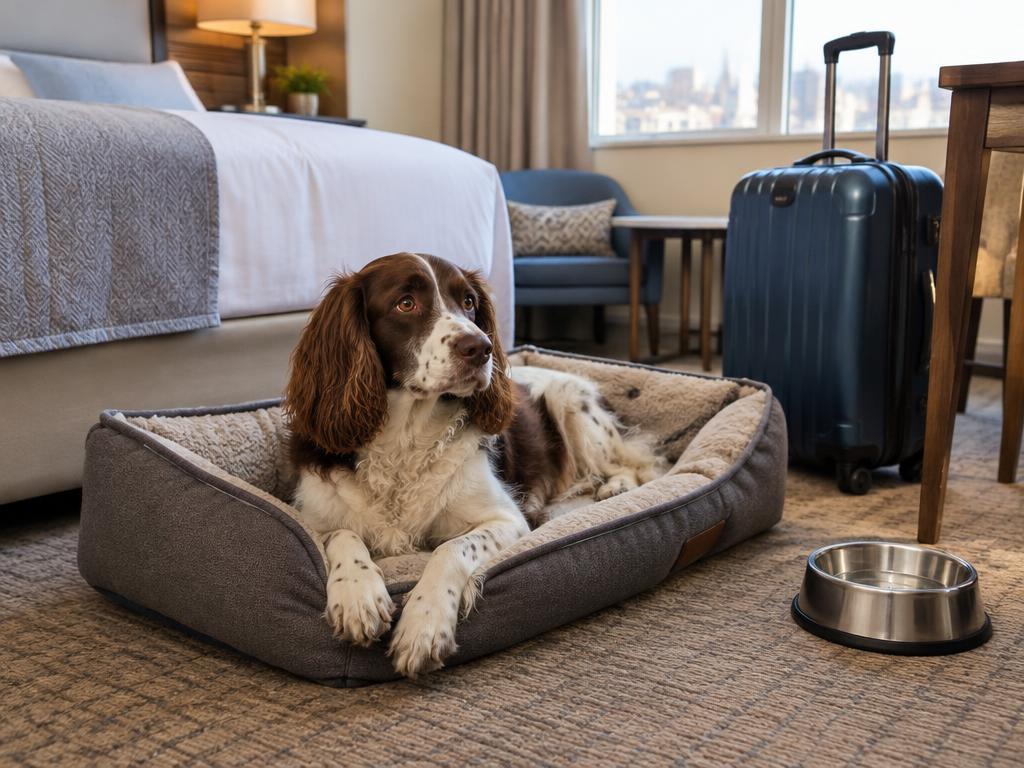
Bring usual food, measured portions, bowls, prescribed medication instructions, waste bags, cleaning supplies, and familiar bedding. Pack a secure leash, well-fitted walking equipment, and current identification. Keep veterinary contact details and property-required records accessible. Use an appropriate secured crate or vehicle restraint and plan breaks. Discuss significant travel difficulties with your veterinarian rather than introducing unfamiliar sedating products for the trip.
- Carry enough regular food for delays.
- Bring a recent photo and update microchip registration details.
Step 3: Practice portable settling
Reward resting on a washable mat at home, then practice in calm dog-permitted places. Gradually introduce mild sounds and brief periods when you move around. Maintain existing comfortable crate skills without suddenly extending confinement. A hotel should not be the first place your dog encounters a new crate, unfamiliar sleeping arrangement, or separation. Make short practice sessions rewarding and end before frustration appears.
Good to know: Bring the same mat used in practice so familiar texture and scent travel with you.
Step 4: Plan an unhurried arrival
Allow a toilet break and quiet sniffing walk before entering. If traveling with another adult, one person can check in while the other stays with the dog where permitted. Keep a secure leash hold in corridors and allow space from strangers and dogs. Avoid unwanted greetings. At the room, ensure your dog is safely beside you before opening the door or moving luggage inside.
Step 5: Inspect and arrange the room
Before free exploration, scan for dropped medication, food, cleaning products, wires, and rubbish, including beneath furniture. Secure balconies and windows. Place water and bedding in a quiet area away from the entrance without obstructing exits. Protect surfaces as required and use your own supplies, not hotel crockery or towels. Supervise exploration closely if your dog scavenges or chews.
- Move tempting snacks and bins out of reach.
- Check door latches and prevent balcony access.
Step 6: Manage noise and time apart
Keep meals, walks, and bedtime close to the usual routine. Reward calm reactions to corridor sounds and use low steady background sound if helpful without disturbing neighbors. Never punish barking or leave your dog to panic. Even where unattended stays are permitted, only attempt absences your dog comfortably manages. A camera cannot replace support; arrange suitable care or dog-friendly outings when needed.
Good to know: Coordinate housekeeping so staff never enter with your dog loose or unexpectedly alone.
Step 7: Leave responsibly and review the stay
Use designated toilet areas and clean up immediately. Blot indoor accidents, use appropriate pet-safe cleaning products, and tell staff about remaining damage. Before checkout, collect toys and food from beneath furniture, remove waste, and secure your dog during luggage trips. Review what helped settling and what caused difficulty. Choose a quieter room, shorter stay, or different arrangement next time if necessary.
This guide was drafted with AI assistance and published by the Pawlito team. It has no formal source list yet. Spotted an error? Tell us and we'll correct it. Read our editorial policy.
Ask about this guide
Leave a comment or a question. Comments are public, so use a first name only and don't include emails, phone numbers or addresses. An automated assistant may reply straight away with general suggestions — it can't diagnose your pet.