How to Keep a Rabbit's Teeth Healthy With the Right Diet
Support rabbit teeth health with the right hay, sensible portions, and daily feeding habits that encourage chewing and catch problems early.
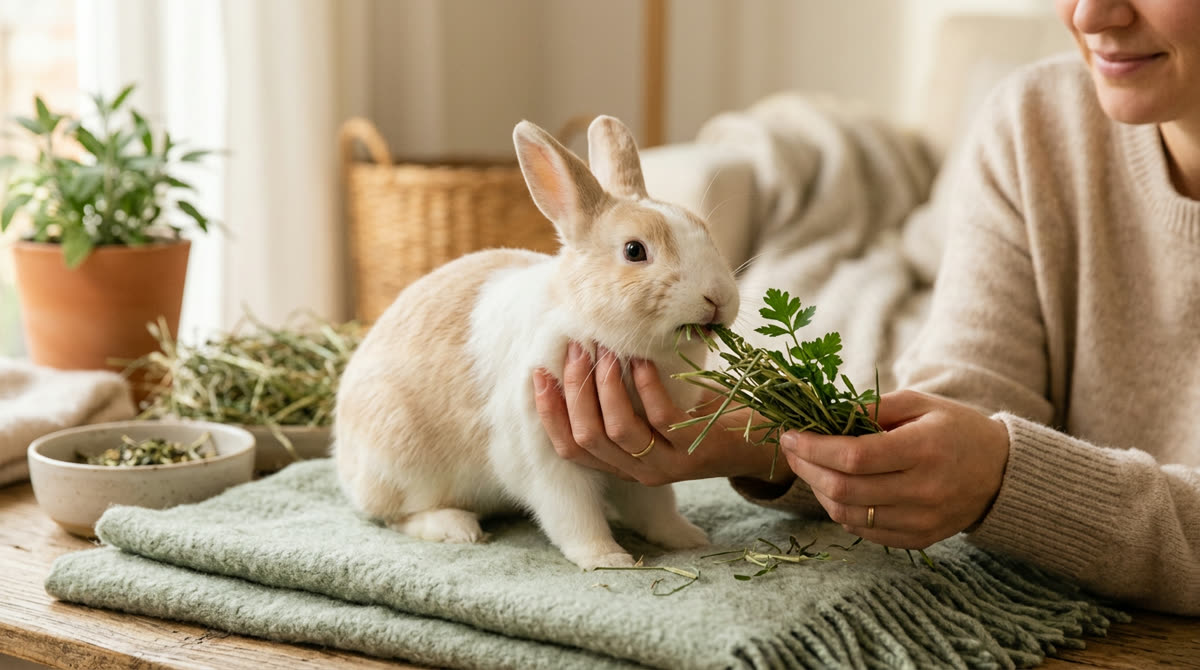
A calm, safety-first approachThis guide provides general education. Contact your veterinarian when symptoms are painful, persistent, or unusual.
- 1
Check your rabbit’s eating habits before changing the diet
Start by watching your rabbit eat for 10–15 minutes, noting whether they willingly chew hay, handle leafy greens, and finish their usual pellets without dropping food. A rabbit’s incisors and cheek teeth grow continuously, and long periods spent chewing fibrous plants help maintain normal wear through repeated grinding movements. Good rabbit teeth health therefore depends more on an appropriate, hay-based diet than on providing something unusually hard to bite. If your rabbit seems comfortable, record their current foods, approximate portions, body weight, and usual droppings over 2–3 days so you have a practical baseline for dietary changes. Do not assume a rabbit that still accepts banana or pellets has a healthy mouth, because a painful rabbit may avoid hay while continuing to eat easier foods. Arrange a prompt veterinary assessment for new selective eating, food falling from the mouth, a wet chin, or unexplained weight loss rather than treating these signs as simple fussiness. If your rabbit stops eating, produces markedly fewer or no droppings, becomes lethargic, or develops a swollen abdomen, stop dietary experimentation and contact a rabbit-experienced veterinarian immediately; do not wait overnight.
- Record the types and amounts of food offered.
- Watch for slower chewing or food dropping.
- Compare droppings with your rabbit’s normal output.
- Find a rabbit-experienced veterinarian before an emergency.
Good to know: Diet supports normal tooth wear but cannot correct every dental problem; jaw alignment, previous injury, and other factors can also affect the teeth.
- 2
Make unlimited grass hay the foundation
For a healthy adult rabbit, provide unlimited grass hay around the clock, aiming for hay or suitable fresh grass to make up roughly 80–90% of the overall diet. Use a loose pile at least as large as your rabbit’s body as a starting visual guide, then replenish it whenever supplies run low rather than treating that pile as a daily limit. Long-strand hay encourages the sustained chewing and grinding that support healthy tooth wear while also supplying the fiber needed for normal digestive function. Put generous amounts beside or above the litter tray, where many rabbits naturally like to eat, and add a second hay station near a favorite resting spot. Choose a stable feeder with openings that cannot trap the rabbit’s head or legs, and position the hay so it can be reached without stretching awkwardly. Top up the hay at least morning and evening, remove wet or urine-soaked material promptly, and offer fresh handfuls throughout the day if that renews interest. Avoid letting pellets, vegetables, or treats keep the bowl full while the hay remains untouched, because nutritional variety cannot replace the prolonged chewing that forage provides.
- Keep hay available day and night.
- Provide at least two easy-to-reach feeding spots.
- Remove damp or soiled hay daily.
- Check that hay is actually being eaten, not just scattered.
Good to know: A refill immediately after cleaning the litter tray can encourage grazing, but keep the main hay supply out of the area your rabbit urinates on.
- 3
Choose hay suited to your rabbit’s age and preferences
For most healthy adults, timothy, orchard grass, meadow grass, and oat hay are useful options, and offering two varieties can make the hay supply more appealing. Choose hay that smells fresh and grassy, feels dry, and contains recognizable long strands rather than mostly dusty fragments. Reject any batch that smells musty, feels damp, or shows visible mold, and store the rest in a dry, ventilated container away from household chemicals. Do not judge quality by color alone, since safe, nutritious hay can include golden strands, and do not assume the coarsest stalks automatically provide the best dental care. If your rabbit dislikes one texture, offer separate handfuls of two or three grass hays for several days and compare what is genuinely eaten. Alfalfa is a legume hay with more protein and calcium than typical grass hays, so it is commonly used for growing rabbits or particular nutritional needs rather than as the default forage for healthy adults. For a rabbit younger than about 7 months, one that is pregnant or nursing, or one that is underweight or has a medical history, ask your veterinarian to tailor the forage plan instead of applying adult feeding rules.
- Try timothy, orchard grass, meadow, or oat hay.
- Look for long strands and a fresh smell.
- Avoid damp, moldy, or excessively dusty batches.
- Match the hay plan to age and health needs.
Good to know: Consistent hay consumption matters more than loyalty to a particular variety; a suitable grass hay your rabbit enjoys is better than a supposedly ideal hay they ignore.
- 4
Measure pellets so they do not displace hay
Choose a plain, uniform, high-fiber rabbit pellet rather than a muesli-style mix containing seeds, corn, dried fruit, or colored pieces that encourage selective eating. For healthy adults, look for a grass-hay-based product with approximately 18% or more crude fiber, while remembering that even a high-fiber pellet does not replace long-strand hay. A commonly used starting range is about 1/8–1/4 cup of pellets daily for a 5-pound adult rabbit, but the correct allowance depends on the product’s calorie density, body condition, activity, and veterinary advice. Measure the full daily portion with a level scoop or kitchen scale, then divide it into two small meals so family members do not accidentally provide multiple allowances. Keep unlimited hay available before, during, and after pellet meals, and consider scattering the measured pellets through a clean foraging area rather than repeatedly filling a bowl. If pellet intake is excessive, reduce it gradually over 1–2 weeks while checking hay consumption, droppings, and body weight rather than abruptly removing a familiar calorie source. Never sharply restrict pellets in an underweight rabbit or one that already struggles to eat hay, because dental discomfort or another health issue may need assessment before the diet can safely change.
- Select plain pellets without sweet or seed-based additions.
- Measure one shared daily allowance.
- Adjust portions to body condition and product guidance.
- Reduce excess pellets gradually, not overnight.
Good to know: Pellets marketed as crunchy or tooth-cleaning still require far less prolonged chewing than hay; their hardness is not a reliable guide to dental benefit.
- 5
Add leafy greens and dependable drinking water
Use washed leafy greens to add dietary variety and moisture while keeping hay as the main source of chewing time and fiber. For a healthy adult already accustomed to greens, roughly 1 packed cup per 2 pounds of body weight daily is a common starting guide, adjusted to appetite, body condition, digestive tolerance, and veterinary advice. Offer a rotation of rabbit-safe choices such as romaine lettuce, green leaf lettuce, cilantro, basil, and endive rather than relying on carrots or fruit as the vegetable portion. Introduce only one unfamiliar green at a time, beginning with a small leaf or sprig and observing appetite and droppings for 24–48 hours before increasing the amount. Serve greens washed and lightly wet if your rabbit enjoys them, but discard uneaten portions before they wilt or become contaminated. Provide fresh water continuously in a heavy ceramic bowl, which many rabbits find easier to drink from than a bottle, and wash and refill it at least daily. If your rabbit uses a bottle, check its flow morning and evening and offer a bowl too, since adequate hydration supports normal eating and digestion even though water itself does not wear down teeth.
Good to know: Persistent soft stools, repeated uneaten cecotropes, or reduced appetite deserve veterinary advice; watery diarrhea, especially in a young rabbit, requires urgent attention.
- 6
Keep treats small and choose safe chewing enrichment
Treat fruit and carrot root as occasional extras rather than foods that improve rabbit dental health, because their sugar and calories can reduce interest in hay. For a healthy medium-sized adult, keep any fruit serving to about 1 teaspoon on an occasional treat day, and use part of the measured pellet allowance or a favorite herb for routine rewards. Skip yogurt drops, honey-coated sticks, sweetened cereal treats, and seed bars, even when the packaging features a rabbit or makes dental claims. Add chewing enrichment with pesticide-free, correctly identified apple or willow twigs from a reliable source, untreated rabbit-safe wooden toys, or a hay-filled cardboard tube slit lengthwise to prevent trapping. Supervise new toys and remove items that splinter, expose staples or glue, or are swallowed in substantial nonfood pieces. These activities can encourage natural gnawing and reduce boredom, but chewing a wooden object is not a substitute for the grinding action involved in eating forage. Do not use mineral blocks, salt licks, antlers, or unusually hard objects as a tooth-filing treatment, because a balanced diet generally does not require these supplements and hard-object chewing cannot correct abnormal teeth.
- Reward with herbs or pellets from the daily allowance.
- Keep sugary treats small and occasional.
- Choose untreated, rabbit-safe chewing materials.
- Remove damaged or heavily swallowed nonfood toys.
Good to know: Never clip or file your rabbit’s teeth at home; teeth can fracture, and proper examination or treatment may require specialized equipment and anesthesia.
- 7
Improve hay acceptance without forcing a sudden switch
If your rabbit has always eaten little hay but otherwise appears well, improve presentation and reduce dietary competition gradually rather than withholding all familiar food until they give in. Offer small, fresh handfuls 3–4 times daily, place a second grass-hay variety beside the usual one, and try a wide tray if pulling strands through a rack seems difficult. Tuck a few familiar herb leaves among the hay or offer hay immediately after exercise, but avoid coating it with juice, molasses, or other sugary flavorings. When changing pellet brands, a practical 7–14-day transition is to mix approximately 25%, then 50%, then 75% new pellets into the old food, allowing several days at each stage if appetite and droppings remain normal. Fresh grass can also provide valuable forage, but introduce it in small amounts from a pesticide-free area and increase gradually rather than offering an unrestricted grazing session to an unaccustomed rabbit. Never feed lawn-mower clippings, which can heat and ferment quickly and may contain contaminants or chopped unsafe plants. If hay refusal is new, persists despite easy access and fresh choices, or accompanies smaller droppings, slow chewing, food dropping, or weight loss, contact your veterinarian instead of continuing to experiment with textures.
Good to know: Do not try to starve a rabbit into eating hay, and do not start syringe-feeding a rabbit that has stopped eating without veterinary guidance, particularly if there is bloating or possible obstruction.
- 8
Monitor comfort, droppings, and weight
Build a 2-minute check into morning and evening feeding: confirm that your rabbit approaches food, chews comfortably, drinks, and produces their usual quantity and size of droppings. Watch hay consumption as closely as pellet consumption, since an empty pellet bowl can hide a meaningful decline in fibrous food intake. Weigh your rabbit weekly during diet changes using the same digital pet scale or a secure container on a suitable scale, at approximately the same time of day. Record the result in grams, and discuss a consistent downward trend with your veterinarian, especially if your rabbit loses around 5% of body weight or shows any eating changes. Look externally for a damp chin, saliva-matted chest fur, facial swelling, new eye discharge, or a reluctance to groom, recognizing that these signs need assessment rather than a home diagnosis. You may briefly look at the front teeth only if your rabbit tolerates gentle handling, but do not pry the mouth open, insert tools, or assume normal-looking incisors mean the cheek teeth are healthy. Contact a veterinarian promptly for these changes, and seek immediate advice for stopped eating, markedly reduced or absent droppings, pronounced lethargy, or apparent pain rather than waiting for a scheduled weight check.
- Check appetite and droppings twice daily.
- Track actual hay intake.
- Weigh weekly during dietary changes.
- Watch for saliva, swelling, or food dropping.
Good to know: Use a nonslip surface close to floor level for weighing and handling, and support the hindquarters; struggling or falls can seriously injure a rabbit.
- 9
Arrange dental follow-up and maintain the routine
Schedule a rabbit-experienced veterinary examination at least annually, with more frequent visits if your rabbit has previous dental problems, weight changes, or other ongoing health concerns. Your veterinarian may recommend checks every 3–6 months for an individual at higher risk, but the interval should reflect that rabbit’s findings rather than a universal timetable. Bring a 3-day food record, recent weights, and a short video of any unusual chewing so the discussion includes what happens at home as well as the examination findings. Ask whether a more complete cheek-tooth examination or imaging is needed, because an awake look at the mouth cannot always reveal problems below the gumline or at the back of the mouth. If dental treatment is required, follow the veterinary feeding and monitoring plan closely, including instructions about assisted feeding and any prescribed medicines, instead of expecting hay alone to reverse the problem. Do not fast your rabbit before an appointment or procedure unless the treating veterinarian gives specific instructions, and ask whether you should bring their usual hay, pellets, and greens. Once eating is stable, keep unlimited appropriate forage, measured pellets, modest greens, fresh water, and daily observation as permanent habits—the most useful dietary approach to rabbit teeth health is consistent, comfortable chewing over a lifetime.
Good to know: A good diet can reduce some dental risks, but rabbits with abnormal tooth alignment or established dental disease may still need lifelong professional monitoring and treatment.


Ask about this guide
Leave a comment or a question about your own pet and the Pawlito assistant replies right away with practical next steps.