How to Rabbit-Proof Your Home
Learn how to rabbit-proof your home with safe cord protection, secure barriers, rabbit-friendly flooring, and practical checks that help prevent chewing injuries and escapes.
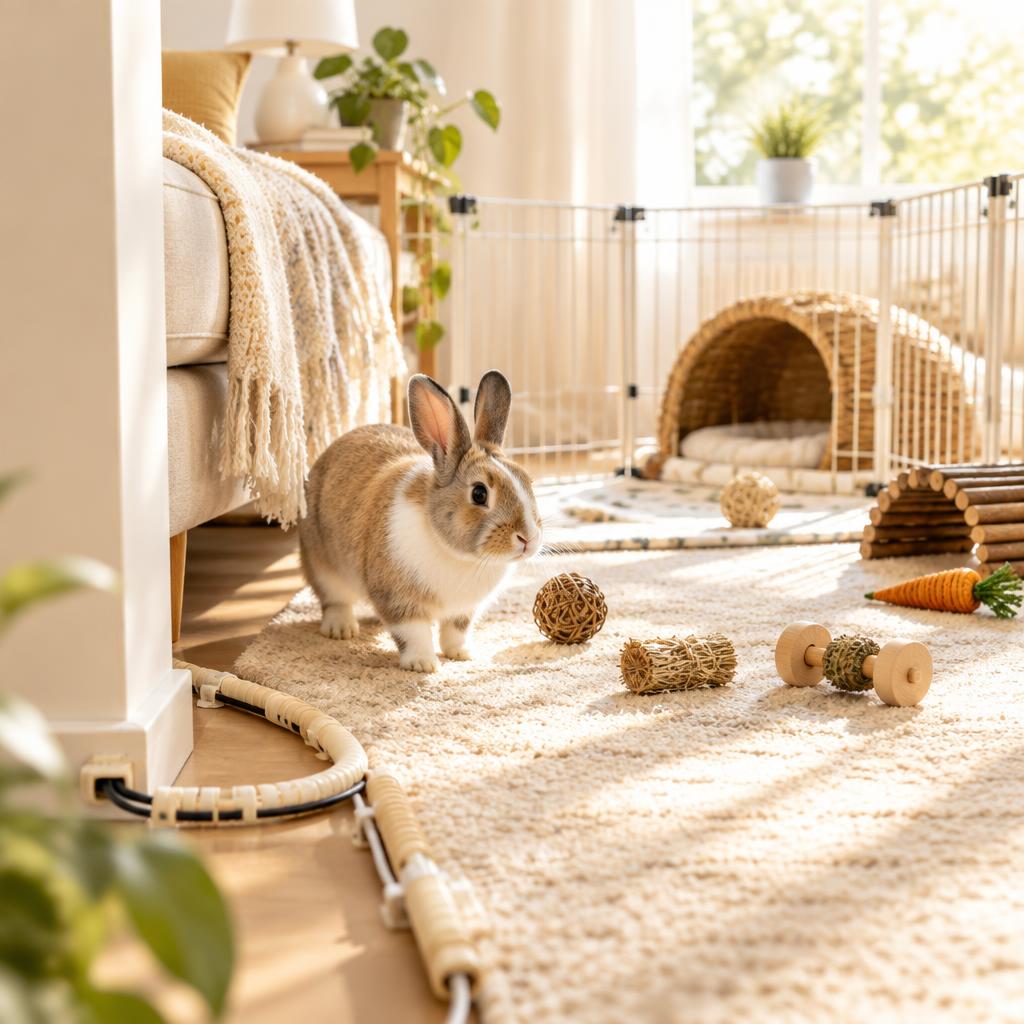
A calm, safety-first approachThis guide provides general education. Contact your veterinarian when symptoms are painful, persistent, or unusual.
- 1
Step 1: Set up a safe home base
Start to rabbit-proof your home by choosing one quiet, temperature-controlled room or a generous exercise-pen area where your rabbit can move freely while you work on the rest of the house. Get down to floor level and look for anything within reach of a curious nose, including hazards accessible from boxes, chairs, and other potential launching points. Choose a sturdy enclosure with smooth edges, a secure entrance, and bar spacing that will not allow your rabbit’s head to become trapped, taking their size and age into account. Make the barrier high enough to prevent jumping out, and keep furniture or hideouts away from its edges so they cannot become escape steps. Provide room for several hops, a full stretch, and separate resting, feeding, and litter areas rather than treating a small cage as a permanent living space. Watch your rabbit closely during their first sessions in the enclosure, adjusting the setup if they climb, squeeze through gaps, or push the panels out of place.
- Quiet location away from direct sun
- Sturdy, securely connected panels
- No head-sized gaps or sharp edges
- Separate food, rest, and toilet areas
Good to know: Photograph the room from floor level before setting up; the lower viewpoint often reveals loose cables and narrow gaps that are easy to overlook.
- 2
Step 2: Put electrical cords completely out of reach
Unplug accessible appliances before rearranging cables, then trace every cord from the outlet to the device, including chargers, lamps, routers, and power strips. The safest approach is to move wiring entirely outside your rabbit’s accessible area, such as behind a securely mounted solid barrier or inside an appropriately rated, closed cable raceway. Ordinary split-plastic sleeves and spiral wraps are not chew-proof, so do not rely on them as the only protection against an electrical injury. Secure power strips and dangling cable loops where your rabbit cannot reach them from either the floor or nearby furniture, while preserving the ventilation required by the equipment. Inspect protected wiring regularly and stop using any cable with tooth marks, exposed conductors, or damaged insulation until it has been safely replaced. If your rabbit bites a live cord or may have received a shock, disconnect power before touching them if it is safe to do so, and seek emergency veterinary care even if they initially appear normal.
- Phone and laptop chargers
- Lamp and extension cords
- Router and television cables
- Power strips beneath furniture
- Adjustable furniture wiring
Good to know: Create a charging station outside the rabbit-accessible area so a visiting phone or laptop does not introduce a new hazard.
- 3
Step 3: Remove plants, chemicals, and swallowable objects
Remove houseplants from the rabbit-accessible area unless you have confirmed that the exact species is safe for rabbits, and remember that fallen leaves can travel beyond a plant stand. Keep fertilizers, potting additives, pesticides, cleaning products, medicines, and human foods in closed cupboards that your rabbit cannot nudge open or reach by climbing. Pay particular attention to bags and low tables, where visitors may leave chewing gum, snacks, tablets, or other items that do not normally live in the room. Sweep up rubber bands, hair ties, coins, foam fragments, and small toy parts, since chewing and swallowing an object can create risks even when it is not chemically toxic. Do not assume that a product labeled natural or pet-safe is suitable for a rabbit to lick or chew, and keep your rabbit away from treated surfaces until label requirements are met and the area is dry. If an exposure or ingestion occurs, contact a veterinarian or animal poison service promptly with the product details, and do not try to induce vomiting because rabbits cannot vomit.
- Plants and fallen leaves
- Medicines and cleaning supplies
- Food bags and uncovered bins
- Rubber bands and small toy parts
Good to know: Keep your regular vet’s number, the nearest rabbit-capable emergency clinic, and a local animal poison service saved on your phone.
- 4
Step 4: Protect floors, trim, and furniture safely
Give your rabbit secure footing on slippery tile or wood by adding flat, washable rugs or mats that stay in place without exposed tape, loose backing, or curled edges. Check these coverings daily and remove them if your rabbit pulls out or swallows fibers, since no fabric or rubber-backed mat should be treated as edible. Protect baseboards, door frames, and furniture legs with securely fitted smooth guards or freestanding barriers that cannot tip over, expose sharp edges, or trap a paw. Keep guard fasteners inaccessible, and avoid leaving adhesive strips, staples, or loose plastic edges where they can become the next chewing target. Use barriers rather than homemade chili mixtures, essential oils, or household chemical deterrents, which can irritate your rabbit or expose them to harmful substances. If chewing persists at a particular spot, block access and offer an appropriate chew nearby rather than punishing your rabbit for a normal behavior.
- Stable, nonslip walking surfaces
- No loose carpet threads or fringe
- Smooth guards with hidden fasteners
- No accessible foam or upholstery stuffing
Good to know: Test a new mat in a small supervised area before covering the whole room, and remove it promptly if your rabbit begins eating it.
- 5
Step 5: Block hiding traps, moving mechanisms, and escape routes
Inspect the spaces behind appliances, beneath cabinets, and under sofas, then block any gap where your rabbit could become stuck or reach hidden wiring. Pay special attention to recliners, sofa beds, rocking chairs, and adjustable beds, because their moving mechanisms can seriously injure a rabbit hiding underneath or inside them. Keep these items physically inaccessible, and make sure everyone knows not to operate them whenever a rabbit could be nearby. Secure exterior doors, balcony entrances, low windows, and other escape routes with appropriate barriers, remembering that an insect screen alone is not a dependable rabbit barrier. Block access to stairs and high ledges until you have assessed them carefully, and never assume that a rabbit capable of climbing up can safely get back down. Include laundry machines, cupboards, and storage rooms in your search routine, checking for your rabbit before closing doors or starting equipment.
- Behind refrigerators and other appliances
- Inside or beneath reclining furniture
- Balconies, windows, and exterior doors
- Stairs and elevated platforms
- Laundry machines and storage spaces
Good to know: Use a solid, secured under-sofa barrier rather than stuffing the gap with pillows, which rabbits may move, chew, or burrow through.
- 6
Step 6: Provide appealing places to chew, dig, and toilet
Make the safe options easy to find by placing fresh grass hay, an appropriate litter tray, and a stable water bowl in your rabbit’s home base. Choose a tray with an accessible entrance and use a rabbit-appropriate paper-based litter, avoiding clumping cat litter, clay litter, and strongly scented or aromatic wood products. Offer rabbit-safe untreated chew items from a reputable source, and check that wooden toys have no paint, varnish, glue, staples, or unknown wood species. A plain cardboard hideout with two exits can provide shelter and chewing opportunities, provided you remove tape and staples and replace it if your rabbit eats substantial amounts rather than simply shredding it. For digging, try a shallow box filled with plain shredded paper, supervising its use and removing the material if your rabbit begins ingesting it. Rotate a few safe activities and reward your rabbit for using them, because meeting their behavioral needs makes household protection more effective than barriers alone.
- Fresh grass hay within easy reach
- Accessible tray with suitable litter
- Untreated, rabbit-safe chew toys
- Stable hideout with two exits
- Supervised digging box
Good to know: Place a legal chewing or digging option near a repeatedly targeted area, while keeping the original hazard securely blocked.
- 7
Step 7: Establish household rules before allowing more freedom
Explain the rabbit-proofing setup to everyone in the household, including children and visitors, so doors, barriers, and stored items stay consistently secure. Ask people to interact at floor level and let the rabbit approach, rather than chasing them or picking them up unnecessarily, since struggling or falling can cause serious injury. Keep dogs and cats physically separated at first, and do not assume that a calm introduction means they can safely share space without close supervision. During cleaning, repairs, deliveries, or furniture rearrangement, return your rabbit to their secure home base before new hazards or open doors appear. Maintain a comfortable, well-ventilated environment away from direct heat and intense sunlight, and shield fans and heaters so your rabbit cannot reach cords or moving and hot parts. Discuss any medical concerns with a rabbit-experienced veterinarian, and seek urgent advice for signs such as reduced eating, fewer droppings, labored breathing, collapse, or suspected heat stress.
- Close doors and relatch barriers
- Keep bags off the floor
- Interact gently at rabbit level
- Separate pets when unsupervised
- Secure the rabbit before household work
Good to know: Post a short reminder near the room entrance: check the rabbit’s location, close the door, and keep bags and cables out of reach.
- 8
Step 8: Test the setup and repeat your safety checks
Introduce your rabbit to the prepared space in short, closely supervised sessions when you have time to watch rather than relying on a camera or listening from another room. Notice where they sniff, dig, climb, and test barriers, using those choices to identify weaknesses before allowing longer access. If they reach a hazard, calmly guide them away, return them to the safe home base, and fix the problem instead of repeatedly interrupting without changing the setup. Expand access one area at a time only after that space has been inspected and your rabbit has explored it safely under supervision. Perform a quick daily scan for dropped objects, shifted barriers, damaged mats, and fresh chew marks, then do a more thorough check whenever furniture, appliances, or decorations change. Remember that rabbit-proofing is an ongoing routine rather than a guarantee, and contact a veterinarian promptly after any suspected injury, dangerous ingestion, or concerning change in eating, droppings, or behavior.
- Check barriers and door latches
- Inspect cables and protective guards
- Remove damaged toys and coverings
- Look beneath furniture for debris
- Recheck after every room change
Good to know: Keep a brief list of your rabbit’s favorite trouble spots and include those locations in every daily inspection.



Ask about this guide
Leave a comment or a question about your own pet and the Pawlito assistant replies right away with practical next steps.