How to Set Up a Sand Bath for a Gerbil
Give your gerbil a comfortable sand bath with a safe product, stable container, and simple cleaning that supports natural grooming.
- Written by
- Pawlito Editorial Team · AI-assisted guide
- Professional review
- Not yet reviewed by a veterinarian
- Published
- Last updated
In this guide (7 steps)
Step 1: Choose bathing sand rather than dust
Buy sand specifically suitable for gerbils, checking composition rather than relying on product names. Choose low-dust, additive-free fine granular sand, not powder. Avoid chinchilla dust, scented materials, calcium reptile sand, dyes, and deodorizing additives. Outdoor sand has uncertain contamination. If ingredients or suitability are unclear, ask a small-mammal veterinarian before use. A product sold for another species may not be appropriate.
Good to know: Gently test a little in an empty dish; a lingering powder cloud is a reason to choose another product.
Step 2: Choose a stable bathing dish
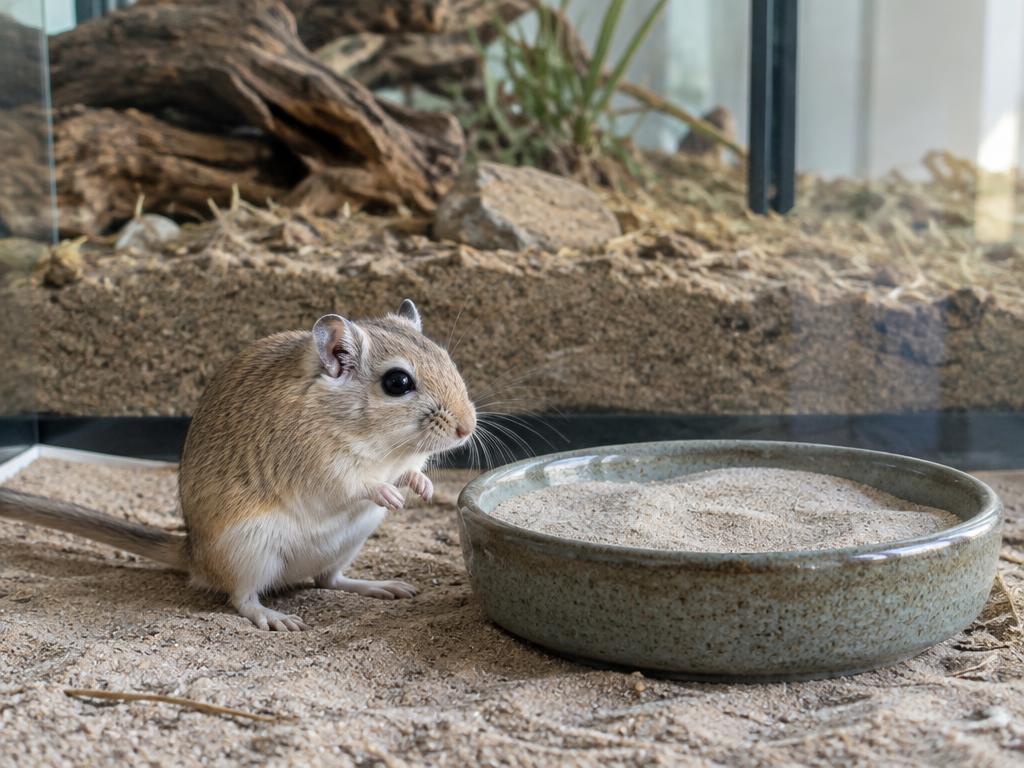
Use a heavy ceramic or smooth chew-resistant container that cannot tip during entry. Allow turning and rolling with an easy entrance and exit. Check for chips, sharp edges, and foot-trapping gaps. Avoid lightweight chewable plastic. Wash with mild unscented soap, rinse thoroughly, and dry fully before adding sand. Replace damage rather than attempting repairs with glue or tape inside the habitat.
- Provide a comfortable entrance and exit.
- Replace chipped or cracked dishes immediately.
Step 3: Support the bath securely
Place on a solid stable surface away from water and food. Support heavy objects independently of deep bedding so tunnels cannot undermine them and trap an animal. Leave clear access while preserving deep digging substrate elsewhere. Avoid spots beneath risky drops from shelves. Gently press each edge to check stability and ensure the dish cannot slide unexpectedly when animals climb into it.
Good to know: If bedding fills the bath, use a securely supported low platform instead of reducing digging depth.
Step 4: Add a shallow layer of sand
Begin with roughly two to three centimeters, adjusting to container shape and your gerbil's movement. Allow rolling without immediately reaching a slippery base. Keep sand dry and loose rather than packing it down. Do not add water, oils, powders, or grooming products. Refill with clean fresh material instead of mixing dirty sand back into the supply. Keep spills manageable without creating a deep difficult entrance.
- Keep sand below the rim.
- Store spare sand in clean dry packaging.
Step 5: Allow voluntary exploration
Introduce during natural active hours and allow investigation without placing or holding your gerbil inside. Some roll immediately; others dig or investigate over several sessions. Stay quietly nearby without tapping or repeatedly moving the dish. Never rub sand into the coat or use water baths for routine grooming. Remove a setup causing obvious distress and reconsider stability, sand type, and access before trying again.
Step 6: Clean and monitor shared access
Inspect daily and remove droppings, damp spots, food, and bedding with a dedicated scoop. Replace all sand when damp, dirty, or unpleasant smelling; sifting cannot clean contamination. Wash and dry between full changes. For established pairs, watch access for chasing or guarding. If needed, offer another accessible bath without disrupting the familiar enclosure. Avoid scented products to disguise a toilet smell.
Good to know: If used as a toilet, clean more often rather than adding deodorizer.
Step 7: Review comfort and warning signs
A clean dry bath may remain available if comfortably used, but remove damage or contamination promptly. Monitor skin, eyes, sneezing, and breathing. Persistent scratching, irritation, discharge, or breathing changes warrants stopping the product and contacting a small-mammal veterinarian. Breathing difficulty requires urgent care. Never introduce medicated powders or skin treatments without instructions. Adjust routines to actual cleanliness and behavior rather than assuming one setup always works.
This guide was drafted with AI assistance and published by the Pawlito team. It has no formal source list yet. Spotted an error? Tell us and we'll correct it. Read our editorial policy.


Ask about this guide
Leave a comment or a question. Comments are public, so use a first name only and don't include emails, phone numbers or addresses. An automated assistant may reply straight away with general suggestions — it can't diagnose your pet.