How to Set Up a Proper Guinea Pig Cage
Give your guinea pigs the space, bedding, hiding spots and company they need to thrive.
- Written by
- Pawlito Editorial Team · AI-assisted guide
- Professional review
- Not yet reviewed by a veterinarian
- Published
- Last updated
In this guide (8 steps)
Step 1: Get the size right
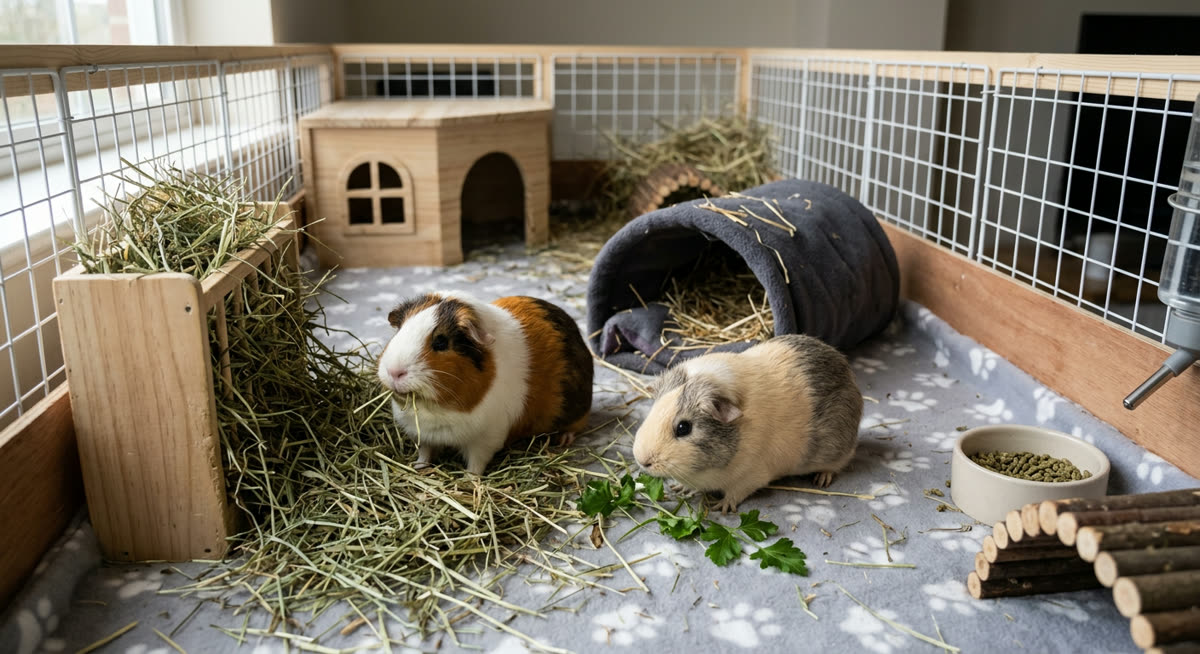
Pet shop cages are almost always too small. Two guinea pigs need a minimum of about 7.5 square feet, but 10.5 square feet or more is strongly recommended — bigger is always better. C&C grids or large pen-style enclosures offer the best space for the money. Guinea pigs are ground animals, so floor space matters far more than levels or height.
Step 2: Always keep guinea pigs in pairs or groups
Guinea pigs are highly social herd animals and a lone guinea pig is a lonely, stressed guinea pig — in Switzerland, keeping one alone is actually illegal. Keep at least two, ideally a neutered male with females or a bonded same-sex pair. Introduce new pigs gradually on neutral territory. Companionship is not optional for this species.
Good to know: Two guinea pigs are barely more work than one, but twice as happy.
Step 3: Choose safe, comfortable bedding
Fleece liners over absorbent pads are popular, economical and gentle on feet, washed every few days. Paper-based bedding or kiln-dried pine are good alternatives. Avoid cedar and non-kiln-dried pine, whose oils harm respiratory systems, and avoid cat litter entirely. Whatever you choose, spot-clean daily and refresh fully at least weekly.
Step 4: Provide unlimited hay
Hay is not bedding or a treat — it is eighty percent of a guinea pig's diet and must be available at all times. Timothy hay is the standard for adults. Hay keeps teeth worn down and digestion moving. Use a hay rack or pile it in a corner; guinea pigs love burrowing in it. A guinea pig without constant hay access will become ill.
- Unlimited timothy hay, refreshed daily
- Avoid alfalfa for adults — too rich in calcium
- Store hay dry and buy fresh-smelling, green hay
Step 5: Add hiding places and enrichment
Guinea pigs are prey animals who need somewhere to hide to feel safe — provide at least one hideout per pig, plus one extra. Tunnels, cardboard boxes and fleece forests add variety. A few safe chew toys keep teeth healthy. Rearrange the layout occasionally to provide novelty.
Step 6: Set up food, water and vitamin C
Use a heavy ceramic bowl for pellets that cannot be tipped, and a water bottle or heavy bowl refreshed daily. Guinea pigs cannot make their own vitamin C, so provide a measured portion of quality guinea pig pellets plus daily fresh vegetables rich in vitamin C, like bell pepper and leafy greens. Vitamin C deficiency causes scurvy, a serious and painful condition.
Step 7: Pick the right location
Place the enclosure in a family area where the pigs get social contact, but away from direct sunlight, draughts and radiators. Room temperature between 18 and 24 degrees Celsius is ideal. Keep them away from TVs and speakers at high volume. Never house guinea pigs outdoors in damp or very cold conditions.
Step 8: Establish a cleaning and health routine
Spot-clean droppings and wet patches daily, and do a full bedding change at least weekly — guinea pigs are clean animals but produce a lot of waste. Weigh your pigs weekly to catch illness early, and check teeth, nails and coat during cuddle time. Find an exotics vet before you need one. A well-kept cage smells mild, never strongly of ammonia.
Good to know: Weekly weighing is the best early-warning system you have — weight loss is often the first sign of illness.
This guide was drafted with AI assistance and published by the Pawlito team. It has no formal source list yet. Spotted an error? Tell us and we'll correct it. Read our editorial policy.
Ask about this guide
Leave a comment or a question. Comments are public, so use a first name only and don't include emails, phone numbers or addresses. An automated assistant may reply straight away with general suggestions — it can't diagnose your pet.