How to Spot Signs of Pain or Illness in Rabbits and Guinea Pigs
Learn rabbit guinea pig illness signs, recognize urgent warning changes, and know when your small pet needs veterinary care.
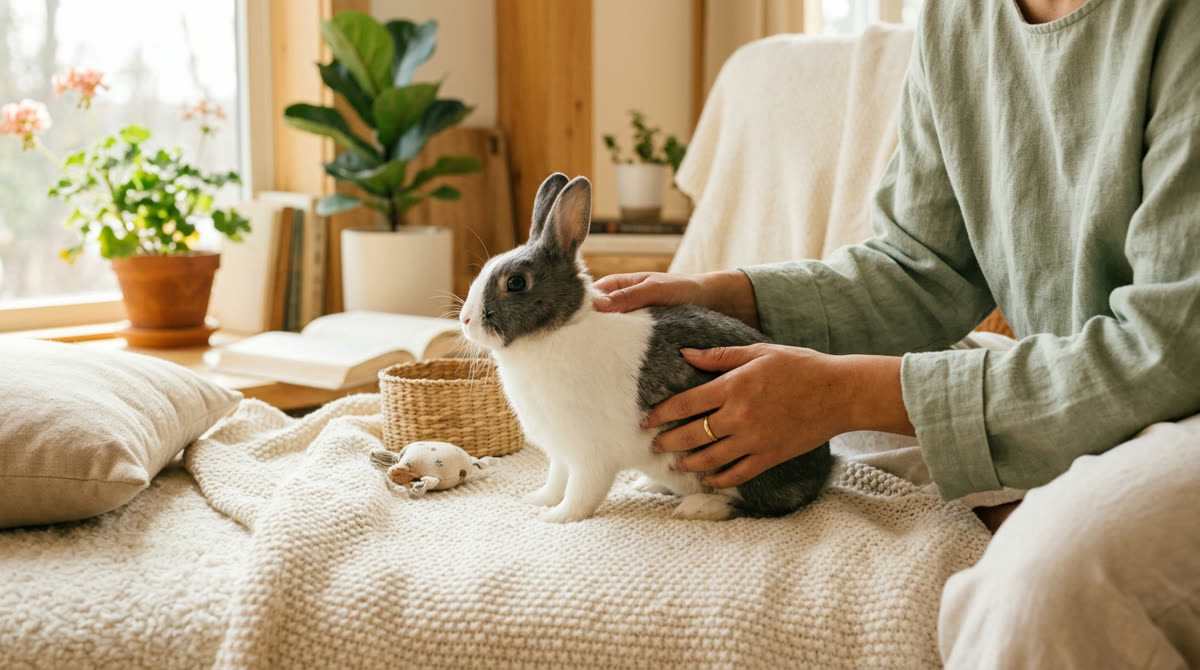
A calm, safety-first approachThis guide provides general education. Contact your veterinarian when symptoms are painful, persistent, or unusual.
- 1
Establish Your Pet’s Healthy Baseline
To spot signs of pain or illness in rabbits and guinea pigs, first learn what is normal for your individual pet, because these prey animals often hide discomfort until a problem is advanced. Spend about 5 minutes observing them at their usual breakfast and evening feeding times, noting how quickly they approach food, where they rest, and how readily they move around. Record their typical hay consumption, drinking pattern, droppings, and social behavior over 7 days, without delaying veterinary care if something already seems wrong. Weigh a healthy adult once a week on a digital kitchen or pet scale that reads in grams, using the same secure container and approximately the same time of day. Place the scale on the floor, tare the container first, and record the weight rather than relying on whether your pet feels lighter through a thick coat. Keep an accessible contact list for a rabbit- and guinea-pig-experienced veterinarian and an emergency clinic, confirming in advance which facilities actually treat these species. A baseline helps you recognize meaningful changes early, but apparently normal weight or one enthusiastic treat response does not rule out illness.
- Log weekly weight in grams.
- Observe two predictable feeding periods daily.
- Note normal droppings, posture, and activity.
- Save regular and emergency veterinary contacts.
Good to know: In a shared enclosure, briefly observe each animal eating without unnecessarily separating bonded companions; a full food bowl cannot tell you who has stopped eating.
- 2
Screen for Emergencies Before Handling
Before picking your pet up for a closer examination, watch from a short distance for 30–60 seconds and check for signs that require immediate veterinary attention. Open-mouth breathing, gasping, obvious effort with each breath, collapse, seizures, uncontrolled bleeding, or inability to stand are emergencies in both rabbits and guinea pigs. A suddenly swollen abdomen with distress, repeated straining without passing urine, or severe weakness also warrants immediate emergency advice rather than a home monitoring trial. Fly eggs or moving maggots on the skin, especially around a soiled rear end, require emergency care because flystrike can progress rapidly and extend beyond what you can see. If either species stops eating or produces markedly fewer droppings, contact a veterinarian immediately for triage, and seek emergency care when this occurs with pain, bloating, weakness, or breathing changes. Do not wait overnight or use a fixed 12- or 24-hour cutoff to decide whether a small herbivore that is not eating needs help. Stop your home examination when you find a red flag, call the receiving clinic, and prepare a secure, well-ventilated carrier lined with a nonslip towel.
- Breathing difficulty or open-mouth breathing
- Collapse, seizures, or inability to stand
- Painful swelling or straining without urine
- Fly eggs, maggots, or uncontrolled bleeding
- No eating with pain, weakness, or reduced droppings
Good to know: Never give human painkillers, leftover antibiotics, or another pet’s medication; an unsuitable drug or dose can be dangerous, and some antibiotics are particularly hazardous to these species.
- 3
Check Appetite and Droppings Together
At each feeding, confirm that your rabbit or guinea pig actually chews and swallows its usual hay and familiar foods, rather than simply approaching the bowl or picking food up. Refusing hay while accepting soft vegetables or treats can still signal a problem, so do not use a favorite snack as the only appetite test. Look for smaller, drier, fewer, or absent droppings, and photograph changes beside a ruler if doing so will help your veterinarian compare them. During routine cleaning, remove old droppings from a defined area so that you can recognize fresh output, while remembering that shared housing makes individual assessment harder. Rabbits normally produce soft, clustered cecotropes that they usually eat directly, and guinea pigs also reingest certain droppings, so seeing this behavior is not itself evidence of illness. Repeated uneaten cecotropes, a newly dirty rear end, or persistently soft stools need veterinary advice, while watery diarrhea—especially with lethargy, reduced eating, or in a young animal—needs urgent assessment. If appetite or output falls, call promptly and leave familiar hay and water available, but do not force-feed or syringe water unless a veterinarian has assessed whether assisted feeding is appropriate and explained a safe technique.
- Watch actual chewing and swallowing.
- Compare fresh droppings with the usual size.
- Check bedding and the rear end for diarrhea.
- Record the last confirmed normal meal and output.
Good to know: A distended abdomen, impaired swallowing, or breathing trouble makes improvised syringe feeding especially risky; some problems require treatment before feeding can safely begin.
- 4
Observe Breathing, Eyes, and Nose
Watch your pet breathe while resting quietly in a comfortable room, because handling, exercise, and fear can temporarily increase breathing speed and make interpretation harder. If breathing looks comfortable, count chest movements for 30 seconds and double the number, recording the result and circumstances for your veterinarian rather than treating a single number as a diagnosis. Repeated sneezing, persistent nasal discharge, noisy breathing, or a sustained change from your pet’s normal resting pattern should prompt a same-day veterinary call. Notice whether the nostrils flare, the abdomen works noticeably with each breath, or the head and neck stretch forward to breathe; these effort changes matter more than waiting for a particular respiratory-rate threshold. Examine the eyes without forcing the lids apart, looking for discharge, redness, swelling, cloudiness, squinting, or one eye held closed. A painful-looking or cloudy eye needs prompt same-day assessment, and an obvious injury, protruding eye, or accompanying breathing distress calls for emergency guidance. Avoid medicated eye drops, essential oils, vapor rubs, and steam treatments, and reduce airborne irritation with low-dust hay, unscented paper bedding, good ventilation, and no smoke or aerosol sprays nearby.
Good to know: Record a 20–30-second video of unusual breathing only if it does not delay care; keep a breathless animal in its preferred upright posture and minimize handling.
- 5
Look for Pain in Posture and Behavior
Observe your pet undisturbed for several minutes, looking for a persistent hunched posture, tightly tucked body, narrowed eyes, repeated position changes, or reluctance to leave a hiding place. In rabbits, unusually loud tooth grinding together with tension, reduced appetite, or withdrawal is concerning, while a relaxed rabbit may make gentle tooth-purring sounds during pleasant interaction. In guinea pigs, tooth chattering can express irritation or social tension rather than pain, so interpret it alongside posture, appetite, movement, and the situation. Reduced grooming, unexpected aggression, flinching during ordinary contact, or a normally sociable pet avoiding its companion can all indicate discomfort without identifying its cause. Encourage a few voluntary steps on a nonslip floor with familiar hay nearby, but never chase, stretch, or repeatedly lift an animal to test whether it hurts. Look for limping, uneven weight-bearing, dragging a limb, loss of balance, head tilt, or circling, and seek prompt veterinary advice for any new change, with inability to walk, rolling, or sudden severe weakness treated as emergencies. Remember that a quiet animal sitting still in your arms is not necessarily comfortable, and rabbits should never be placed on their backs to induce the immobile state sometimes called trancing.
- Compare posture with normal relaxed resting.
- Watch voluntary movement on a nonslip surface.
- Note new withdrawal, aggression, or grooming changes.
- Film unusual movement without making the pet repeat it.
Good to know: Rabbit facial pain scales can help trained observers notice subtle changes, but ear position or squinting alone cannot confirm or exclude pain.
- 6
Notice Dental Clues and Weight Changes
Watch a normal meal from the side for food dropping from the mouth, unusually slow chewing, repeated unsuccessful attempts to eat, or selection of only softer foods. A wet chin, saliva-matted chest, new facial swelling, or food stuck around the mouth warrants veterinary assessment even if your pet still accepts occasional treats. You may look at the front teeth if your pet tolerates gentle lip movement, but do not pry the mouth open, insert tools, or assume that normal-looking incisors mean the cheek teeth are healthy. Return to your weight log whenever eating behavior changes, and ask the veterinarian whether daily weighing is appropriate while an appointment or recovery plan is underway. A confirmed loss of about 5% from a stable adult baseline—for example, 50 grams in a 1,000-gram guinea pig—deserves a prompt call, and smaller losses also matter when accompanied by reduced appetite or abnormal behavior. Guinea pigs require dietary vitamin C, so review whether they receive fresh guinea-pig-specific pellets stored as directed and suitable daily vegetables, such as bell pepper, rather than rabbit pellets alone. Share any diet gaps with the veterinarian instead of diagnosing a deficiency or starting high-dose supplements, and do not let apparent dental discomfort postpone care for reduced eating.
Good to know: Never clip or file teeth at home; fractures and injuries can result, and assessing the back teeth generally requires veterinary equipment and sometimes sedation.
- 7
Inspect Urine, Skin, Feet, and the Rear End
During your daily check, inspect bedding and litter areas for changes in urine amount, repeated tiny wet patches, blood, or evidence that your pet strains or cries while urinating. Rabbit urine can naturally range from pale yellow to orange or reddish brown, and some mineral residue can occur, but color alone cannot reliably distinguish harmless pigment from blood. Painful urination, persistently thick or gritty deposits, a wet rear end, or a major change in drinking needs veterinary advice, while repeated attempts with no urine require emergency assessment. On the floor or another securely supported low surface, gently inspect the underside and rear, supporting a rabbit’s hindquarters and never leaving either species dangling by the front end. Part the fur to look for wounds, swelling, crusts, hair loss, urine-scalded skin, and stuck feces, and inspect the feet for redness, sores, or broken skin without squeezing tender areas. Check the rear at least daily, increasing to twice daily during warm weather or when mobility or cleanliness is impaired, because damp, soiled fur can attract flies. Seek care for sores, persistent itching, new lumps, or discharge from the genital area, and avoid full baths, picking off scabs, or applying dog-and-cat flea products unless your veterinarian specifically directs their use.
- Check urine output as well as color.
- Inspect the rear for dampness and stuck feces.
- Look between parted fur for wounds or parasites.
- Check foot surfaces without pressing sore areas.
Good to know: If you find maggots, stop grooming and contact an emergency veterinarian immediately; bathing or attempting to remove every visible larva can delay essential treatment.
- 8
Gather Useful Evidence Without Delaying Care
If a change is mild and your pet is otherwise eating, passing normal droppings, breathing comfortably, and moving normally, make a brief observation log while asking your veterinarian how soon an examination is needed. Record when the sign began, the last confirmed normal food intake and droppings, current weight, urine changes, and any recent boarding, new foods, medications, falls, or exposure to heat or chemicals. Check practical explanations such as a blocked water-bottle nozzle, an empty hay rack, wet bedding, or a cage mate guarding food, and correct them without assuming they explain every symptom. If a bottle is malfunctioning, offer fresh water in a heavy, shallow bowl as well, but contact the veterinarian if drinking or eating has already fallen or your pet seems unwell. Take a short video of unusual behavior and clear photographs of discharge, droppings, or skin changes, then ask whether the clinic wants a fresh sample brought in a clean, sealed container. Do not repeatedly palpate the abdomen, attempt a rectal temperature without veterinary instruction, or use internet symptom lists to label the problem, because several illnesses can produce similar signs. When transporting your pet, use a secure carrier with absorbent, nonslip bedding, maintain a comfortable temperature, and ask the clinic whether a bonded companion should travel too.
- Write down symptom timing and recent changes.
- Verify that food and water are accessible.
- Bring weight records, photos, and videos.
- List all medicines and supplements already given.
- Ask the clinic about samples and bonded companions.
Good to know: A cool-feeling ear or warm nose does not reliably reveal body temperature; avoid direct heating pads, ice baths, and other aggressive warming or cooling unless a veterinarian instructs you.
- 9
Follow the Care Plan and Watch for Relapse
After the examination, ask for written instructions covering the suspected problem, treatment schedule, feeding plan, expected improvement, and specific signs that mean you should call or return. Give only prescribed or veterinarian-approved treatments exactly as directed, and request a demonstration before attempting assisted feeding or any unfamiliar handling technique. During recovery, check appetite, droppings, urine, breathing, posture, and activity at least morning and evening, or more often if the veterinarian advises, and weigh daily when that forms part of the plan. Keep familiar hay, water, clean dry bedding, and easy-to-reach hiding places available, avoiding abrupt diet changes or unnecessary separation from a bonded companion unless medically required. Call promptly if improvement does not occur within the veterinarian’s stated timeframe, and seek urgent help for renewed food refusal, declining droppings, worsening pain, watery diarrhea, marked weakness, or breathing difficulty. Do not stop medication early simply because your pet seems brighter, and keep recommended rechecks because weight, dental health, wounds, or other problems may need reassessment beyond what is visible at home. Once recovered, continue routine checks and schedule wellness examinations at the interval your veterinarian recommends, commonly at least annually for healthy adults, so subtle rabbit and guinea pig illness signs are easier to catch next time.
Good to know: Before leaving the clinic, ask whom to contact after hours and what to do if a dose is missed, refused, or spilled; never double a dose on your own.

Ask about this guide
Leave a comment or a question about your own pet and the Pawlito assistant replies right away with practical next steps.