How to Socialise a Puppy With People, Dogs and Noises
Build confidence with puppy socialisation: introduce people, dogs and everyday noises safely, with practical steps and clear signs to slow down.
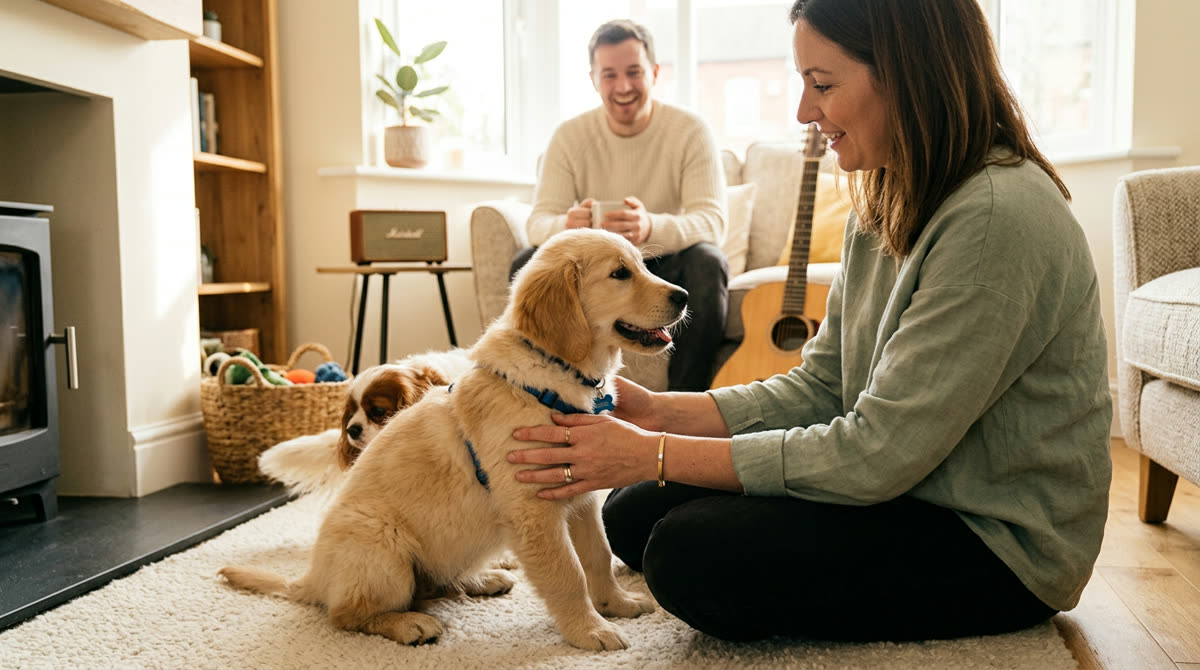
A calm, safety-first approachThis guide provides general education. Contact your veterinarian when symptoms are painful, persistent, or unusual.
- 1
Plan around your puppy’s age, health and vaccination status
Start puppy socialisation as soon as your puppy comes home, but make the goal positive, manageable experiences rather than meeting as many people and dogs as possible. The especially sensitive learning period is roughly 3 to 14 weeks of age, sometimes described as extending to 16 weeks, although confidence-building should continue through adolescence and adulthood. Book a veterinary appointment soon after arrival and ask which activities are appropriate for your puppy’s vaccination history, parasite protection and local disease risks, particularly parvovirus. You do not necessarily need to wait until the entire vaccination course is complete to begin: observing people from your arms, hearing quiet household sounds and meeting suitable visitors at home can provide useful learning opportunities. Until your vet approves public ground access, avoid dog parks, communal toilet areas and other places heavily used by unfamiliar dogs, choosing a clean private space or a secure carrier instead. Write a flexible two-week plan covering different people, suitable dogs and everyday sounds, starting with one or two brief planned experiences a day and leaving plenty of time for sleep. If your puppy is older than the early socialisation window, use the same gradual approach without trying to catch up through crowded outings or intensive exposure.
- Confirm locally appropriate outings with your vet.
- List people, dogs and noises your puppy will encounter regularly.
- Identify a clean private meeting space.
- Choose quiet times and plan an easy exit.
Good to know: Look for a puppy class that checks age-appropriate vaccination records, cleans its facilities and uses reward-based methods. Ask your vet whether its health precautions suit your puppy before booking.
- 2
Prepare rewards and learn your puppy’s comfort signals
Set up a lightweight lead, a well-fitted harness, a treat pouch and a quiet retreat, then practise using them at home before adding unfamiliar surroundings. Prepare soft, pea-sized or smaller food pieces that your puppy can swallow quickly, using some of their measured daily food allowance and keeping extra treats within about 10% of daily calories. Begin with sessions lasting around 1 to 3 minutes, ending sooner if your puppy disengages, and use a calm marker word such as “yes” when they notice something and remain comfortable. Relaxed signs include a loose body, soft eyes, normal sniffing and the ability to turn away from the experience, while repeated lip-licking, crouching, hiding, freezing or a tucked tail suggest you should reduce the challenge. A wagging tail does not automatically mean a puppy wants contact, and taking food is helpful information rather than proof that they feel safe. Choose a starting distance at which your puppy can observe without stiffening or trying to escape, whether that is 3 metres from a quiet visitor or more than 20 metres from a lively dog. Keep the lead loose and preserve an escape route, because trapping a puppy beside something frightening can turn a potentially useful introduction into a negative association.
- Bring tiny rewards, water and waste bags.
- Check harness fit according to its manufacturer’s instructions.
- Identify relaxed and worried body-language signals.
- Keep a quiet room, carrier or route home available.
Good to know: Never withhold meals to make a frightened puppy participate. If they stop accepting food they normally enjoy, create more distance and consider ending the session.
- 3
Introduce people without insisting on greetings
Begin with one calm adult in a familiar room or clean private garden, asking the visitor to sit or stand sideways and initially ignore your puppy. Let your puppy watch from whatever distance feels comfortable, and reward calm observation without pulling them forward or using food to lure them within touching distance. If your puppy approaches, the visitor can gently toss a treat behind the puppy so they can retreat to eat and freely decide whether to return. When the puppy clearly seeks contact, invite the person to stroke the shoulder or chest for 2 to 3 seconds, then pause and continue only if the puppy chooses to stay engaged. Across separate short sessions, introduce people with different voices, appearances and movements, including someone wearing a hat or using a walking aid, without treating real people as props or encouraging intrusive interactions. For children, start with one calm child seated at a comfortable distance while an adult actively supervises, with clear rules against hugging, chasing, lifting or putting faces near the puppy’s face. Practise seeing people without greeting them too, because successful socialisation with people means feeling safe around strangers, not expecting attention from everyone.
- Ask visitors to avoid staring, looming or reaching overhead.
- Let the puppy approach and leave voluntarily.
- Keep early visits quiet and brief.
- Separate children and puppies whenever active supervision stops.
Good to know: Do not hand your puppy from person to person at a gathering. A quiet retreat behind a gate lets them observe without being surrounded.
- 4
Make gentle handling part of socialisation
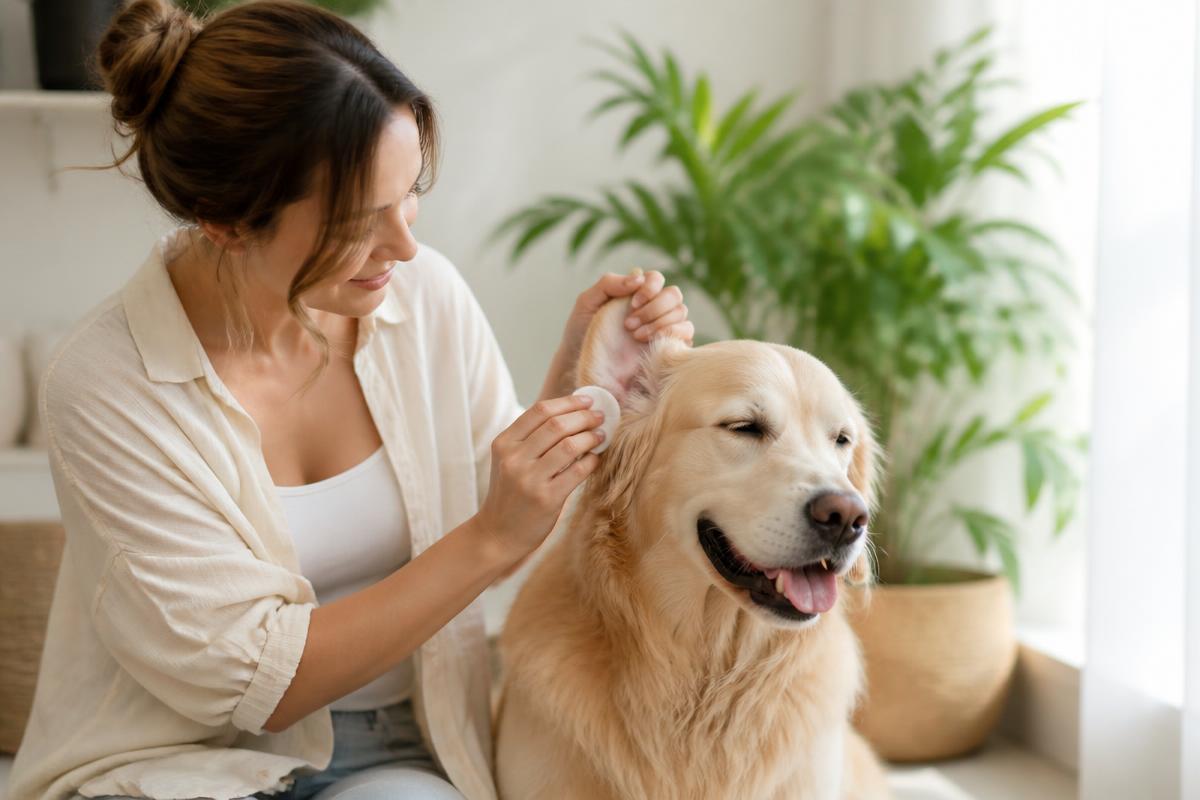
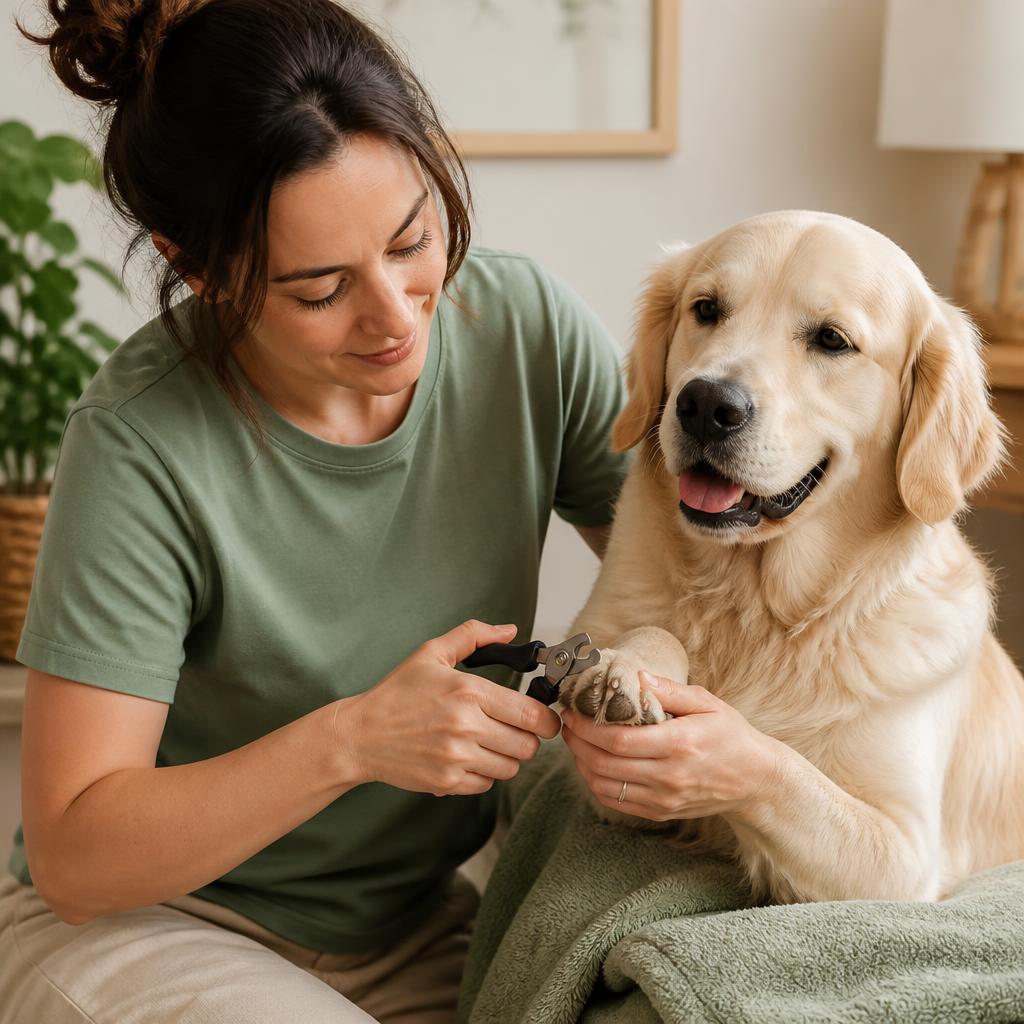
Include cooperative handling in your puppy socialisation plan, because veterinary examinations, grooming and everyday care involve people touching unfamiliar parts of the body. When your puppy is awake and settled, touch their shoulder for about 1 second, give a small reward and remove your hand before repeating two or three times. Over several sessions, progress to briefly touching a paw, looking at an ear flap or lifting a lip, changing only one element at a time rather than attempting a complete examination. Practise separately with a soft brush, a towel and an appropriate non-slip mat, allowing the puppy to investigate each item before you use it. Introduce one trusted helper only after your puppy is comfortable with your touch, and ask veterinary staff whether a short, low-pressure visit for treats is suitable and available. If your puppy pulls away, stiffens or mouths your hand, pause and make the next repetition shorter or easier instead of holding them still until they stop resisting. Stop handling a particular area and contact your veterinarian if gentle touch repeatedly causes yelping, sudden defensiveness or an apparent pain response, as those signs should not be treated as a training problem.
Good to know: Avoid practising handling while your puppy is asleep, eating or chewing something valuable. Predictable, voluntary participation is more useful than testing how much restraint they will tolerate.
- 5
Choose safe dogs and supervise short meetings
Arrange first dog introductions with a known, healthy dog whose vaccinations are current and who has a history of being calm and tolerant around puppies, following your vet’s advice about suitable locations. Start in a spacious, clean private area with separate handlers, letting the dogs observe each other from several metres away before considering closer contact. Where lead walking is appropriate, move in the same direction with space between them rather than holding tight leads during a head-on greeting, and separate them if either dog becomes tense or fixated. For puppies comfortable with closer interaction, use a securely enclosed space, remove food bowls and valued toys, and allow brief contact without forcing play. Look for loose, curved movements, pauses and reciprocal engagement, then gently call the dogs apart after roughly 20 to 30 seconds of early play to see whether both willingly choose to resume. Interrupt chasing that becomes one-sided, pinning, repeated mounting, hiding or ignored attempts to escape, and do not expect an adult dog to “teach the puppy a lesson” through escalating corrections. Avoid busy dog parks and uncontrolled puppy free-for-alls as socialisation exercises, since one suitable companion or a well-managed class offers more control than a crowd of unknown dogs.
- Check the other dog’s health and puppy tolerance.
- Provide enough space for both dogs to move away.
- Remove shared chews, bowls and high-value toys.
- Build in frequent, calm play breaks.
- Reward each dog separately to avoid food competition.
Good to know: Never punish growling: it is a warning that more space is needed. Calmly separate the dogs, and do not put your hands between their mouths if conflict develops.
- 6
Introduce everyday noises at a barely noticeable level
Start noise socialisation in a familiar room while your puppy is awake and relaxed, choosing one sound at a time, such as a quiet recording of traffic, thunder or a doorbell. Place the speaker several metres away and use a volume low enough that your puppy notices little or briefly looks up before returning to normal activity, remembering that device volume percentages are not consistent sound measurements. Play the sound for around 1 to 3 seconds, immediately offer a small reward and leave a quiet pause of 10 to 20 seconds, beginning with just three to five repetitions. Across later sessions, increase either volume, duration or proximity by a small amount only when the previous version causes no concern, rather than changing all three at once. For real household appliances, separate sight, movement and sound: let your puppy see the switched-off vacuum at a comfortable distance before a helper briefly operates it in another room. If your puppy startles and does not quickly settle, freezes, barks repeatedly or tries to leave, stop the sound and restart another day at a much easier level rather than leaving it running until they “get used to it”. Recordings cannot fully reproduce fireworks, storms or heavy traffic, so never use a fireworks display or a roadside close to fast vehicles as a training session.
- Use one quiet sound per early session.
- Keep the puppy free to move away.
- Pair brief sounds with something enjoyable.
- Adjust only one sound variable at a time.
- Stop before repeated startling or distress.
Good to know: Keep speakers away from your puppy’s ears and never use headphones on them. During unavoidable loud events, prioritise a quiet indoor refuge and company if sought rather than attempting exposure training.
- 7
Combine experiences in quiet real-world settings
Once individual introductions are going well, practise in a quiet setting where your puppy can see people, notice a distant dog and hear mild background noise without confronting everything at close range. Depending on veterinary advice, this might mean sitting on a private driveway, watching from a securely supported carrier or spending a few minutes at the edge of a quiet public space approved for ground access. Keep initial outings to around 5 to 10 minutes, with actual training broken into short moments and plenty of time simply to look, sniff or rest. Reward your puppy for noticing a passing person or dog and then turning back towards you, since disengaging calmly is a more useful everyday skill than rushing over to greet. Increase only one challenge per outing, such as a slightly busier time or a little less distance, and avoid combining a first bus journey, crowded café and unfamiliar dogs in one trip. Stay clear of shop entrances, narrow paths and other bottlenecks where strangers or dogs can approach faster than you can create space. Finish while your puppy is still comfortable and give them a quiet recovery period afterwards, because fatigue can make an otherwise manageable experience feel overwhelming.
Good to know: Be ready to say, “We’re practising watching today, so no greeting, please.” Preventing unwanted contact is part of responsible puppy socialisation, not a missed opportunity.
- 8
Respond to fear, overexcitement and setbacks
If your puppy hides, freezes, barks, lunges or becomes frantic, stop moving towards the trigger and calmly increase distance, using a visual barrier or leaving the area if necessary. Do not scold, jerk the lead or insist on one more greeting, because punishment can add another unpleasant experience to the person, dog or noise already causing difficulty. Once your puppy is somewhere calmer, offer reassurance if they seek it and let them decompress; you do not need to withhold comfort out of concern that it will reinforce the emotion of fear. If they cannot recover enough to explore normally, end the session and make the next attempt shorter, quieter or farther away, rather than repeating the same setup. For overexcited jumping or pulling, reduce the intensity and reward a brief moment of calm at a greater distance, remembering that excitement is not permission for unrestricted greetings. Contact your veterinarian if fear is severe, suddenly appears, worsens across sessions or accompanies changes such as reduced appetite, lethargy, limping or sensitivity to touch, and ask about referral to a qualified reward-based behaviour professional when needed. Stop dog interactions and seek veterinary advice promptly after a bite, puncture or suspected injury, even when the wound looks small, and seek urgent care for breathing difficulty, collapse or uncontrolled bleeding.
- Create distance before asking for more behaviour.
- End the session if your puppy cannot settle.
- Record what happened without blaming the puppy.
- Seek help early for persistent fear or aggression.
Good to know: Never arrange repeated close encounters to prove that a trigger is harmless. Controlled exposure only helps when its intensity stays manageable for the individual puppy.
- 9
Track progress and keep practising as your puppy grows
Keep a simple socialisation log recording the experience, approximate distance or sound setting, duration and your puppy’s response, such as “watched a calm dog from 10 metres for 2 minutes with a loose body”. Review the log weekly and repeat comfortable experiences in slightly different settings rather than continually seeking something new or ticking off a fixed number of strangers. A practical ongoing routine might include a short visitor session, a calm dog walk or observation opportunity, and several brief noise or handling practices spread across the week, adjusted to your puppy’s energy and recovery. Protect sleep and downtime, remembering that many young puppies sleep around 18 to 20 hours in a 24-hour period and should not be woken repeatedly for training opportunities. Continue rewarding relaxed behaviour through adolescence, and if something familiar becomes worrying, return to easier versions instead of assuming your dog is stubborn or has forgotten everything. At routine veterinary visits, discuss progress, upcoming experiences such as boarding or grooming, and any recurring concerns so you can plan gradual preparation before those events occur. Measure success by your puppy’s ability to feel safe, recover from small surprises and choose calm behaviour around people, dogs and noises—not by how many greetings or loud environments they can endure.
Good to know: A puppy who calmly watches a dog pass and then returns to sniffing has had a successful socialisation experience. Friendly neutrality is a valuable outcome, even for naturally sociable dogs.
Ask about this guide
Leave a comment or a question about your own pet and the Pawlito assistant replies right away with practical next steps.