How to Stop a Dog Barking at the Door
Learn how to stop dog barking at the door with reward-based training, a calm settling spot, and safe visitor routines that help your dog feel more secure.
A calm, safety-first approachThis guide provides general education. Contact your veterinarian when symptoms are painful, persistent, or unusual.
- 1
Identify what sets off the barking
Step 1: Spend a few days noticing exactly what happens before your dog barks, without deliberately provoking a reaction or letting visitors approach to test them. Some dogs respond first to footsteps outside, while others react to the doorbell, a knock, the handle turning, or a person appearing in the doorway. Watch your dog's whole body: pacing, backing away, freezing, or a stiff posture may mean they need more space, even if they also wag their tail. Record how long the barking lasts, how close your dog is to the entrance, and whether they can turn toward you or take a familiar treat. Your goal is not to eliminate every alert bark, but to help your dog recover quickly and follow a comfortable alternative routine. If the barking starts suddenly, becomes unusually intense, or comes with other changes in health or behavior, see your vet before treating it only as a training issue. If your dog has lunged, snapped, or bitten near the door, prevent contact with visitors and seek a qualified reward-based behavior professional, with veterinary input.
- Note the first sound or movement
- Watch posture and willingness to retreat
- Record recovery time
- Check whether treats are accepted
Good to know: Keep a simple door diary on your phone: trigger, distance, reaction, and time needed to settle.
- 2
Make real arrivals safer and quieter
Step 2: Reduce surprise door events while you teach new skills, because repeated overwhelming encounters make it harder for your dog to practice a calmer response. Ask expected visitors to text instead of ringing, add a delivery note requesting no knock, and cover any low window that gives your dog a constant view of approaching people. Before opening the entrance, place your dog behind a secure barrier or in a comfortable room where they cannot reach the visitor or slip outside. Choose a space your dog already likes, and provide water and a suitable food toy if they can use it safely and do not guard it around other pets. A baby gate is appropriate only if your dog cannot jump it, push through it, or become more distressed while watching the doorway. Use a closed door and more distance instead when a visible visitor causes frustration or fear, and never leave a dog tethered unattended. These arrangements are not a failure of training; they protect everyone and give your dog a break while their new routine develops.
- Request texts instead of doorbells
- Block busy doorway views
- Prepare a secure retreat
- Separate pets during food activities
- Secure your dog before opening
Good to know: Put treats in a closed container out of your dog's reach near the retreat area, so you can prepare before an expected arrival.
- 3
Teach a comfortable station away from the entrance
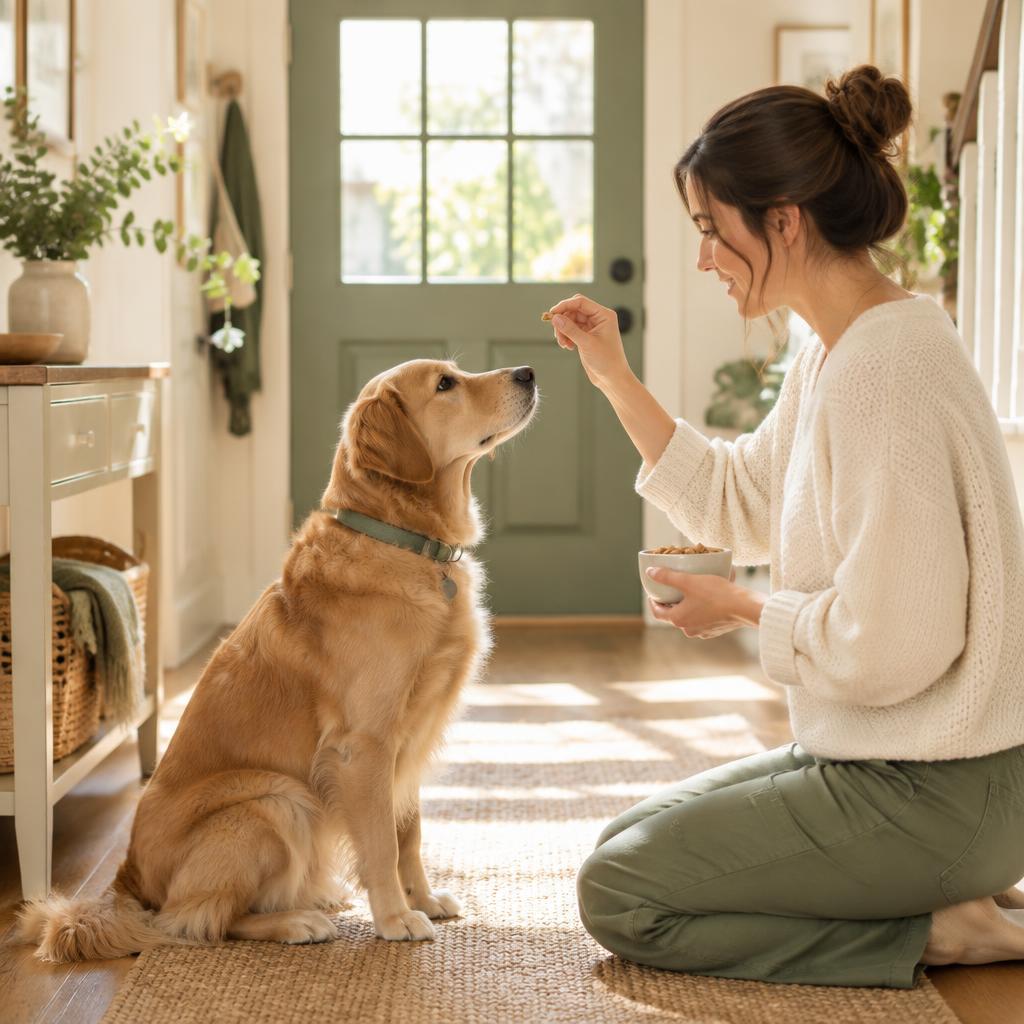
Step 3: Choose a nonslip mat or bed well away from the door and, ideally, out of direct view of arriving visitors. With the entrance quiet, reward your dog for looking at the mat, stepping onto it, and then remaining there with a loose, comfortable posture. Deliver small treats onto the mat so the reward encourages staying in that location rather than rushing back toward your hand. Once your dog readily approaches it, say a simple cue such as "mat" just before they move there, then reward their arrival. Add a release word such as "free" and gradually build from one or two seconds of staying to a short, relaxed pause, rewarding before they choose to leave. Practice separately while you take one step away, turn toward the entrance, or touch the handle, reducing the challenge whenever your dog struggles. Keep sessions to a few easy minutes, and remember that a mat cue is a trained behavior, not a substitute for a physical barrier when the door is open.
- Pick a quiet, nonslip station
- Reward directly on the mat
- Build duration a little at a time
- Practice an explicit release cue
Good to know: If the entrance is in a narrow hallway, use a bed in an adjoining room rather than asking your dog to settle beside passing visitors.
- 4
Introduce door sounds at a manageable level
Step 4: Start with a version of the trigger so gentle that your dog notices it without launching into barking, rushing forward, or showing a tense posture. This might be a very quiet doorbell recording, a single soft tap on an interior surface, or a helper making a faint sound while your dog is farther away. Play or make the sound once, then promptly offer several tiny, appealing treats, letting the sound predict something good rather than waiting for a formal obedience response. Pause until your dog is relaxed again, and repeat only a few times before ending the session while it still feels easy. If your dog barks, freezes, scans the doorway intensely, or cannot eat, stop the repetitions and make the next attempt quieter, shorter, or more distant. Refusing food can have several explanations, but during doorway practice it is a useful reason to pause and check whether the setup is too difficult. Increase just one feature at a time, and expect to return to an easier level when moving from a recording to the real bell because dogs may respond differently to each.
- Begin with a barely challenging sound
- Follow the sound promptly with treats
- Pause between repetitions
- Reduce intensity after a reaction
- Change only one feature at a time
Good to know: Ask your helper to wait for a text before each repetition; an unexpected second knock can undo an otherwise manageable practice round.
- 5
Link the door signal to going to the mat
Step 5: Combine the exercises only when your dog responds comfortably to the gentle sound and already understands the mat cue in a quiet room. Have your helper produce one easy knock or bell sound, say "mat" once, and reward your dog generously after they reach their station. Continue delivering treats at a pace that helps them stay relaxed while you take a small action toward the door, such as turning your body or walking one step. Work toward touching the handle and opening the door slightly only with your dog safely separated from the exit by an appropriate barrier. If your dog leaves the mat, calmly reset and simplify the next repetition instead of repeating the cue loudly or physically holding them in place. When a brief bark occurs, wait for a natural pause before cueing the familiar behavior, but do not stand through prolonged distress waiting for silence. With repeated successful practice, the door sound can become a signal to move away from the entrance, although many dogs will still need your cue and support during exciting arrivals.
- Use one easy door signal
- Give the mat cue once
- Reward arrival and relaxed staying
- Add small door movements gradually
Good to know: Reward early, before your dog breaks position; a steady sequence of small rewards is often easier than expecting a long wait for one treat.
- 6
Rehearse with a cooperative visitor
Step 6: Recruit one calm adult who can follow instructions, and explain the plan before they approach so your dog is not left barking while you organize the visit. Begin with the helper outside at a comfortable distance, your dog behind their secure barrier, and the easiest door signal you have successfully practiced. Reward your dog at their station while the helper becomes visible briefly, then have the helper move away before your dog becomes overwhelmed. As your dog remains comfortable across several repetitions, build separately toward a wider door opening, a person stepping inside, and a person sitting down. Ask the visitor to avoid staring, leaning over, reaching toward, or calling your dog, because friendly human gestures can still feel threatening or excessively exciting. Do not lure a worried dog toward someone with food or require a greeting; you can deliver the rewards yourself while your dog stays at a safe distance. If barking escalates or your dog stiffens, lunges, or repeatedly tries to escape, end the rehearsal, restore separation, and get professional support before attempting closer contact.
- Brief the helper before arrival
- Keep a secure barrier in place
- Practice brief appearances first
- Ask visitors to ignore your dog
- Make greeting optional
Good to know: Use planned practice visits rather than parties or essential deliveries, so your helper can leave or repeat a tiny step without pressure.
- 7
Use a simple plan for unexpected knocks
Step 7: When someone arrives unexpectedly, prioritize secure management rather than trying to turn a difficult moment into a full training session. Keep the entrance closed, take a breath, and use your practiced cue to move your dog toward their retreat if they can respond. If needed, toss a few treats away from the door into the safe area, provided there is no food-guarding risk or competition from another pet. Close the barrier before opening the entrance, and ask the person outside to wait or leave the delivery if you need more time. For a dog that cannot disengage, keep the door shut and avoid grabbing their collar or reaching into a highly aroused situation, especially if there is any bite risk. Do not shout, spray water, use bark collars, or startle your dog into silence, since these approaches can make arrivals feel more unpleasant without teaching a safe alternative. Once the visitor has gone, let your dog recover in a quiet space and use what happened to make the next planned session easier.
- Keep the entrance closed initially
- Move your dog away from the door
- Secure the barrier before answering
- Allow quiet recovery afterward
Good to know: A door sign asking people to wait gives you permission and time to secure your dog without rushing.
- 8
Build reliability and adjust the plan
Step 8: Practice in short sessions on most days, choosing times when your dog is comfortable and their needs for rest, toileting, exercise, and enrichment have been met. Measure progress by quicker recovery, easier movement to the mat, and more relaxed body language rather than expecting complete silence at every arrival. Gradually rehearse with different helpers, gentle variations in knocking, and different times of day, returning to easier versions whenever you introduce something new. Once the routine is dependable, space treats out slowly during easy stays while continuing to reward promptly for challenging arrivals and particularly good choices. Avoid suddenly removing all rewards or increasing visitor activity, sound intensity, and waiting time together, because those changes can make an established skill fall apart. Many dogs need ongoing management and weeks or longer of gradual practice, and a temporary setback means the plan needs adjusting rather than your dog being stubborn. If progress stalls despite easier setups, or your dog shows persistent distress or aggression, consult your vet and a qualified reward-based behavior professional for an individualized, safety-focused plan.
- Track recovery as well as barking
- Vary one challenge at a time
- Keep rewarding difficult arrivals
- Maintain safe visitor management
Good to know: Review your door diary weekly and choose one small next goal, such as staying relaxed while a familiar helper briefly appears.
Ask about this guide
Leave a comment or a question about your own pet and the Pawlito assistant replies right away with practical next steps.