How to Store Dry Dog Food Safely
Protect dry dog food from moisture, heat, pests, and mix-ups with practical storage, cleaning, and stock-rotation habits.
- Written by
- Pawlito Editorial Team · AI-assisted guide
- Professional review
- Not yet reviewed by a veterinarian
- Published
- Last updated
In this guide (7 steps)
Step 1: Buy an amount you can use
Choose a bag your dog can finish within the manufacturer's recommended period after opening. Check the date and packaging for holes, damp patches, broken seals, or insects. A discount bag is not economical if it sits open too long. Estimate use from actual portions and mixed feeding. Follow product-specific storage directions rather than assuming all dry foods have identical requirements.
Good to know: Ask the manufacturer for an after-opening recommendation if the bag does not provide one.
Step 2: Keep original packaging and details
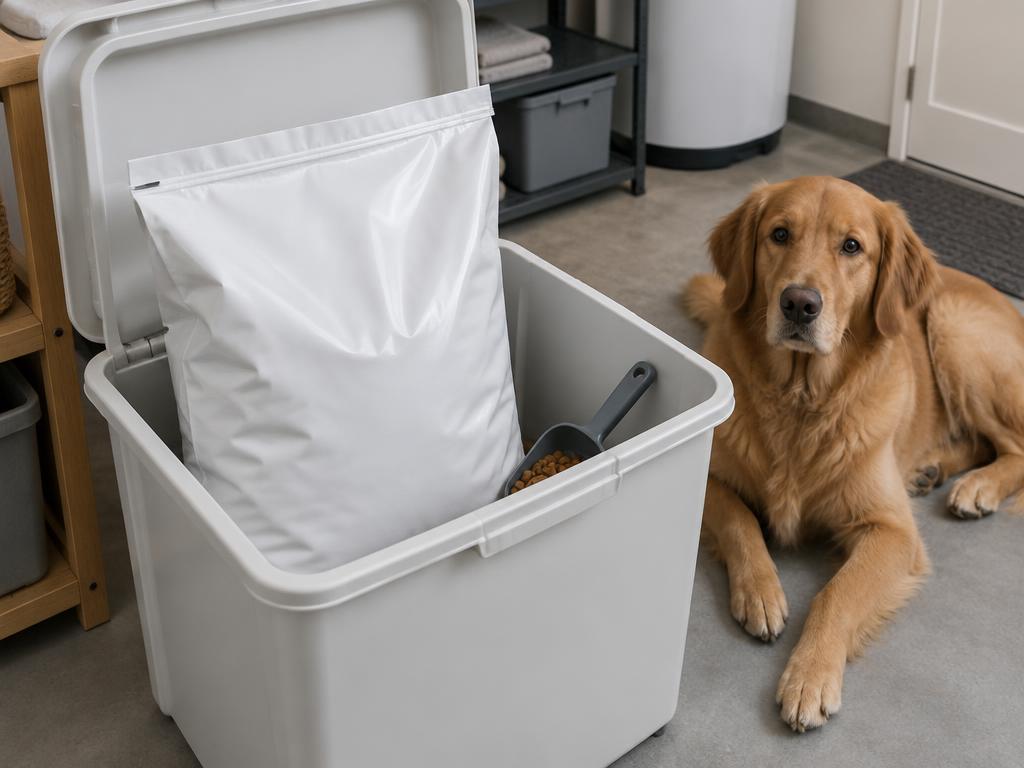
Retain the original bag, which is designed for the food and carries the name, lot code, and date needed for recalls or questions. Fold or roll the opening and close securely after use. If using an outer bin, place the closed bag inside rather than automatically pouring kibble out. Preserve purchase information and never discard identifying details unless they remain reliably retrievable.
- Record the opening date without covering the lot code.
- Keep batches and products identifiable.
Step 3: Choose a cool and dry location
Store indoors away from direct sunlight, heating appliances, humidity, and household chemicals. Follow any printed temperature limits. Garages and sheds can overheat or attract rodents even when convenient. Avoid storage beneath pipes that might leak. Choose a location you can inspect regularly and that pets and children cannot open. A sealed bin cannot make a damp storage area suitable.
Good to know: A frequently checked indoor cupboard is often easier to manage than an out-of-sight shed.
Step 4: Use an appropriate outer container
Choose a sturdy food-safe bin with a secure lid and room for the original bag. Check seals, cracks, and crumb-trapping corners. Extra protection limits pest access but does not make contaminated food safe. Avoid containers previously holding chemicals and do not assume decorative bins are food-safe. Keep lids closed and position the container where your dog cannot knock it over.
- Leave room to close the original bag properly.
- Choose a secure closure for dogs that investigate bins.
Step 5: Handle food with clean dry tools
Wash and dry hands before handling food, using a completely dry scoop. Keep water, wet-food spoons, and saliva-coated bowls out of the bag. Measure into a feeding bowl rather than allowing eating from storage. Keep the scoop clean and protected and wash it regularly. Never return uneaten kibble from a used bowl; this can introduce moisture, saliva, and debris into the remaining food.
Step 6: Clean between bags without topping up
Finish or remove the old supply before adding a fresh bag, retaining separate batch details when both are in use. Wash the bin, seals, lid, and scoop according to care instructions, rinse thoroughly, and dry completely. Even bins containing bagged food collect crumbs and oils. Continually topping up loose kibble leaves older pieces underneath and complicates stock rotation and recall identification.
Good to know: Plan cleaning early so the container has time to dry fully before the next bag is needed.
Step 7: Inspect and respond to concerns
Check for unexpected odors, mold, moisture, insects, and changes in appearance when serving. Stop using compromised food; drying, freezing, or mixing it with fresh kibble is not a safe salvage method. Retain packaging and ask the retailer or manufacturer for guidance, checking official recalls when relevant. If your dog becomes unwell, contact your veterinarian with product details. Normal appearance alone cannot guarantee safety.
This guide was drafted with AI assistance and published by the Pawlito team. It has no formal source list yet. Spotted an error? Tell us and we'll correct it. Read our editorial policy.
Ask about this guide
Leave a comment or a question. Comments are public, so use a first name only and don't include emails, phone numbers or addresses. An automated assistant may reply straight away with general suggestions — it can't diagnose your pet.