How to Store Rabbit Hay to Keep It Fresh
Keep rabbit hay dry, clean, and appealing with sensible storage, stock rotation, and daily checks for moisture, pests, and spoilage.
- Written by
- Pawlito Editorial Team · AI-assisted guide
- Professional review
- Not yet reviewed by a veterinarian
- Published
- Last updated
In this guide (7 steps)
Step 1: Inspect every new supply
Check deliveries before combining with existing hay. Look for dry fibrous strands and a fresh grassy smell, not musty or sour odors. Color varies with species and curing, so assess texture and smell together. Examine several handfuls for damp clumps, mold, pests, and foreign objects. Reject questionable material rather than trying to salvage it by shaking or airing. Packaging intactness alone does not prove hay is sound.
Good to know: Keep supplier details and purchase date for reporting problems and tracing batches.
Step 2: Choose a dry storage space
Store in a cool dry indoor area away from rain, sunlight, and chemicals. Avoid damp basements, steamy laundry spaces, heaters, and boilers. Hay absorbs moisture and odors, so separate it from cleaners, fuels, and fragrances. Keep off the floor on clean shelving with room to inspect around it. Avoid walls with condensation and areas with leaking pipes. Check storage conditions throughout the year.
- Inspect after heavy rain or plumbing problems.
- Keep away from ignition and heat sources.
Step 3: Use breathable protected storage
For dry hay in a dry room, use clean breathable storage such as suitable sacks or cardboard boxes, protected from pests. Do not tightly compress uncertainly damp hay into airtight tubs. Follow supplier packaging guidance. Avoid containers formerly used for chemicals. Keep bulk hay outside the enclosure so rabbits cannot soil supplies or chew hazardous handles, liners, and strings. Breathability cannot fix a damp room.
Good to know: Fabric handles and packaging strings must never become chew toys.
Step 4: Buy manageable amounts and rotate
Choose quantities matching consumption and available dry space rather than the largest bargain bale. Mark arrival dates, use older acceptable hay first, and keep batches separate until inspected. No universal freshness deadline overrides poor storage conditions. Discard deterioration even in recent purchases. Maintain enough reserve for delivery delays while avoiding an excessive supply that cannot be inspected or used conveniently.
- Put oldest usable batches at the front.
- Keep a modest reserve for delivery delays.
Step 5: Transfer a clean working supply
Keep a small amount near the enclosure while bulk storage remains protected. Use clean dry hands or a dedicated scoop. Never return feeder hay to storage. Cover working supplies without trapping moisture and remove twine or straps immediately. Shake hay only away from your rabbit where dust can disperse. Choose a less dusty batch if persistent clouds appear rather than repeatedly exposing the animal.
Step 6: Separate fresh hay from waste
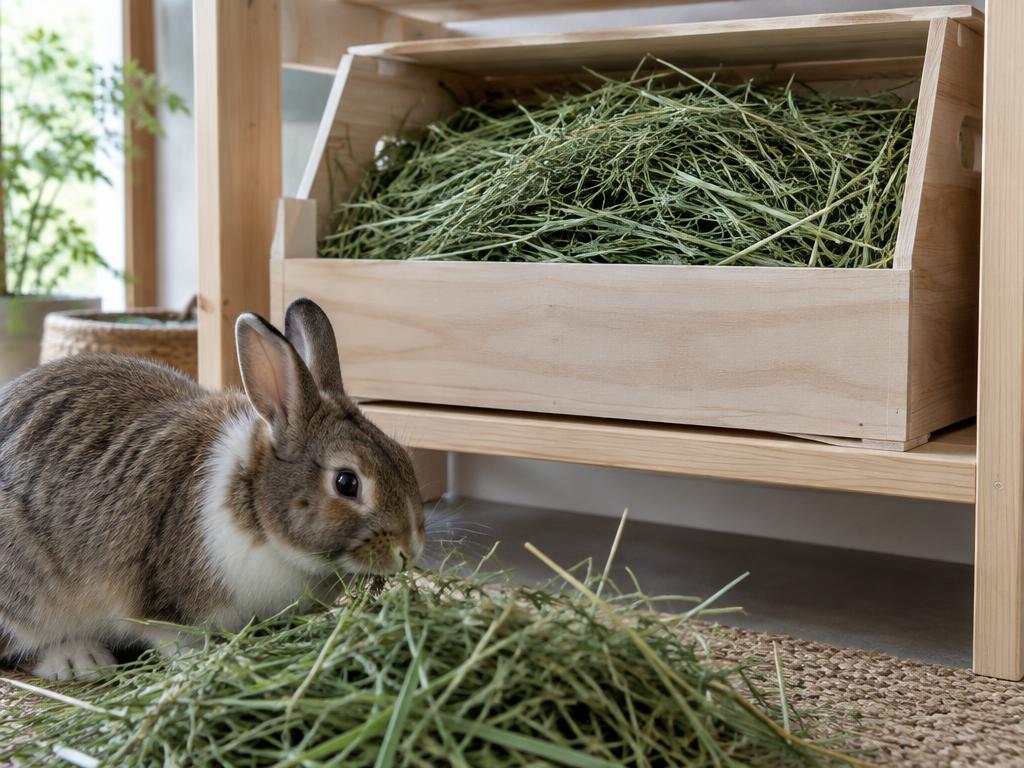
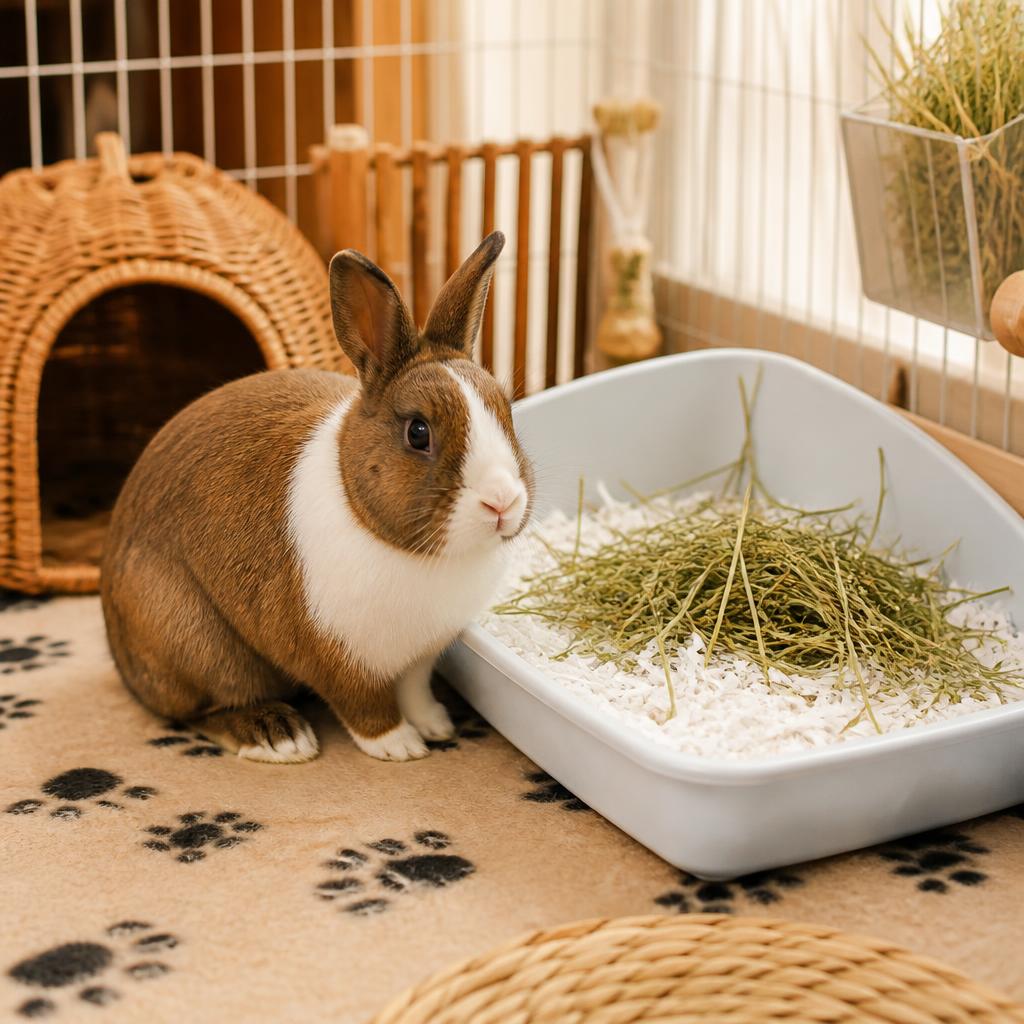
Offer fresh hay generously and replenish for continuous access. Place where it remains reachable without water soaking or heavy soiling, using a feeder without trapping gaps. Eating near litter is common, but contaminated strands still need removal. Discard wet and urine-soaked hay instead of drying for reuse. Clean feeding areas and let washed surfaces dry fully before refilling. Check hidden bottom layers as well as the visible top.
Good to know: Inspect feeder bottoms for damp leftovers that may be missed during refills.
Step 7: Act on spoilage and reduced eating
Stop feeding a batch with mold, damp clumps, or musty smell. Inspect all storage and do not disguise suspect hay by mixing with fresh material. Replace from a known clean source and resolve leaks before restocking. Reduced hay eating can reflect more than freshness. Contact a rabbit-experienced veterinarian promptly for lower appetite or fewer droppings; complete refusal to eat needs urgent attention rather than waiting for a new delivery.
This guide was drafted with AI assistance and published by the Pawlito team. It has no formal source list yet. Spotted an error? Tell us and we'll correct it. Read our editorial policy.

Ask about this guide
Leave a comment or a question. Comments are public, so use a first name only and don't include emails, phone numbers or addresses. An automated assistant may reply straight away with general suggestions — it can't diagnose your pet.