How to Tame a Nervous Hamster
A gentle, step-by-step taming plan that turns a shy or nippy hamster into a confident, handleable pet.
- Written by
- Pawlito Editorial Team · AI-assisted guide
- Professional review
- Not yet reviewed by a veterinarian
- Published
- Last updated
In this guide (8 steps)
Step 1: Let your hamster settle in first
A new hamster needs five to seven days of complete peace to learn their cage and feel safe. Resist the urge to handle them during this time — it feels like a predator attack to a prey animal. Keep the cage in a quiet spot, speak softly when passing, and let your hamster learn your voice and scent from a distance.
Step 2: Work with your hamster's schedule
Hamsters are nocturnal or crepuscular, so tame them in the evening when they naturally wake. Never wake a sleeping hamster for handling — a startled hamster bites. Wait until your hamster is up and active, then begin your session. Consistent timing helps your hamster anticipate and accept interaction.
Good to know: If your hamster is always asleep when you are awake, try early morning just as they settle down.
Step 3: Start with treats through the bars
Offer small treats — a sunflower seed or a tiny piece of apple — through the bars so your hamster associates you with good things. Do this for several days until your hamster approaches eagerly when you appear. Keep your voice soft and movements slow. This stage builds the foundation of trust.
Step 4: Move to open-cage hand feeding
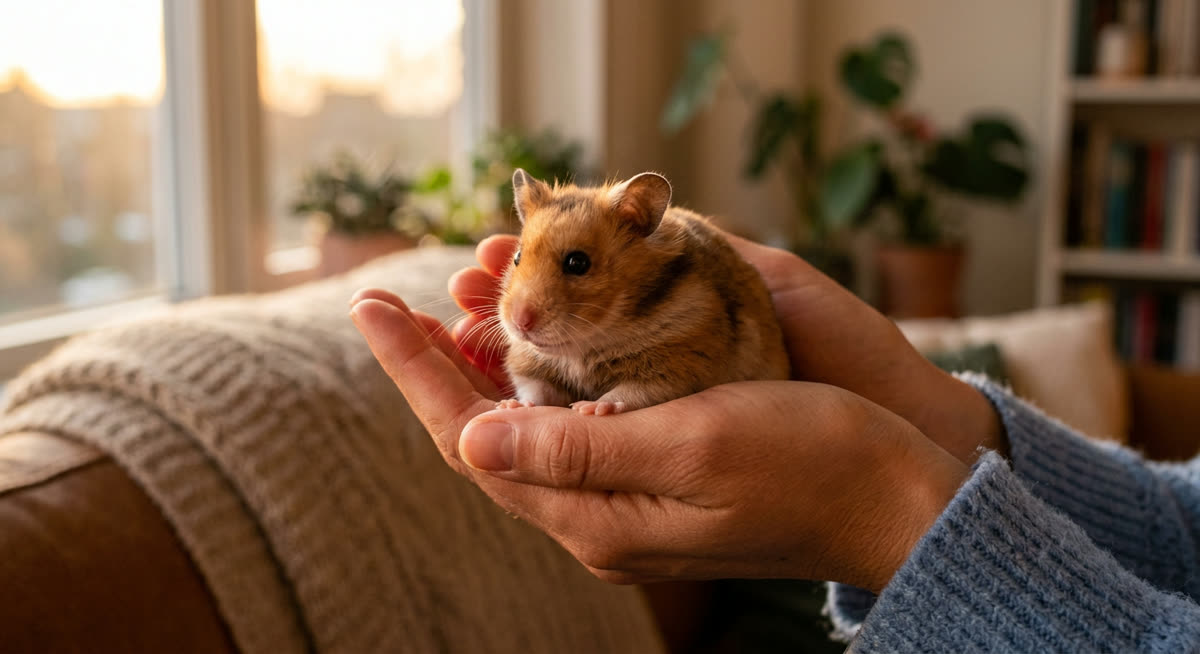
Open the cage door and rest your hand inside, palm up, with a treat on it. Let your hamster come to you — never chase or grab. At first they may grab the treat and run; that is fine. Repeat nightly until your hamster happily climbs onto your hand to reach the treat. Patience here pays off enormously later.
Step 5: Attempt the first lift
Once your hamster walks onto your hand confidently, try lifting a few centimetres for a second or two, then lower and treat. Cup your other hand over or beside them so they cannot jump. Increase height and duration gradually over days. Keep early sessions over the cage or a soft surface in case of a leap.
Step 6: Handle in a safe space
For proper handling sessions, sit on the floor or use a playpen or bathtub lined with a towel, with the plug hole covered. Let your hamster walk from hand to hand, exploring you. Ten to fifteen minutes is plenty. If your hamster seems stressed — frozen, squeaking, trying to escape — return them calmly to the cage and try again tomorrow.
Step 7: Deal with biting correctly
Nervous hamsters bite from fear, not aggression. If bitten, do not pull away suddenly or shout — place your hamster down calmly and end the session. Wash your hands before handling so they do not smell of food. Go back a step in the taming process and rebuild. Consistent gentle handling almost always resolves fear-biting within weeks.
- Never punish a bite — it confirms the fear
- Wash hands to remove food smells before handling
- Thick gardening gloves can help confidence in early sessions
Step 8: Keep the trust for life
Handle your hamster regularly — several times a week — so taming does not fade. A hamster left alone for weeks may revert to nervousness, especially young ones. Continue offering treats from your hand forever. Most hamsters become genuinely tame within two to four weeks of patient nightly sessions.
Good to know: Syrian hamsters are solitary — never house two together, whatever a pet shop says.
This guide was drafted with AI assistance and published by the Pawlito team. It has no formal source list yet. Spotted an error? Tell us and we'll correct it. Read our editorial policy.



Ask about this guide
Leave a comment or a question. Comments are public, so use a first name only and don't include emails, phone numbers or addresses. An automated assistant may reply straight away with general suggestions — it can't diagnose your pet.