How to Teach Your Dog to Drop a Toy Without a Tug-of-War
Teach a reliable toy-release cue through low-pressure trades, short play sessions, and safe practice without chasing or grabbing.
- Written by
- Pawlito Editorial Team · AI-assisted guide
- Professional review
- Not yet reviewed by a veterinarian
- Published
- Last updated
In this guide (7 steps)
Step 1: Start with a safe, low-value toy
Teach drop it during ordinary play, not during a real emergency. Choose a sturdy toy your dog enjoys but does not guard. Work in a quiet space and have a second similar toy or small food rewards ready. Avoid brittle chews, tiny objects, and anything your dog may swallow. Children should not lead these exercises or retrieve objects from a worried dog.
Good to know: Stiffening, freezing, growling, or snapping means stop and seek qualified reward-based behavior support.
Step 2: Offer a trade without grabbing
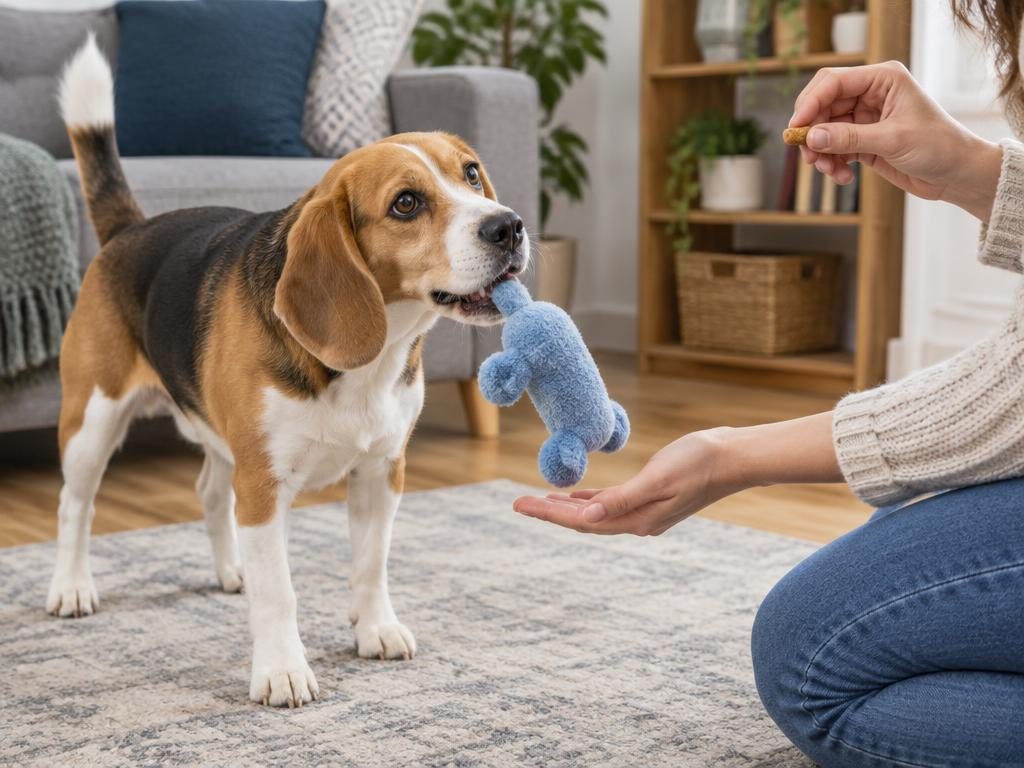
Let your dog hold the toy, then present a reward close enough for them to notice without pushing into their face. Remain still and wait for the mouth to open voluntarily. Say yes as the toy falls, give the reward, and calmly pick up the toy only when it is safe. Never pry the jaws apart, chase your dog, or pull the toy from clenched teeth.
Step 3: Return the toy when it is safe
After the trade, invite your dog to play with the toy again. Frequent returns teach that releasing an object does not always end the fun. This makes future trades less threatening. Keep play controlled and pause if arousal rises. If your dog snatches at your hands, place the reward on the floor away from the toy and use more distance next time.
Step 4: Attach the release cue to the action
When your dog regularly releases for the trade, say drop it once immediately before offering it. Mark the release and reward. Repeat a few easy successes, then finish. Do not say the cue over and over while your dog continues holding; that teaches the words are background noise. Avoid a harsh tone, which can make the dog hold tighter or retreat.
Step 5: Fade the visible bribe gradually
Begin saying the cue before showing the food. If your dog releases, mark the action and bring the reward from a pocket. If they do not, make the next repetition easier rather than escalating. You can also trade one toy for another during play. Keep rewarding successful releases even after food is no longer visible so the behavior remains worthwhile.
Step 6: Practice with different safe toys
Try another toy in the same room, then repeat in a quiet garden on a secure lead if needed. Raise object value and distraction separately, not together. Return to easier toys whenever your dog struggles. This cue is not the same as leave it, which asks the dog not to pick something up; practice those skills separately rather than assuming one automatically covers both.
Step 7: Plan for unsafe objects and guarding
Keep rubbish, medications, batteries, and dangerous chews out of reach. A trained cue never replaces prevention. If your dog has something potentially poisonous or sharp, avoid a confrontation and contact a veterinarian promptly for instructions; do not induce vomiting without advice. If your dog guards possessions, use management and professional help rather than repeated forced trades that may increase anxiety.
Good to know: Educational training guidance is not emergency treatment or a diagnosis.
This guide was drafted with AI assistance and published by the Pawlito team. It has no formal source list yet. Spotted an error? Tell us and we'll correct it. Read our editorial policy.
Ask about this guide
Leave a comment or a question. Comments are public, so use a first name only and don't include emails, phone numbers or addresses. An automated assistant may reply straight away with general suggestions — it can't diagnose your pet.