How to Teach Your Dog Hand Targeting
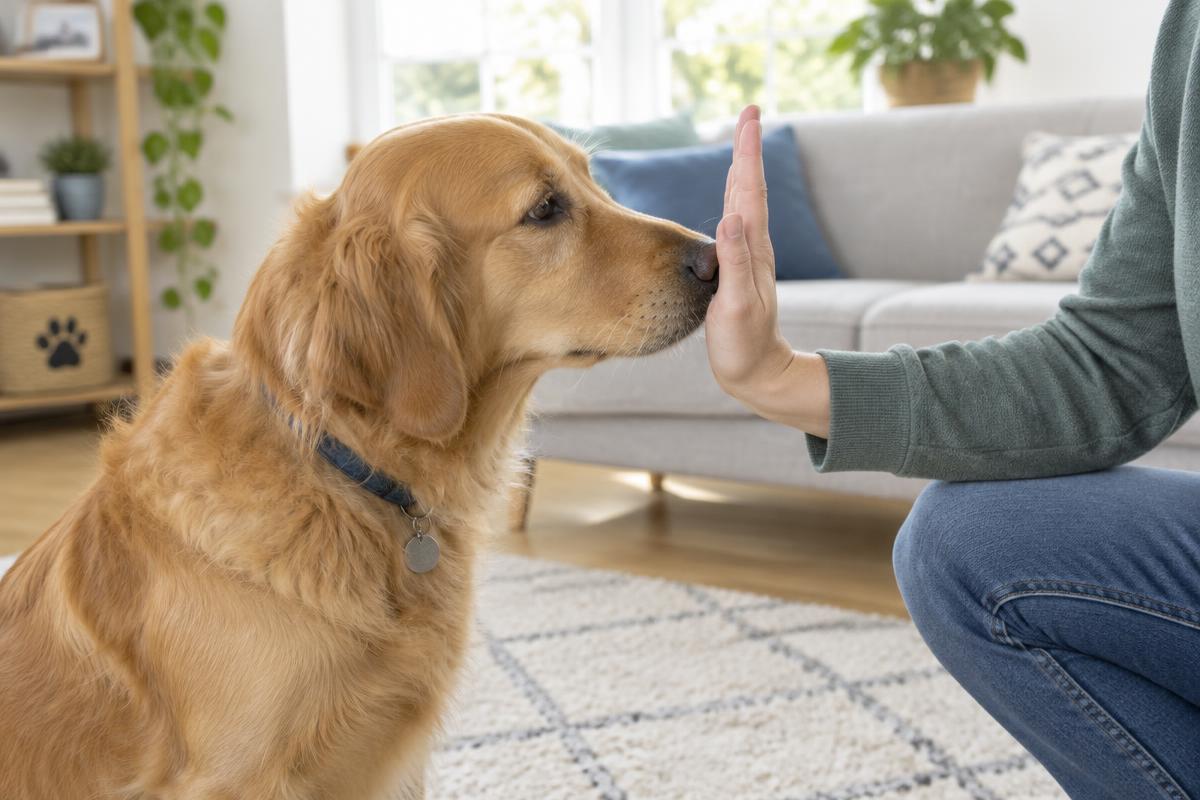
Teach your dog to touch their nose to your palm, a simple skill that helps with recall, positioning and confidence.
- Written by
- Pawlito Editorial Team · Pet Care Writers
- Professional review
- Not yet reviewed by a veterinarian
- Published
- Last updated
In this guide (6 steps)
Step 1: Present your hand close by
Hold your flat palm a few centimetres from your dog's nose. Most dogs sniff a new object. The moment their nose touches your hand, mark with yes and give a treat from your other hand, then hide the target hand behind your back.
Step 2: Repeat in short sets
Do five to ten repetitions, changing the hand position slightly each time. Keep sessions under three minutes. If your dog does not touch, rub a little treat scent on your palm to spark interest.
Step 3: Add the cue word
When your dog touches reliably, say touch just before presenting your hand. Say it once. Reward every correct touch while the skill is new.
Step 4: Increase distance and angles
Move your hand higher, lower and further away so your dog takes a step or two to reach it. Gradually ask for longer moves across the room.
Good to know: Keep your hand still. Let your dog come to it rather than poking their face.
Step 5: Use it in real life
Hand targeting helps move your dog off furniture, guide them past distractions on walks or redirect attention. Practise in new places, starting with easy distances.
Step 6: Keep it rewarding
Continue rewarding touches often so the behaviour stays strong. Mix food with praise and play.
This guide was drafted with AI assistance and published by the Pawlito team. It has no formal source list yet. Spotted an error? Tell us and we'll correct it. Read our editorial policy.
Ask about this guide
Leave a comment or a question. Comments are public, so use a first name only and don't include emails, phone numbers or addresses. An automated assistant may reply straight away with general suggestions — it can't diagnose your pet.