How to Teach a Reliable Recall So Your Dog Comes When Called
This “teach dog to come when called” guide builds reliable recall with rewarding games, safe practice, and a plan for distractions.
A calm, safety-first approachThis guide provides general education. Contact your veterinarian when symptoms are painful, persistent, or unusual.
- 1
Prepare a safe space and the right equipment
Start teaching your dog to come when called in a quiet room, hallway, or securely fenced yard where you can control distractions and prevent an unsuccessful recall from becoming a chase. Close doors and gates, put other pets in another room, and check fencing for gaps before taking off your dog’s leash. Gather a treat pouch, pea-sized soft rewards, a well-fitted harness that does not restrict movement, a standard leash, and a 15–30-foot training line for later outdoor sessions. Attach the long line to the harness rather than a neck collar, because a dog running to the end can experience a sudden, potentially harmful jolt. Begin when your dog has had a toilet break and is alert but not exhausted, overheated, or intensely excited; training just before a normal meal can help, but do not withhold meals to create hunger. Plan two or three sessions of 2–5 minutes each day, since short, successful practice is generally more productive than repeatedly calling a tired or distracted dog. If your dog shows pain, limping, unusual breathlessness, or a sudden change in hearing or responsiveness, stop training and contact your veterinarian rather than treating the behavior as disobedience.
- Quiet room or escape-proof fenced space
- Soft treats and an easy-access pouch
- Comfortable, well-fitted harness
- Standard leash and 15–30-foot long line
- Water and a nonslip training surface
Good to know: A retractable leash is not a substitute for a training line: its thin cord and changing tension make controlled recall practice harder and can cause injuries.
- 2
Choose a cue and identify worthwhile rewards
Choose one short recall cue, such as “Come!” or “Here!”, and agree that everyone in the household will use the same word with a friendly, consistent tone. If your dog already hears “come” many times without responding, or associates it with scolding, choose a fresh cue rather than trying to overpower that history with a louder voice. Test three possible rewards indoors by offering small samples of familiar, dog-safe foods or comparing food with a favorite tug toy, then note what your dog eagerly works to earn. Soft commercial training treats or tiny pieces of plain cooked, boneless chicken are useful options, provided they suit your dog’s dietary needs and contain no harmful seasonings. Pick a marker word such as “Yes!” to identify the exact successful moment, and introduce it by saying it once and immediately delivering a treat, repeating this 5–10 times without requesting a behavior. Keep treats below 10% of your dog’s daily calories, use smaller pieces for small dogs, and ask your veterinarian about suitable rewards if your dog follows a prescription diet. Reserve especially exciting rewards for difficult recalls, but never assume praise alone will compete with wildlife, another dog, or an irresistible smell.
- One recall word shared by the household
- One marker word or clicker
- Small rewards your dog genuinely values
- A toy option for dogs that enjoy play
Good to know: Keep rewards ready but out of sight before calling. Otherwise, your dog may learn to check for visible food before deciding whether to respond.
- 3
Connect the recall word with moving toward you
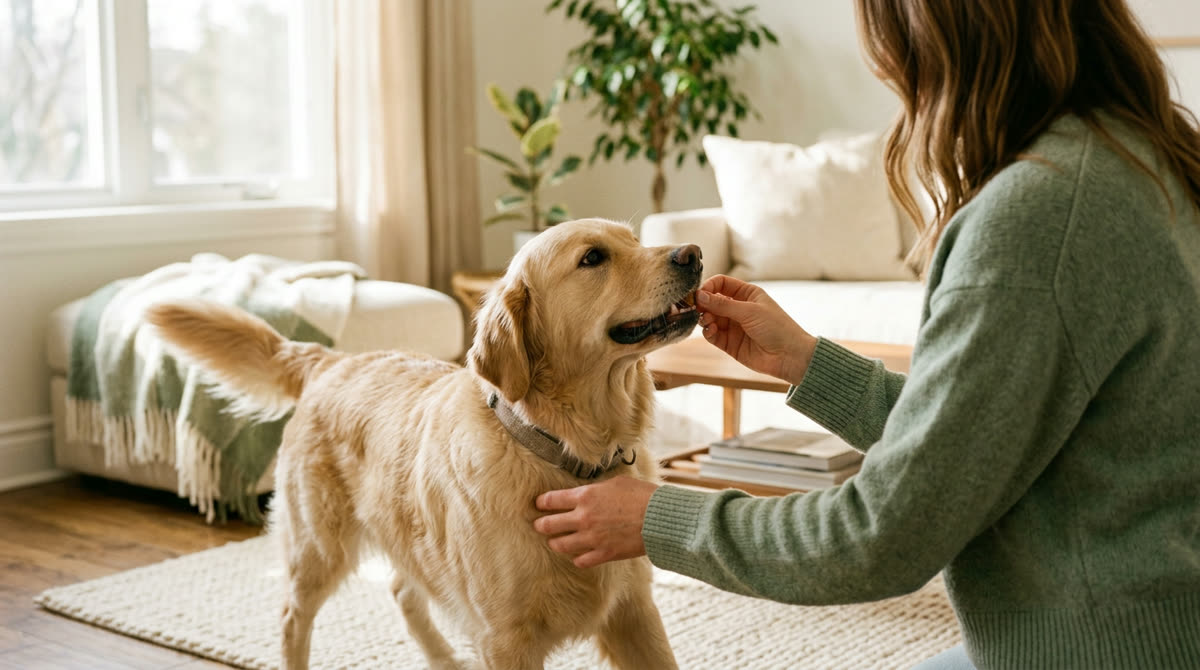
Begin 2–3 feet from your dog in your quiet training space, ideally when they are already looking at you or naturally starting to approach. Say your chosen recall cue once as they move toward you, then take one or two small steps backward to make approaching inviting rather than confrontational. When your dog reaches you, mark with “Yes!” and deliver a treat within about one second, keeping the reward close to your legs so they finish within easy reach. For the first few sessions, concentrate on making the word predict a happy arrival instead of testing whether it can interrupt something interesting. After several successful repetitions, try saying the cue when your dog is nearby but not already moving, then reward promptly if they turn and approach. Complete about five repetitions before taking a break, and occasionally give three tiny treats in succession to make arriving feel especially worthwhile. Avoid leaning over your dog, advancing toward them, grabbing their collar, or repeating “come, come, come,” because these habits can make the approach uncomfortable or teach them that the first cue does not matter.
Good to know: If your dog hesitates, turn slightly sideways and move away a step instead of reaching toward them. Many dogs find this posture more inviting.
- 4
Build a complete indoor recall
Once your dog readily approaches from a few feet away, practice across the room at roughly 6–10 feet, keeping the route clear and the surface nonslip. Say their name once if you need their attention, pause briefly, and give the recall cue once rather than using their name as a repeated substitute for the command. Reward when they arrive within arm’s reach, then gradually introduce a brief touch to the harness or collar before delivering another treat so coming close does not predict being trapped. If your dog ducks away from your hand, practice the touch separately with tiny, comfortable movements and rewards rather than holding them in place. Add a release word such as “Go play” after the reward, allowing them to return to their previous activity when it is safe, so recall does not always end their fun. You can also play a two-person recall game from 6–10 feet apart, with each person calling only when the dog is free to respond and rewarding the arrival without teasing or restraint. Aim for at least eight prompt, complete responses out of ten opportunities across two short sessions before making the next change, treating this as a training checkpoint rather than proof of outdoor reliability.
- Responds to one recall cue
- Travels all the way to the caller
- Finishes within easy reach
- Accepts a comfortable, brief harness touch
- Waits for the release before returning to play
- 5
Transfer the skill outdoors on a long line
Move to a securely fenced yard or quiet outdoor area far from traffic, unfamiliar dogs, and wildlife, and expect to make the exercise easier because outdoor smells are powerful distractions. With the long line attached to your dog’s harness, begin at only 5–10 feet even if they can recall across the house. Keep the line mostly slack, manage spare length in loose folds rather than wrapping it around your hand, and prevent it from looping around legs, dogs, or equipment. Call when your dog has finished a sniff or glances toward you, move backward a few steps, and reward generously when they arrive. The line is a safety backup, not a tool for jerking or dragging your dog into a response, so use it to prevent unsafe movement while keeping your handling calm. If your dog does not respond, avoid another cue, calmly move closer while managing the line, and reset at an easier distance once they can engage with you. After three to five successful recalls, end with a relaxed sniffing break, often releasing your dog back to exploration after individual recalls so approaching you remains worth doing.
- Harness fit checked before starting
- Clear practice area away from hazards
- Short starting distance outdoors
- Slack line without loops around limbs
- Rewards ready for every successful arrival
Good to know: Never allow your dog to accelerate into the end of a long line. Reduce available distance near hazards, and avoid long-line play with other dogs because of entanglement risks.
- 6
Increase distance and distractions separately
Build reliable recall by changing only one challenge at a time: distance, distraction level, or location, rather than asking for all three improvements in the same session. For example, increase your quiet-yard distance from 10 to 15 feet while keeping everything else familiar, then return to 5 feet when introducing a mild distraction such as a toy resting on the ground. Arrange distractions so your dog notices them but can still comfortably turn toward you; if they stare, lunge, bark, or cannot take a reward they normally enjoy, create more distance or choose an easier setting. Give the cue once during a manageable moment, reward a complete return, and use permission to resume a safe activity, such as sniffing a tree, as an additional reward. Record the location, approximate distance, distraction, and number of successful first-cue responses so you can identify patterns instead of guessing that your dog is ready. Stay at the current level until your dog responds promptly in at least eight of ten opportunities across two sessions, and step back after two missed responses rather than continuing to rehearse failure. Do not progress directly from the backyard to a busy dog park, because excited play and unfamiliar dogs introduce challenges that are difficult to control and may make safe practice impossible.
- Add about 5 feet before adding excitement
- Introduce mild distractions at close range
- Increase space from moving dogs or people
- Log first-cue responses across sessions
- Reduce difficulty after repeated misses
Good to know: Sniffing can be part of the paycheck: call your dog away from a safe scent, reward the return, then release them to investigate it again.
- 7
Rehearse real-life situations without gambling
Practice in several safe locations, such as two quiet walking routes and a fenced training field, because a cue learned at home does not automatically have the same meaning everywhere. Keep the harness and line in use in unfenced spaces, shorten the distance at each new location, and begin with easy recalls before trying to interrupt mild interest in the surroundings. Build toward everyday situations such as returning from a sniff, coming away from a familiar person, or checking in when another leashed dog is visible at a comfortable distance. Reward spontaneous check-ins too, since a dog who regularly notices where you are gives you more opportunities to communicate before a distraction becomes overwhelming. Make some arrivals lead to a harness touch and leash attachment followed by another reward and a return to activity, so being secured does not always signal the end of the outing. Consider off-leash practice only in a securely enclosed area at first, and understand that leash laws, local hazards, wildlife, and your individual dog’s chasing history may make continued leash use the appropriate long-term choice. No recall is guaranteed, so never test reliability beside a road, near livestock, at a cliff edge, or around a known trigger simply because your dog has performed well in easier settings.
Good to know: Recall training does not replace barriers or leash management. A dog who comes nine times out of ten still needs protection from the consequences of the tenth attempt.
- 8
Troubleshoot missed cues without punishment
When your dog ignores a recall, first check whether the request exceeded their training: too much distance, an unfamiliar setting, competing excitement, fatigue, fear, or a reward that was not worthwhile. Stop repeating the cue, safely manage the dog with the leash or enclosure, and restart from about half the previous distance with fewer distractions. If they come partway and stop, reward future easy recalls close to your body and rebuild comfortable harness touches; do not chase them or snatch at their neck when they hesitate. If they arrive slowly, try a brighter tone, a few backward steps, or a better reward while also checking that movement is comfortable and your training sessions are not too long. Never scold a dog who finally returns, even after a delay, because the immediate consequence can teach them that reaching you is unsafe rather than explain why the earlier hesitation was wrong. A sudden loss of responsiveness, reluctance to move, apparent hearing changes, or distress warrants stopping the session and contacting your veterinarian, while persistent training difficulties are a good reason to consult a qualified reward-based trainer. If your dog gets loose in an unsafe area, prioritize securing them rather than testing cues: when feasible, move away from the hazard and invite them toward you with a cheerful voice, familiar food, or movement instead of chasing them farther away.
- Ignored cue: reduce difficulty and reset
- Partial return: reward a close finish
- Slow approach: assess comfort and motivation
- Avoiding hands: rebuild touch confidence
- Sudden behavior change: contact your veterinarian
Good to know: Avoid shock collars, leash corrections, and intimidation for recall training. They can create fear or unwanted associations with you, the surroundings, or whatever your dog was watching.
- 9
Maintain the skill throughout your dog’s life
After each session, offer water as needed, check that the harness has not rubbed and the line has not caused irritation, and let your dog settle or enjoy a relaxed sniff. Maintain recall with three to five easy repetitions on most days, mixing familiar indoor successes with manageable outdoor practice instead of saving the cue for emergencies. Continue rewarding every successful practice recall with something your dog values, varying food, brief play, and safe access to an enjoyable activity while keeping food especially dependable in challenging situations. Occasionally deliver a jackpot of three to five tiny treats one after another for an excellent response, and include these calories in the daily treat allowance. Review your training notes weekly and temporarily reduce difficulty after illness, a move, a frightening experience, or a period when your dog becomes more distracted, including adolescence. Ask family members and dog walkers to follow the same one-cue, reward, and release routine, and tell them which situations still require a shorter leash or extra distance. Reliable recall develops through repeated, rewarding experiences over weeks and months—not a fixed deadline—and thoughtful management should remain part of your dog’s safety plan even as their response improves.
Good to know: Make most recalls lead to something pleasant rather than the end of freedom. When it is time to leave, reward generously and secure your dog calmly before packing up.
Ask about this guide
Leave a comment or a question about your own pet and the Pawlito assistant replies right away with practical next steps.