How to Teach Your Dog to Relax Behind a Pet Gate
Build comfortable, voluntary rest behind a pet gate through short practice sessions, familiar rewards, and gradual distance.
- Written by
- Pawlito Editorial Team · AI-assisted guide
- Professional review
- Not yet reviewed by a veterinarian
- Published
- Last updated
In this guide (7 steps)
- 1. Choose a safe barrier and resting area
- 2. Make the area pleasant before closing the gate
- 3. Practice closing with you beside your dog
- 4. Step across the barrier for an instant
- 5. Build distance separately from duration
- 6. Offer suitable settling activities
- 7. Use the skill within your dog's comfort level
Step 1: Choose a safe barrier and resting area
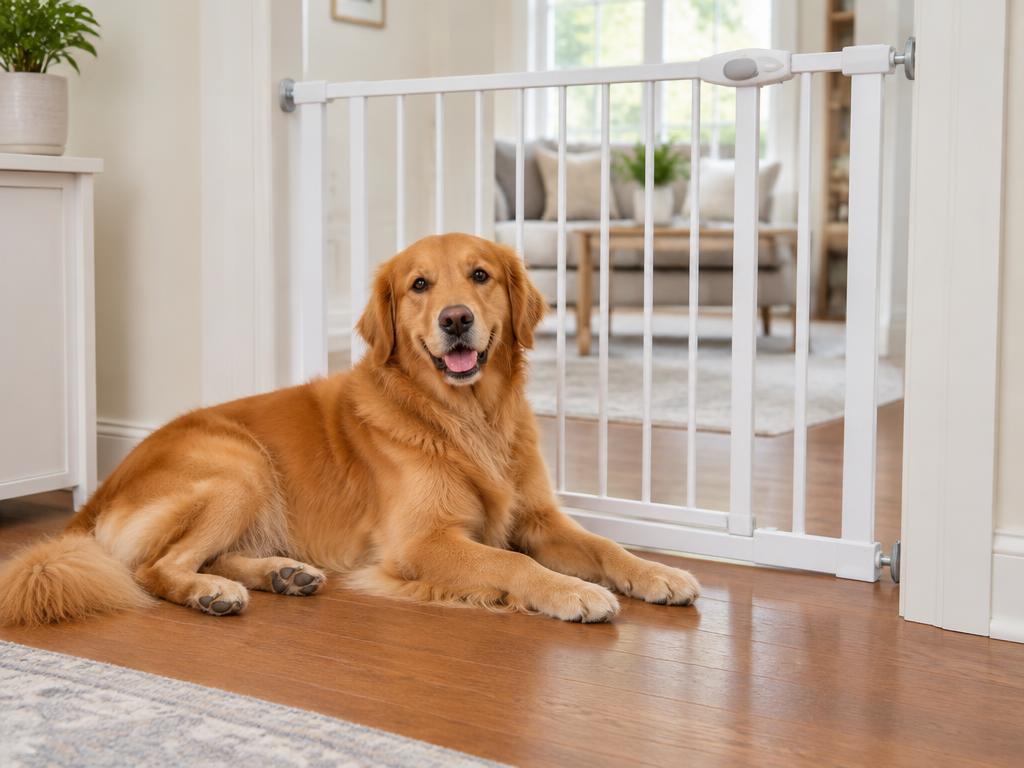
Choose a secure pet gate suitable for your dog's size and the doorway, following its installation instructions. Check for head-trapping gaps, loose fixtures, and nearby furniture that could help your dog climb over. Set up a comfortable bed, water, and safe flooring on the dog's side. Begin at ground level, not beside stairs. The gate is a management tool, not a punishment or a solution for serious separation distress.
- Check that the gate cannot shift under gentle pressure.
- Keep cables and swallowable objects outside the resting area.
Good to know: A gate that your dog can jump or force open is not an appropriate unsupervised barrier.
Step 2: Make the area pleasant before closing the gate
Leave the gate open and allow your dog to investigate freely. Place a few tiny rewards near the bed and calmly reward choosing to rest there. Sit nearby without asking for a long stay. Repeat during ordinary quiet moments rather than only when you need to leave. Avoid luring your dog inside and suddenly shutting the gate; that surprise can make the area feel like a trap.
Step 3: Practice closing with you beside your dog
When your dog is comfortable inside the area, briefly move the gate, reward relaxed behavior, and open it again. Progress to fastening it for a second while you remain on the same side. Check that paws and noses are clear of the hinge. If the latch sound causes worry, practice that sound separately at a comfortable distance. Increase difficulty only while your dog remains relaxed and willing to participate.
Good to know: Starting with you inside the area separates the gate movement from the challenge of distance.
Step 4: Step across the barrier for an instant
Move to the opposite side, remain close, and reward a relaxed glance or quiet pause. Return before your dog becomes worried. Start with very short repetitions rather than waiting for barking or scratching. If your dog stiffens, repeatedly paws at the gate, or tries to escape, reopen safely and make the next attempt easier. Do not punish vocalizing or wait out a frightened dog.
- Reward with small treats placed safely on the dog's side.
- Keep your first sessions short enough to end comfortably.
Step 5: Build distance separately from duration
Once brief separation at the gate is easy, take one small step away and return. Keep the time short while adding distance, then practice a slightly longer pause at a familiar distance. Ordinary household movement can be introduced gradually. Avoid leaving view immediately or adding visitors during early practice. Several easy repetitions are more useful than one long test that ends with frustration or an escape attempt.
Step 6: Offer suitable settling activities
Provide an appropriate chew or simple food activity if your dog already uses it safely under supervision. Count food rewards within the normal daily ration and remove damaged items promptly. An activity can support settling, but it should not hide growing distress. Watch what happens when the food finishes. Your dog should have comfortable footing, drinking water, and space to change resting position without being crowded against the gate.
Good to know: Food distraction is not evidence that a dog is comfortable being left alone.
Step 7: Use the skill within your dog's comfort level
Practice during short everyday tasks and return before your dog struggles. Maintain regular toilet breaks, exercise, company, and rest; a gate is not a substitute for meeting those needs. Do not leave a new setup unattended until safety and comfort are established. If your dog panics, injures themselves, or shows persistent distress when separated, seek veterinary advice and qualified reward-based behavior support rather than extending confinement.
This guide was drafted with AI assistance and published by the Pawlito team. It has no formal source list yet. Spotted an error? Tell us and we'll correct it. Read our editorial policy.
Ask about this guide
Leave a comment or a question. Comments are public, so use a first name only and don't include emails, phone numbers or addresses. An automated assistant may reply straight away with general suggestions — it can't diagnose your pet.