How to Teach Your Dog to Settle on a Mat
Build a voluntary resting routine with rewards, a comfortable mat, and gradual practice around everyday distractions.
- Written by
- Pawlito Editorial Team · AI-assisted guide
- Professional review
- Not yet reviewed by a veterinarian
- Published
- Last updated
In this guide (7 steps)
Step 1: Choose a quiet starting point
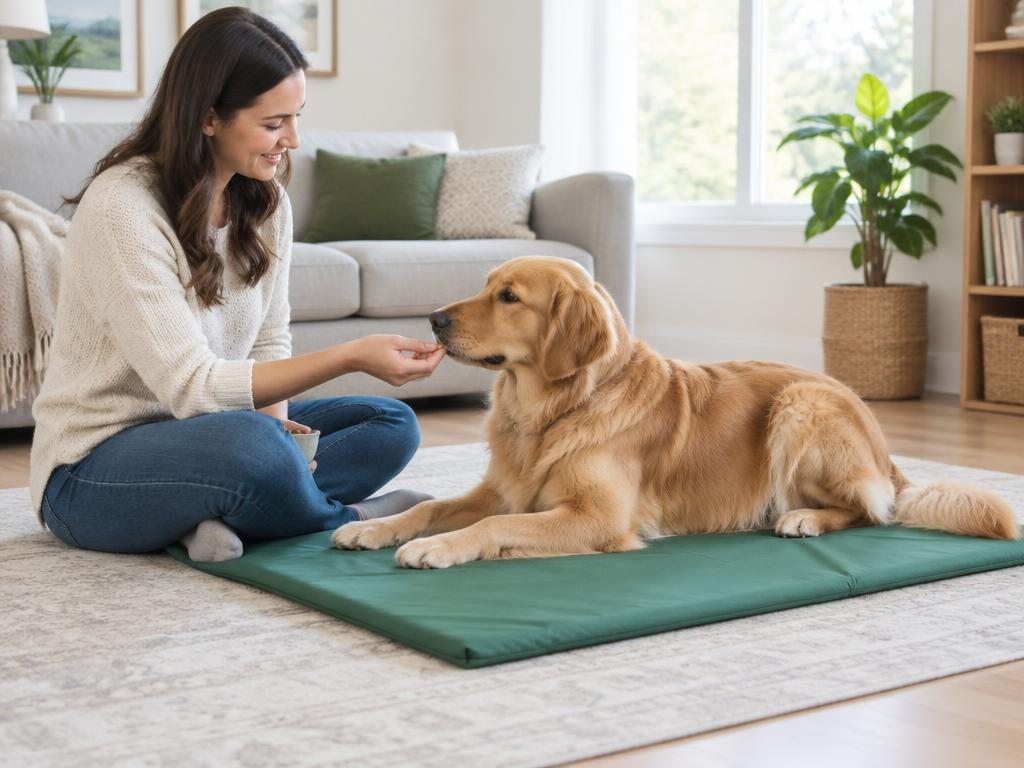
A settle mat gives your dog a predictable place to relax without shutting them away. Start after a toilet break and a comfortable walk, not when your dog is bursting with energy. Put a flat, non-slip mat near you in a quiet room. Keep tiny rewards ready and remove exciting toys. Choose somewhere your dog can leave freely rather than trapping them in a corner.
Good to know: A mat is a resting option, not a place to punish or isolate your dog.
Step 2: Reward interest in the mat
Place the mat down and wait. Mark a glance, sniff, or single paw on it with a soft yes, then place a reward on the mat. Delivering the reward there makes the location meaningful. Repeat without pushing your dog onto it. If they show no interest, reward beside the edge first and gradually place rewards farther onto the surface.
Step 3: Build four paws and a comfortable lie-down
Once your dog steps onto the mat readily, reward having all four paws on it. Wait for a sit or lie-down rather than repeating commands. If your dog already knows a comfortable down cue, use it once and reward. Avoid demanding a particular position from dogs with stiffness or pain; a relaxed, supported posture matters more than a perfectly square down.
Step 4: Pay for relaxation, not constant movement
Drop rewards gently between the front paws while your dog remains comfortable. Look for softer muscles, a hip rolled to one side, or their head lowering. Start with very short pauses between rewards. Do not keep waving food over their head, which can create an alert performance instead of rest. Calm delivery and your own quiet movement help reduce excitement.
Step 5: Add a cue and a clear release
Say mat just before your dog voluntarily walks onto it, then reward. After a brief successful rest, say a release word such as all done and invite them away. Distinguishing the beginning from the end prevents confusion. If they leave early, simply restart with an easier interval; do not drag them back or withhold normal needs until they comply.
Step 6: Introduce everyday distractions gradually
Practice while you sit, then while you stand briefly, then while you take a step away. Change one challenge at a time. Later try a quiet meal or a visitor sitting at a distance. Reward before your dog becomes worried or gets up. If they repeatedly leave, reduce duration or distraction and check whether the location is too hot, noisy, or uncomfortable.
Good to know: Never expect mat training alone to manage aggression or serious fear around visitors.
Step 7: Keep the skill flexible and kind
Move the same mat to another quiet room only after your dog understands the routine. Reward generously in each new place and shorten sessions again. Continue providing walks, play, social contact, and toilet access; settling is not a substitute for those needs. Sudden inability to rest, panting at rest, or new reluctance to lie down warrants veterinary advice rather than harder training.
This guide was drafted with AI assistance and published by the Pawlito team. It has no formal source list yet. Spotted an error? Tell us and we'll correct it. Read our editorial policy.

Ask about this guide
Leave a comment or a question. Comments are public, so use a first name only and don't include emails, phone numbers or addresses. An automated assistant may reply straight away with general suggestions — it can't diagnose your pet.