How to Teach Your Dog to Stay
Teach your dog a reliable stay with short, reward-based sessions that build duration, distance and distractions without frustration.
A calm, safety-first approachThis guide provides general education. Contact your veterinarian when symptoms are painful, persistent, or unusual.
- 1
1. Prepare a quiet, comfortable training space
Choose a familiar room with a non-slip floor, close the door and put away toys or food that could distract your dog. Train when your dog has had a toilet break and is comfortably settled, rather than bursting with energy or ready to sleep. Prepare small, easy-to-swallow rewards that suit their usual diet, and account for food rewards within their daily allowance. Keep the first sessions to one or two minutes, with only a handful of repetitions before a break. Let your dog stand, sit or lie down in a comfortable position, and avoid pressing their body into place. If holding a position appears uncomfortable, or your dog suddenly becomes reluctant to sit or lie down, stop and contact your vet.
- Quiet room with secure exits
- Comfortable, non-slip surface
- Small, suitable food rewards
- Fresh water available
- One or two minutes free from interruptions
Good to know: Keep rewards in an accessible pouch so you can deliver them promptly without rustling a packet.
- 2
2. Choose a starting position and teach a release word
Start with a position your dog already offers comfortably, such as a sit, and use that same position throughout the first few sessions. Choose a release word, such as 'free', that will mean the exercise has finished and your dog may move. Ask for the position once, or reward your dog when they offer it naturally if the position cue is not yet familiar. Feed one reward while they remain in place, then say 'free' and encourage them to move with a gentle invitation or a small step away. If necessary, toss a treat a short distance onto the clear floor after saying the release word, allowing them to collect it. Repeat this brief sequence until your dog begins to recognise that staying in position earns a reward and the release word permits movement.
Good to know: Use a release word you are unlikely to say accidentally in conversation, and ask everyone in the household to use it consistently.
- 3
3. Introduce the stay cue for a single moment
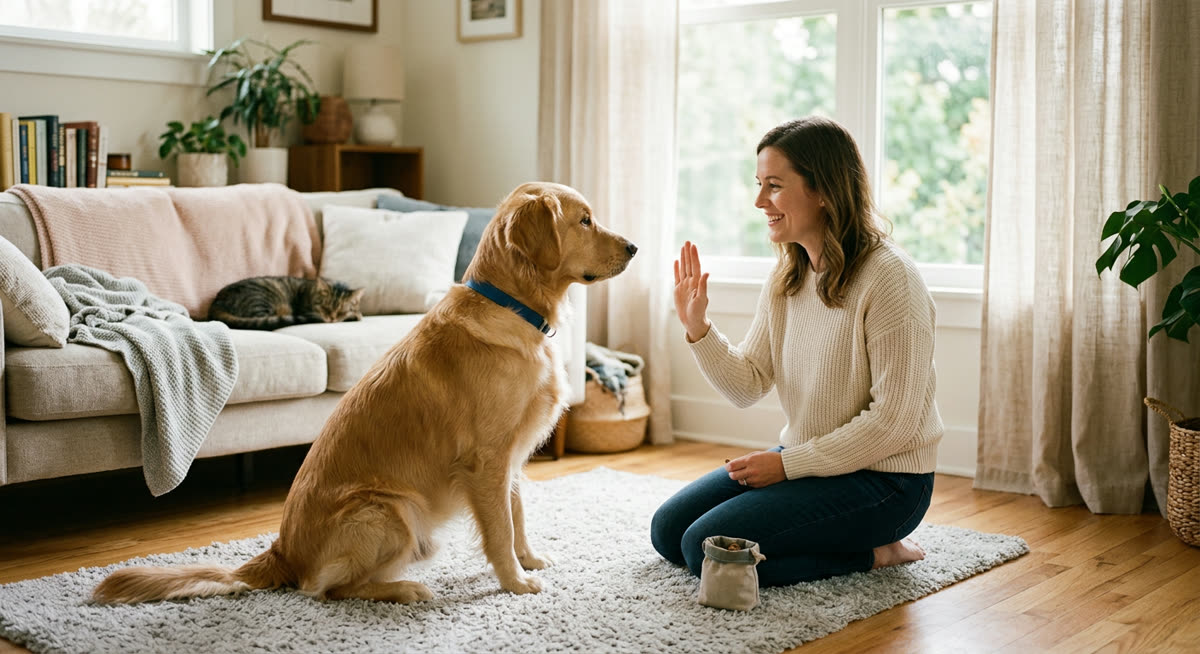
With your dog in the chosen position, stand close enough to deliver a reward without making them stretch or step forwards. Say 'stay' once in a calm voice and, if you want a hand signal, briefly show an open palm before lowering your hand. Pause for about one second, then reward your dog while they are still in position. Deliver the food at mouth level rather than holding it above or away from them, which could encourage movement. Say your release word after the reward, then invite your dog to move before setting up the next repetition. Complete three to five easy repetitions, shortening the pause if your dog repeatedly moves before you can reward them.
- Give the stay cue once
- Pause for one second
- Reward in the chosen position
- Release before inviting movement
Good to know: Keep your reward hand still during the pause so your dog is not tempted to follow it.
- 4
4. Build duration while staying close
Once your dog succeeds with several one-second stays, remain beside them and occasionally extend the pause to two seconds. Mix these slightly longer attempts with easy one-second repetitions instead of making every stay longer than the last. During a longer repetition, you can deliver another reward while your dog remains in position, then finish with the release word. Work towards a comfortable five-second stay over as many short sessions as your dog needs, rather than aiming for a long hold immediately. As a practical checkpoint, wait for around four successful attempts out of five before adding another second or two. If your dog stands up, changes position or walks away, reset without scolding and make the next pause shorter.
Good to know: Count silently rather than aloud, so your counting does not become an unintended part of the cue.
- 5
5. Add distance in very small movements
When a short stay is comfortable, reduce the duration again and introduce distance by shifting your weight back without moving your feet. Return to your original stance, reward your dog in position and give the release word. Progress to a tiny step away, immediately step back to your dog and reward before releasing them. Increase to a full step only when the smaller movement is consistently easy, keeping the total waiting time brief. Avoid turning your back or walking out of sight at this stage, as these are separate challenges rather than simple extensions of distance. If your dog follows you, make your next movement smaller instead of repeating 'stay' or physically blocking them.
- Begin with a weight shift
- Try a tiny step away
- Return before rewarding
- Keep the waiting time short
- Save out-of-sight work for later
Good to know: Return to your dog to reward most practice stays rather than regularly calling them towards you, which can encourage anticipation.
- 6
6. Introduce gentle, controlled distractions
Practise distractions only after your dog can manage a short stay with you a step away in the quiet room. Start close to your dog again and choose one mild distraction, such as slowly moving your empty hand at your side. Give the stay cue, make the small movement once and reward your dog if they remain in position. Gradually try other manageable changes, such as lifting your foot or having a familiar person sit quietly across the room. Make each new distraction easier by reducing its intensity, shortening the stay or increasing the distance between your dog and the distraction. Stop and create more space if your dog becomes worried, barks repeatedly or cannot disengage from whatever has caught their attention.
- A slow hand movement
- A small foot movement
- A person seated at a distance
- A quiet object placed well away
Good to know: Change only one challenge at a time: duration, distance or distraction.
- 7
7. Practise in new places and everyday situations
Move to another quiet room and return to an easy, one-second stay with you standing close to your dog. Treat each new setting as a fresh lesson, even if your dog can manage longer stays in the original room. Once indoor practice is comfortable, try a securely enclosed garden or a quiet outdoor area with your dog wearing a well-fitted harness and lead. Keep the lead loose and remain within its length, using it as a safety backup rather than pulling your dog into position. Introduce useful situations gradually, such as asking for a brief stay while you place an empty bowl on a worktop or pick up your coat. Never rely on a stay to protect your dog beside traffic, near livestock or at an open external door; maintain secure physical barriers or lead control.
- Restart with an easy stay
- Choose quiet, secure locations
- Use a harness and lead outdoors
- Keep distance within the loose lead
- Maintain barriers around hazards
- 8
8. Troubleshoot without pressure or punishment
If your dog repeatedly breaks the stay, check whether you have increased the waiting time, moved too far away or introduced a distraction they cannot yet manage. Return to the last easy version and reward a few successful repetitions before finishing the session. If your dog gets up as you reach for food, prepare the reward beforehand and practise delivering it smoothly while they remain in position. If they move immediately after eating, shorten the gap between the reward and release word, then rebuild that gap gradually. End the session if your dog repeatedly turns away, becomes restless or stops engaging, and reconsider the setting, reward and timing before trying again. Seek help from a qualified, reward-based trainer for persistent difficulties, and contact your vet if there is a sudden behavioural change, apparent pain or unusual reluctance to move.
Good to know: Briefly note what happened just before a failed attempt, as this often reveals which part of the exercise became too difficult.
- 9
9. Finish gently and maintain the skill
Finish each session after an easy successful repetition, give the release word and put the rewards away. Offer a relaxed activity afterwards, such as a short sniffing break, access to water or time to rest without further demands. Record the setting, approximate stay length and distance you practised so the next session starts at a realistic level. Continue with one or two brief sessions a day if your dog enjoys them, mixing familiar successes with occasional small challenges. As the skill becomes reliable, vary how often you give food during an easy stay, while still rewarding generously for new places or harder tasks. Continue using a clear release word and revisit easier practice whenever circumstances change, remembering that a stay is a trained skill rather than a substitute for supervision.
- Finish with an easy success
- Release clearly
- Allow a relaxed break
- Note the successful difficulty level
- Keep future sessions brief
Ask about this guide
Leave a comment or a question about your own pet and the Pawlito assistant replies right away with practical next steps.