How to Teach Your Dog to Wait at Doors
Teach a polite pause at doors and gates so your dog stays safe and calm instead of rushing out.
- Written by
- Pawlito Editorial Team · Pet Care Writers
- Professional review
- Not yet reviewed by a veterinarian
- Published
- Last updated
In this guide (6 steps)
Step 1: Start at an inside door
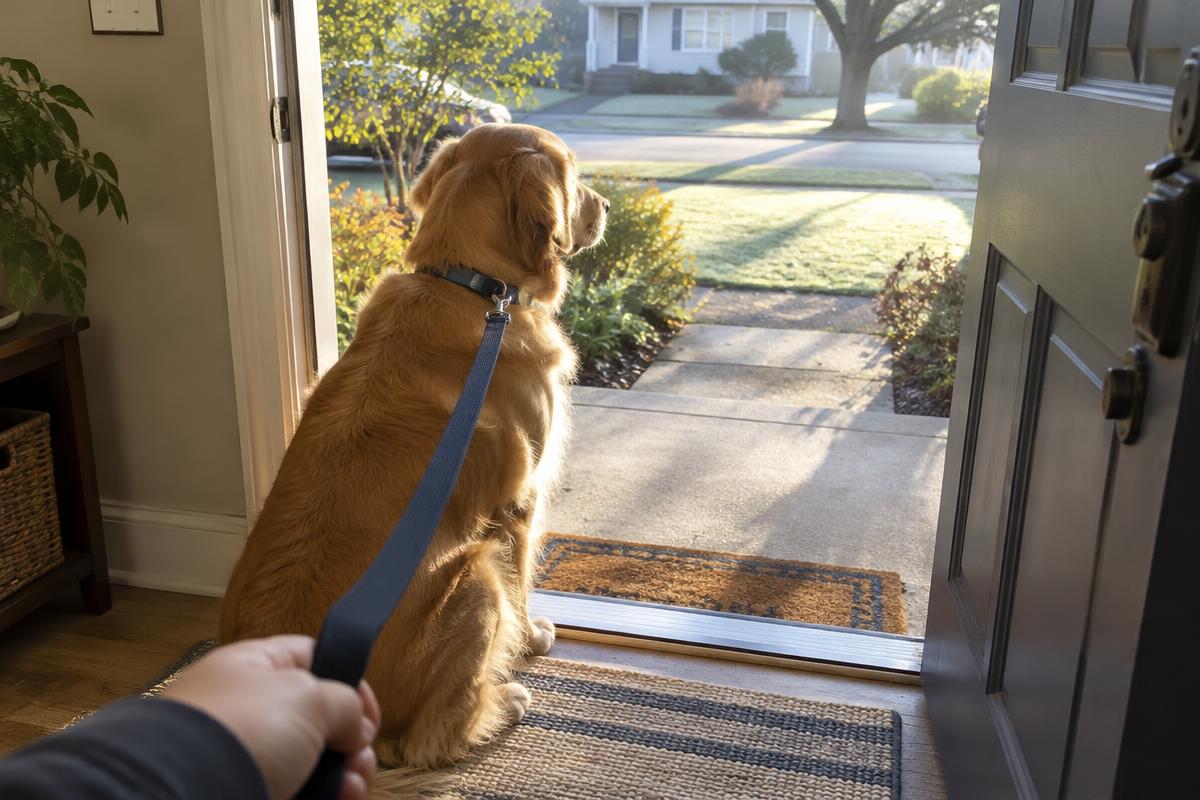
Begin with a door that leads to another room, not the street. Put your dog on a lead for safety. Stand by the door with treats ready. Choose a quiet time when your dog is not already overexcited.
Step 2: Reward stillness as the door moves
Touch the handle. If your dog stays still, mark and reward. Open the door an inch. If they move forward, calmly close it. If they hold position, reward. Your dog learns that staying put makes the door open.
Step 3: Add a release word
When your dog waits for a few seconds while the door is open, say a release word such as okay or free, and walk through together. The release tells them when it is their turn, so waiting has a clear end.
Step 4: Build duration and distance
Gradually open the door wider and wait longer before releasing. Then try stepping through yourself first while your dog waits. Increase one element at a time and keep the lead on for any door to the outside.
Good to know: Never rely on a wait cue alone near traffic. Always use a lead or secure gate.
Step 5: Practise at the front door and car
Move to the front door, then the car door, rewarding waits before release. These are high-excitement spots, so make them easy at first and reward generously.
Step 6: Maintain the habit
Ask for a brief wait at doors throughout the day. Consistency from every household member makes it a natural routine. If your dog keeps rushing, return to easier practice inside.
This guide was drafted with AI assistance and published by the Pawlito team. It has no formal source list yet. Spotted an error? Tell us and we'll correct it. Read our editorial policy.
Ask about this guide
Leave a comment or a question. Comments are public, so use a first name only and don't include emails, phone numbers or addresses. An automated assistant may reply straight away with general suggestions — it can't diagnose your pet.