How to Trim Your Guinea Pig's Nails
Trim guinea pig nails safely with the right tools, good restraint and small, careful cuts.
- Written by
- Pawlito Editorial Team · Pet Care Writers
- Professional review
- Not yet reviewed by a veterinarian
- Published
- Last updated
In this guide (6 steps)
Step 1: Know when nails need trimming
Indoor guinea pigs often need nail trims every few weeks. Nails that curl, catch on bedding or change how your guinea pig walks are too long.
Step 2: Gather supplies
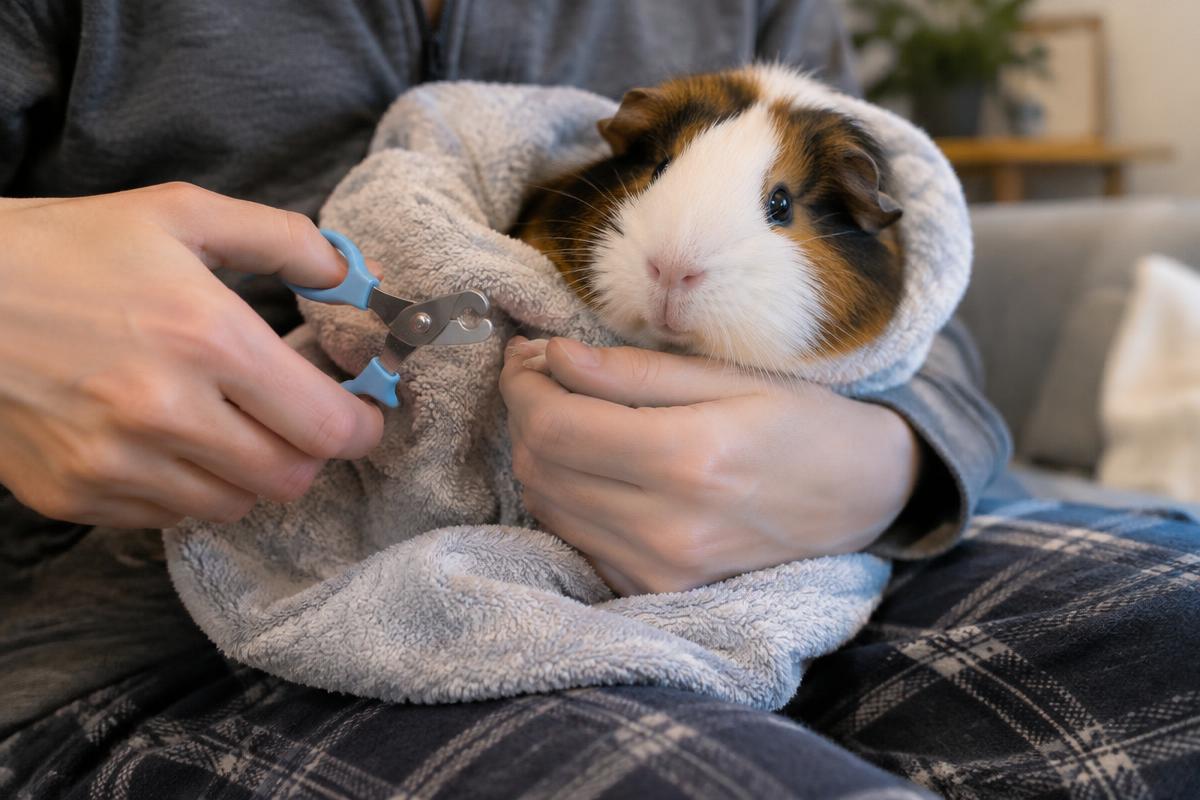
Use small-animal nail clippers, a towel, a bright light, treats and styptic powder in case of bleeding. Having a helper makes it easier.
Step 3: Hold your guinea pig securely
Sit with your guinea pig wrapped loosely in a towel on your lap, leaving one foot out at a time. Support their body so they feel secure.
Step 4: Find the quick
In light nails, the pink quick is visible. Cut a small amount beyond it. For dark nails, take tiny slivers and stop when you see a darker dot in the centre of the cut surface.
Good to know: Trimming a little more often is safer than one big cut.
Step 5: Cut and reward
Make quick, clean cuts. If a nail bleeds, apply styptic powder and gentle pressure. Give treats between feet, and take breaks if your guinea pig is stressed.
Step 6: Ask for help when needed
If nails are very overgrown, curled or bleeding persists, see a veterinarian. They can trim safely and show you techniques.
This guide was drafted with AI assistance and published by the Pawlito team. It has no formal source list yet. Spotted an error? Tell us and we'll correct it. Read our editorial policy.

Ask about this guide
Leave a comment or a question. Comments are public, so use a first name only and don't include emails, phone numbers or addresses. An automated assistant may reply straight away with general suggestions — it can't diagnose your pet.