How to Weigh Your Guinea Pig at Home and Track Changes
Get consistent, low-stress weight readings with a stable container and simple records, and recognize when a change needs veterinary advice.
- Written by
- Pawlito Editorial Team · AI-assisted guide
- Professional review
- Not yet reviewed by a veterinarian
- Published
- Last updated
In this guide (7 steps)
Step 1: Use weighing as monitoring, not diagnosis
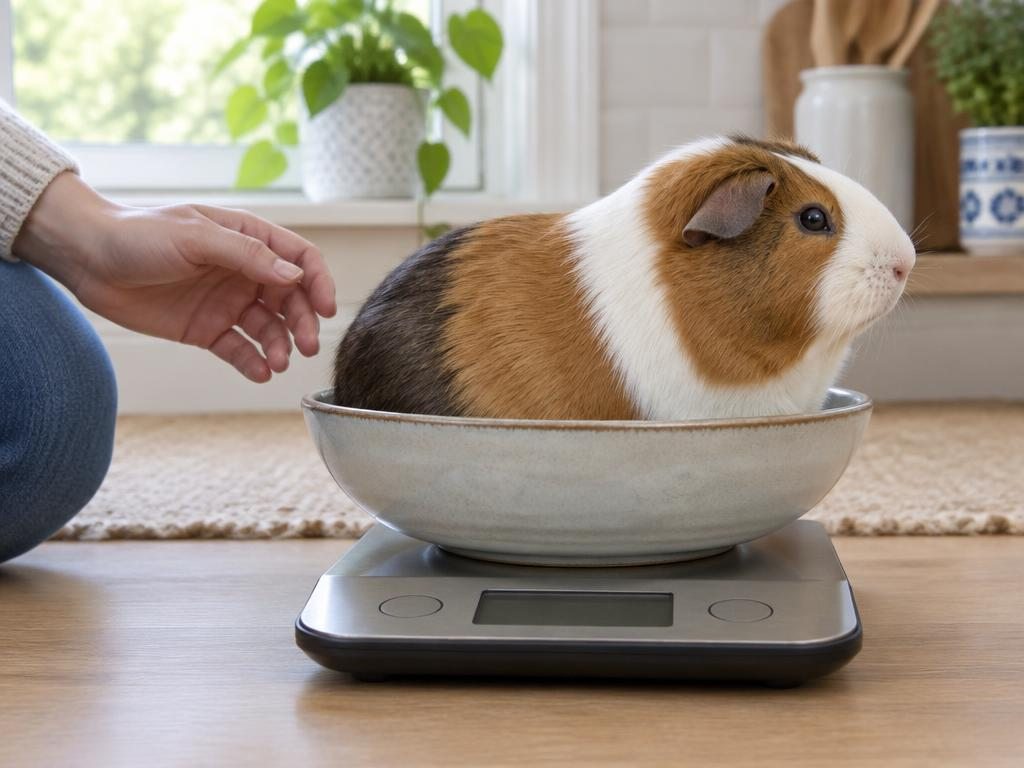
Weight records can help you notice changes that are hard to see through fur, but they cannot tell you the cause. Choose a digital scale that reads in grams and supports your guinea pig’s weight. Use a shallow, stable container with non-slip lining. Prepare everything on the floor or a very low surface so a sudden hop cannot turn into a fall.
Good to know: If your guinea pig stops eating, produces few droppings, or has trouble breathing, seek urgent veterinary care rather than waiting for another weighing.
Step 2: Check the scale and record setup
Put the scale on a flat firm surface, switch it on, and check it with a known reference weight according to the manufacturer’s instructions. Place the empty lined container on top and press tare so the display reads zero. Use the same container and lining each time where possible. A soft carpet or wobbling surface can produce misleading readings even when the numbers look precise.
Step 3: Transfer your guinea pig with full support
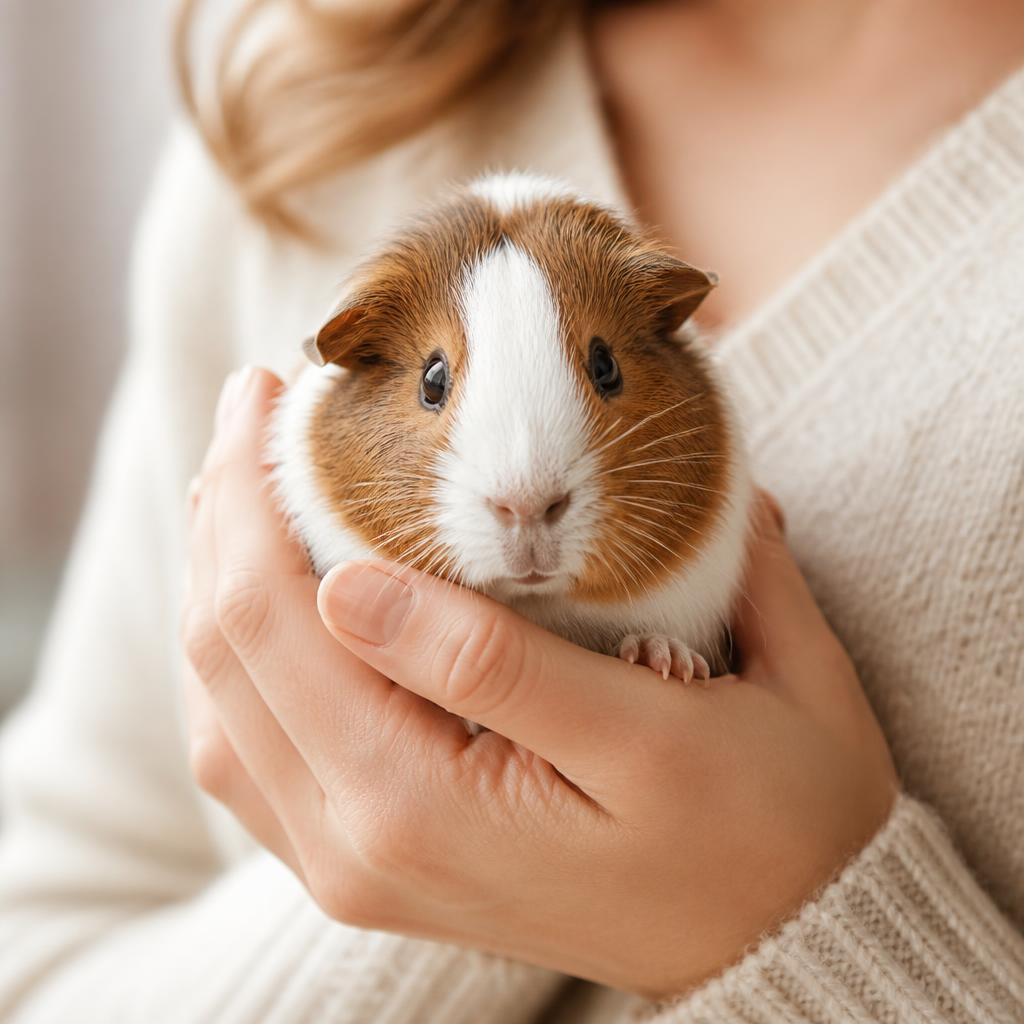
Approach calmly, support the chest with one hand and hindquarters with the other, and place your guinea pig gently in the container. Stay close enough to prevent a jump without pressing down on the scale. Do not weigh in a deep covered box that hides breathing or posture. If your guinea pig panics, stop, allow recovery, and use calmer handling next time.
Step 4: Wait for a stable reading
Allow a moment for movement to settle and note the stable value in grams. If readings fluctuate widely, check that the container is not touching nearby furniture and that your hands are not adding pressure. Repeat once if needed rather than holding your guinea pig in place for a long session. A few leaves from their normal food may help make the experience pleasant.
Step 5: Keep comparable records for each animal
Write down the date, weight, appetite, droppings, and anything unusual such as travel or a diet change. Keep separate records for cage mates. Weigh at a similar time relative to normal feeding, without withholding hay or water. Ask your veterinarian how often to monitor your individual animal, especially during recovery, pregnancy, or a prescribed nutritional plan.
Good to know: Never fast a guinea pig just to make the readings more comparable.
Step 6: Look for trends and associated symptoms
Small differences can reflect gut contents or measurement variation, while a repeated downward trend deserves attention. Compare new readings with your guinea pig’s own history rather than an internet ideal weight. There is no single universal safe loss threshold for every animal. Contact an experienced veterinarian for unexplained loss, changes in eating or droppings, or a sudden gain accompanied by swelling or illness.
Step 7: Share useful records with your veterinarian
Bring the dated log and describe any change in chewing, activity, water intake, and food access. Confirm that one cage mate is not preventing another from eating. Do not begin supplements, restrict food, or force-feed solely because of a scale reading without veterinary direction. Continue unlimited suitable hay and normal water access, and use weight monitoring to support professional care rather than postpone it.
This guide was drafted with AI assistance and published by the Pawlito team. It has no formal source list yet. Spotted an error? Tell us and we'll correct it. Read our editorial policy.
Ask about this guide
Leave a comment or a question. Comments are public, so use a first name only and don't include emails, phone numbers or addresses. An automated assistant may reply straight away with general suggestions — it can't diagnose your pet.