How to Feed a Balanced Diet to Pet Birds
Build a safer, balanced feeding routine for your bird with species-specific food choices, gradual changes and simple daily checks.
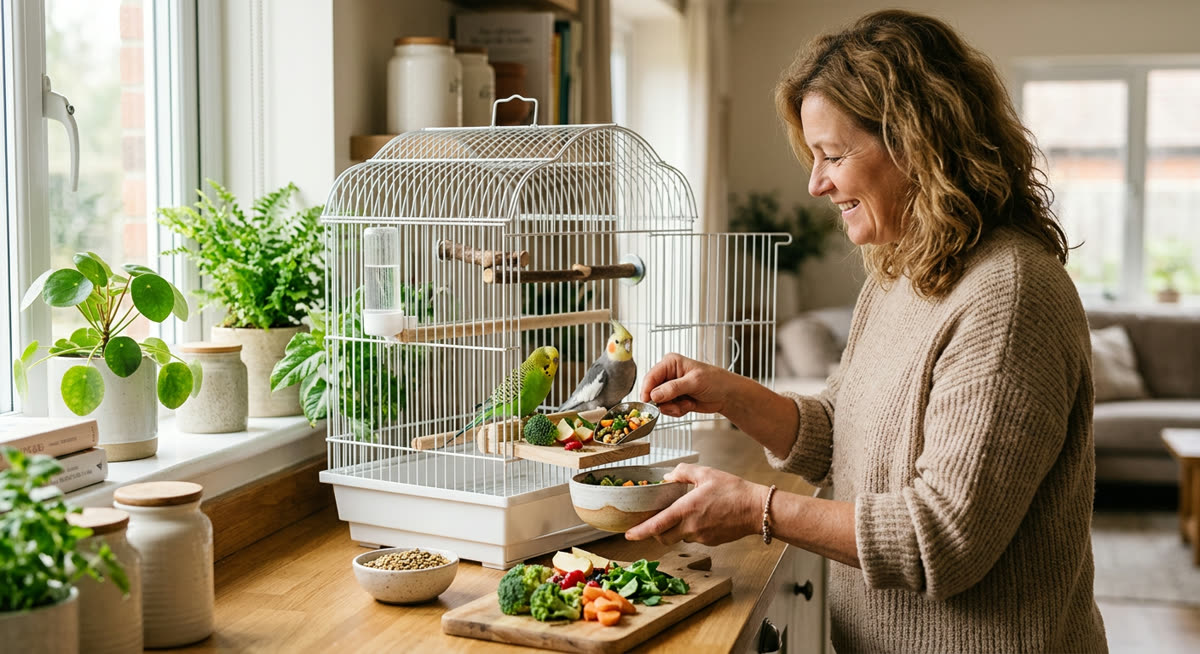
A calm, safety-first approachThis guide provides general education. Contact your veterinarian when symptoms are painful, persistent, or unusual.
- 1
1. Establish what a balanced diet means for your bird
Identify your bird’s species, age and life stage before choosing food, because parrots, finches, canaries, pigeons and nectar-feeding birds have different nutritional needs. Arrange a dietary review with an avian vet, especially if your bird is newly adopted, laying eggs, raising chicks or living with a health condition. Explain what your bird actually eats rather than listing everything you put in its bowl, as selective feeding can leave apparently varied diets unbalanced. Ask the vet to recommend a suitable staple food and practical proportions for fresh foods, seeds and treats. Nectar-feeding species such as lories and lorikeets need a specialist feeding plan rather than a standard parrot pellet-and-vegetable routine. If you have an unweaned chick, seek experienced veterinary guidance instead of attempting hand-rearing or changing its feeding method yourself.
- Confirm species and approximate age
- List foods actually eaten
- Note breeding or egg-laying activity
- Request a species-specific feeding plan
Good to know: Take photographs of food packaging and a typical filled bowl to your bird’s dietary review.
- 2
2. Record the starting diet and organise your equipment
Keep a food diary for several typical days, noting what you offer, what disappears and what ends up discarded beneath the cage. Use digital scales accurate enough for your bird’s size, ideally with a stable perch, and introduce them gradually with rewards. Record weight at the same time of day, preferably before the usual morning meal, without withholding food to obtain a reading. Gather separate, easily cleaned bowls for the staple diet, fresh foods and drinking water so that wet ingredients do not spoil dry food. Choose secure stainless-steel or intact glazed ceramic dishes, and replace anything cracked, chipped or difficult to clean. In a shared enclosure, provide several feeding stations and watch each bird eat so that a confident cage-mate cannot quietly monopolise the food.
- Digital scales and a stable perch
- Separate food and water dishes
- Food diary or tracking app
- Clean storage containers
Good to know: A short video of your bird eating can help your vet spot food sorting or difficulty handling particular textures.
- 3
3. Choose an appropriate staple rather than relying on favourite foods
For many companion parrots, a reputable formulated pellet is an appropriate nutritional foundation, but confirm the product and intended proportion with your avian vet. Select a pellet size your bird can comfortably handle and check that the label identifies it as a complete food suitable for the species or bird group. Seed-eating birds such as finches and canaries also need a carefully balanced plan, so do not assume either a seed-only mix or a generic parrot food meets their needs. For nectar-feeding birds, use an appropriate commercial nectar formula prepared exactly as directed, including its dilution and replacement instructions. Measure the daily allowance recommended for your bird and divide it between feeding opportunities without restricting access in a way that risks inadequate intake. Keep seeds, nuts and other energy-dense favourites within the agreed allowance rather than topping them up whenever your bird rejects a less familiar food.
- Check species suitability
- Read the complete-food statement
- Choose a manageable food size
- Check expiry and storage instructions
Good to know: Buy a small pack of a suitable staple first, then use the original packaging to keep its batch number and feeding instructions.
- 4
4. Add fresh foods in suitable amounts
Offer fresh foods in the proportions agreed for your species, using vegetables to provide variety rather than allowing them to displace the nutritional staple. For many parrots, suitable choices include broccoli, carrot, sweet pepper, courgette and leafy greens such as kale or pak choi. Present manageable shreds, slices or larger graspable pieces according to your bird’s size and usual feeding behaviour. Where fruit suits the species, offer modest portions of foods such as berries or apple with its seeds and core removed, rather than treating fruit as an unlimited snack. Introduce one unfamiliar ingredient at a time so you can track acceptance and notice changes in droppings or appetite. Plain cooked grains or thoroughly cooked pulses may fit some feeding plans, but use them as measured additions and never as a replacement for a balanced staple.
- Rotate suitable vegetables
- Keep fruit portions species-appropriate
- Remove stones, pits and apple seeds
- Serve grains and pulses plain
Good to know: Try the same vegetable in two safe textures, such as finely grated and thinly sliced, before deciding your bird dislikes it.
- 5
5. Prepare food safely and exclude unsuitable extras
Wash your hands, bowls and preparation surfaces, then rinse fresh produce thoroughly under running water before cutting it. Keep bird food away from raw meat and its utensils, and serve cooked ingredients cooled rather than hot. Never offer avocado, chocolate, caffeinated drinks or alcohol, and keep onion, garlic, heavily salted snacks and foods containing xylitol out of your bird’s diet. Avoid fruit stones, apple seeds, uncooked dried beans and any food that is mouldy, rancid or of uncertain freshness. Do not add vitamin powders, calcium products or other supplements unless your vet recommends them for your bird’s actual diet and needs. Most parrots, finches and canaries do not need insoluble grit, while pigeons and some other species have different requirements that you should confirm with an avian vet.
- Wash produce and preparation tools
- Remove unsafe seeds and stones
- Exclude harmful human foods
- Use supplements only with veterinary advice
Good to know: Keep a short bird-safe food list beside the feeding area so every household member follows the same rules.
- 6
6. Change the diet gradually while checking actual intake
Introduce the new staple alongside familiar food and allow your bird to investigate it without immediately removing the food it recognises. Offer a little in a separate dish or as a hand-presented reward, and demonstrate interest without putting food in your mouth or sharing saliva. Check for genuine eating by watching your bird swallow and inspecting leftovers, because crushed pellets or scattered crumbs do not prove adequate intake. Only reduce the previous diet once your bird reliably eats the replacement, following a pace agreed with your avian vet. Weigh daily during the transition when this can be done without undue stress, and record appetite, activity and the amount of droppings produced. Never starve a bird into accepting new food, and contact your vet promptly if intake falls, weight trends down or your bird becomes quieter than usual.
Good to know: Expect a conversion to take weeks in some birds, and judge progress by reliable eating rather than an arbitrary deadline.
- 7
7. Build a clean, predictable daily feeding routine
Refresh drinking water at least daily and immediately whenever it contains food, droppings or other debris, checking that your bird can use the drinker provided. Wash food and water dishes with hot water and washing-up liquid, rinse thoroughly and dry them before refilling where appropriate. Offer fresh produce at predictable times when you can watch your bird eat, and remove it within two hours or sooner in warm conditions. Replace nectar and moistened foods according to the manufacturer’s directions, using stricter hygiene and more frequent changes when heat speeds spoilage. Inspect dry food throughout the day, removing contaminated portions and checking seed bowls beneath the husks rather than assuming a full-looking bowl contains edible food. Use part of the measured daily allowance in clean, bird-safe foraging toys once your bird knows how to use them, while keeping an easily accessible food source available.
- Refresh and inspect drinking water
- Wash bowls every day
- Remove wet food promptly
- Check beneath seed husks
- Count foraging food in the daily allowance
Good to know: Keep a second set of bowls so a clean, dry set is always ready at feeding time.
- 8
8. Troubleshoot rejection and recognise when to call the vet
If your bird refuses a suitable food, change one feature at a time, such as its cut, bowl position or presentation, while maintaining familiar food intake. Offer new items beside an accepted vegetable or during a calm shared mealtime, without seasoning them or adding sugary coatings. If your bird sorts a mixed bowl, serve components separately so you can see what is being eaten and discuss persistent avoidance with your vet. Moist foods can make droppings look wetter, but persistent changes, markedly fewer droppings or blood warrant veterinary advice rather than a home diagnosis. Contact an avian vet promptly if your bird stops eating, repeatedly vomits, loses weight or has trouble picking up or swallowing food. Treat weakness, breathing difficulty, collapse or suspected poisoning as urgent, and do not force-feed or give home remedies while seeking help.
Good to know: Keep your avian vet’s number and an out-of-hours contact somewhere accessible before a feeding problem occurs.
- 9
9. Maintain the plan and review it as your bird’s needs change
Once your bird is eating the intended diet consistently, continue weighing regularly, often weekly for a stable adult unless your vet advises otherwise. Review the food diary alongside weight trends, activity and leftovers so that portion changes reflect actual intake rather than an empty-looking dish. Store dry food in its original bag inside a clean, sealed container in a cool, dry place, and follow any refrigeration instructions on specialist products. Avoid adding new food on top of old supplies, and discard anything past its expiry date or showing moisture, insects or an unusual smell. Revisit the feeding plan with your avian vet when your bird ages, changes activity level, begins laying eggs or develops a health concern. Keep offering safe variety and enjoyable foraging, but protect the established nutritional foundation instead of repeatedly replacing it with whichever food is currently most popular.
Ask about this guide
Leave a comment or a question about your own pet and the Pawlito assistant replies right away with practical next steps.