How to Bathe a Pet Bird and Keep Feathers Healthy
Make bathing a pet bird safe and stress-free with gentle methods, comfortable water, and expert tips for drying and healthy feathers.
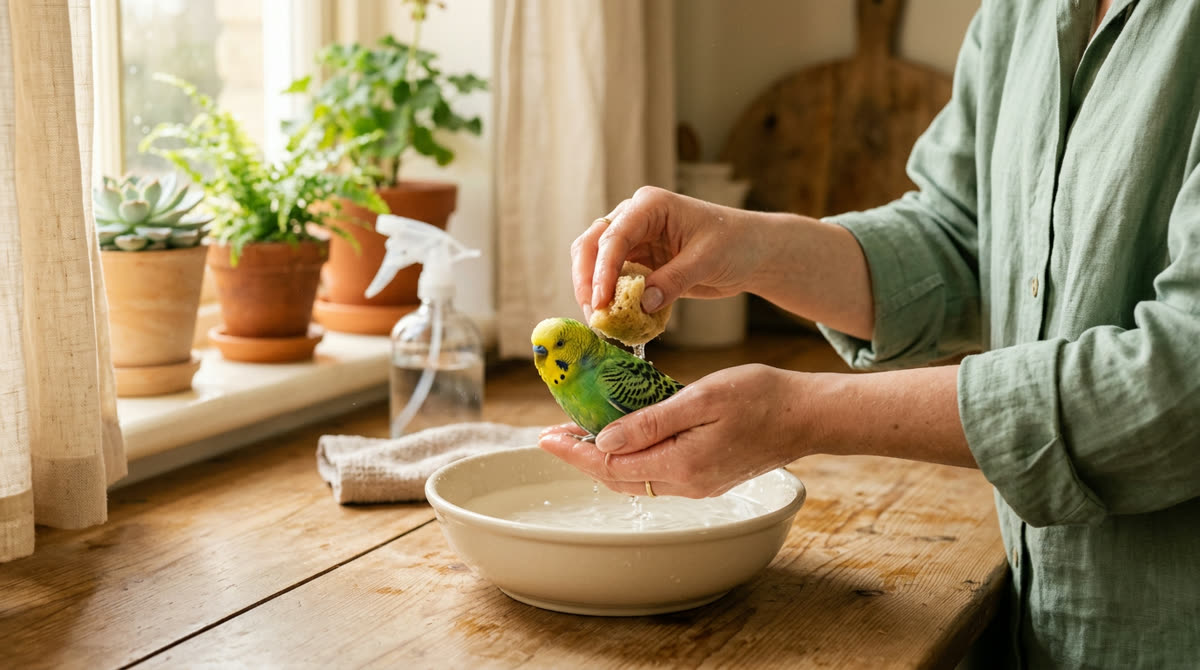
A calm, safety-first approachThis guide provides general education. Contact your veterinarian when symptoms are painful, persistent, or unusual.
- 1
Check Your Bird’s Health and Readiness
Before bathing a pet bird, spend 2–3 minutes watching its breathing, posture, balance, and interest in its surroundings so you can recognize changes during the bath. A bird that is alert, steady on its perch, and behaving normally is a better candidate than one that is unusually quiet, weak, or persistently fluffed up. Postpone bathing and contact an avian veterinarian if you notice discharge from the eyes or nostrils, reduced appetite, new balance problems, or tail bobbing with each breath while resting. Open-mouth breathing at rest, collapse, or severe breathing difficulty warrants urgent veterinary care, not an attempt to refresh the bird with water. Ask your veterinarian for individualized instructions before bathing an unweaned chick, a bird recovering from illness or surgery, or one with mobility limitations, wounds, or a bandage. For a newly adopted or bath-shy bird, first build confidence with its usual handling routine rather than adding restraint and unfamiliar water on the same day. Bathing supports normal preening and helps remove loose dust and debris, but it does not treat feather loss, itching, or an underlying illness.
- Check breathing while the bird is resting.
- Confirm normal alertness, appetite, and balance.
- Look for wounds, bandages, or active bleeding.
- Identify an avian veterinarian before problems arise.
Good to know: Birds often conceal illness, so a noticeable change from your bird’s normal behavior matters even if it seems subtle.
- 2
Choose a Bathing Method Your Bird Accepts
Choose among a shallow dish, gentle misting, or a supervised shower setup based on your bird’s preferences and ability to stand securely, rather than assuming every member of a species enjoys the same method. Budgies, canaries, and finches may investigate a shallow dish, while some parrots prefer droplets falling like light rain, but individual preferences vary considerably. For a small bird’s first dish bath, start with approximately ½ inch of water and increase only if its size and stable footing allow, keeping the water well below its chest while standing. A larger bird needs a wider, heavier container, not automatically deeper water, because bathing should never require swimming or struggling to keep its head above the surface. If you choose misting, use a dedicated spray bottle with a gentle setting that produces falling droplets rather than a forceful stream. A shower is appropriate only for a bird already comfortable with it, using a secure bird-safe shower perch outside the direct spray and away from shampoo, soap, and temperature changes. Offer one method at a time and preserve an easy exit, since the ability to move away makes voluntary bathing safer and less frightening.
- Dish bath: shallow, stable, and easy to exit.
- Misting: gentle droplets from a dedicated bottle.
- Shower: secure perch outside the direct stream.
- Every method: continuous supervision and a choice to leave.
Good to know: A bird drinking from a bath dish is not necessarily ready to bathe; leave room for investigation without splashing it to trigger a response.
- 3
Prepare Plain Water and Clean Equipment
Use fresh, potable water that feels neutral to slightly warm against the inside of your wrist, not hot, icy, or heavily chilled. If you want a measured starting point, approximately 75–85°F (24–29°C) is a reasonable comfortable range, although your bird may prefer the cooler end. Wash the bathing dish with mild, unscented dish detergent before use, rinse until all residue is gone, and fill it immediately before the session. Use a spray bottle that has never held cleaners, pesticides, fragrances, or other chemicals, because rinsing a repurposed chemical bottle does not make it a safe bird mister. Plain water is enough for routine pet bird bathing; do not add shampoo, soap, essential oils, vinegar, disinfectant, or products marketed to make feathers shiny unless your avian veterinarian specifically directs their use. Avoid salt baths and commercial feather sprays as routine grooming tools, since ingredients left on feathers may irritate the bird or be swallowed during preening. If feathers are contaminated with cooking oil, paint, glue, household chemicals, or another sticky substance, stop home cleaning attempts and promptly contact an avian veterinarian for substance-specific guidance.
- Fresh drinking-quality water.
- Clean, thoroughly rinsed bathing dish.
- Dedicated chemical-free misting bottle.
- No routine additives or feather conditioners.
Good to know: Do not cut away contaminated feathers or use solvents to dissolve a sticky patch; both can create additional injuries or exposure.
- 4
Set Up a Warm, Quiet Bathing Area
Schedule the bath in the morning or early afternoon, ideally leaving several hours before bedtime so your bird can dry and preen while awake. Choose a comfortably warm room, roughly 75–80°F (24–27°C), and eliminate drafts from open windows, air-conditioning vents, and fans without making the space hot or stuffy. Close exterior doors and windows, turn off ceiling fans, and keep cats, dogs, and unsupervised children out of the room before bringing the bird over. Put a shallow bath on a stable, low surface or an appropriate cage platform, and protect the surrounding area with a towel positioned where toes cannot snag in loose loops. For a smooth dish, use a clean, flat, textured insert that sits securely, cannot shift, and has no frayed edges or pieces the bird might chew off. Avoid kitchens during cooking and bathrooms containing aerosol products, toilet cleaners, or an open toilet, because ordinary household hazards remain dangerous during a bath. Set out a dry perch and any reward beforehand so you never need to leave your bird unattended near water.
- Warm room with no direct drafts.
- Closed windows and stopped ceiling fans.
- Stable bath with secure footing.
- Dry perch and small reward within reach.
- Other animals kept outside the room.
Good to know: Never use a filled sink, bucket, or bathtub as a substitute for a shallow bird bath; depth, slippery sides, and drain hardware create avoidable hazards.
- 5
Introduce Water Without Restraint
Place the prepared dish within easy reach and allow 5–10 minutes for your bird to look at it, approach it, or ignore it without being pushed closer. You can gently ripple the water with a clean finger or offer a familiar cue, but avoid tapping loudly, splashing its face, or repeatedly moving the dish toward it. For misting, first spray away from the bird to check the nozzle, then release one or two light sprays into the air above and to the side so droplets settle gently onto its body. Start with the nozzle about 18–24 inches away, adjusting for the spray pattern so it produces soft falling droplets rather than a concentrated jet. Comfortable birds may voluntarily approach, fluff their body feathers, lower their bodies, or spread their wings, although these signs should be interpreted alongside relaxed behavior and normal breathing. Leaning away, scrambling, frantic flight, a rigid posture, or repeated attempts to escape mean you should stop and offer a dry resting place. Reward calm investigation with praise or a tiny familiar treat, and consider a peaceful refusal a successful introduction rather than a reason to force the bath.
Good to know: Never hold the wings open, pin the bird in place, or dunk its body or head; restraint can cause injury and make future bathing much harder.
- 6
Keep the Bath Gentle and Bird-Led
Once your bird chooses to participate, let it control how much of its body becomes wet rather than trying to saturate every feather. For a first successful session, approximately 2–5 minutes of actual bathing is enough, and you should end sooner whenever the bird moves away or loses interest. During misting, apply a few gentle sprays, pause for 10–20 seconds to observe the response, and continue only while the bird remains comfortable and engaged. Direct falling droplets toward the back and body rather than spraying the eyes, nostrils, ear openings, or mouth, and never direct a shower stream at the bird’s face. In a dish bath, allow self-directed splashing and head movements without pushing the bird under water or manually rubbing its feathers. Do not scrub against feather growth, pull off keratin sheaths, or massage newly growing pin feathers, which can be sensitive and may contain a blood supply. Watch continuously for slipping, fatigue, or breathing changes, and replace the water immediately if droppings enter it rather than allowing the bird to continue bathing or drinking.
Good to know: Water beading on the feather surface does not mean the bath failed; there is no need to overcome the feathers’ natural water resistance.
- 7
Troubleshoot Refusal and Recognize Stop Signs
If your bird refuses to bathe, remove the setup after about 10 minutes and try again another day rather than chasing it with a mister or withholding drinking water. Change only one feature at a time, such as the dish position, water temperature, or bathing method, so you can identify what actually improves comfort. For a bird frightened by spray-bottle movement or sound, practice short 1–2 minute sessions with the bottle visible at a comfortable distance and reward calm behavior without spraying. If the bird repeatedly slips or cannot enter and exit independently, stop and switch to a more accessible setup, seeking veterinary advice when weakness or mobility changes are involved. Stop immediately for shivering, panic, loss of balance, unusual lethargy, or abnormal breathing, and move the bird to a quiet, comfortably warm area while assessing whether veterinary help is needed. Persistent open-mouth breathing at rest, pronounced tail bobbing, collapse, or suspected inhalation of water requires urgent veterinary assessment, and you should not swing the bird or try to drain water from its airway. Contact an avian veterinarian promptly for bleeding, persistent itching, bald patches, or feathers that remain unusually dirty or matted, because repeated baths can delay needed care.
- Refusal: stop and try another day.
- Fear: change the approach, not the level of restraint.
- Shivering or weakness: end the bath.
- Breathing distress or collapse: seek urgent veterinary care.
Good to know: Keep a brief note of the method, water temperature, and response after each attempt; patterns are more useful than insisting on a fixed bathing routine.
- 8
Allow Safe Air-Drying and Preening
After the bath, offer a familiar dry perch in the warm, draft-free room and allow your bird to shake, rearrange its feathers, and preen naturally. Expect drying to take anywhere from roughly 30 minutes to several hours depending on the bird’s size, how wet it became, and the room conditions, rather than relying on a fixed timer. Let a comfortably perching bird air-dry without toweling; rubbing or wrapping a resisting bird can damage feathers, increase stress, and restrict normal chest movement if held too tightly. Never use a hair dryer, heat lamp, heating pad, or close space heater to speed drying, because excessive heat can burn or overheat the bird, and some appliances may also present fume hazards. Keep the bird indoors and away from direct air-conditioning flow, and do not put its cage in hot direct sunlight as a drying shortcut. Check quietly every 10–15 minutes at first for steady balance, normal breathing, and comfortable behavior while avoiding repeated handling that interrupts preening. If shivering persists despite a comfortably warm environment, the bird becomes weak, or breathing changes develop, contact an avian veterinarian promptly rather than adding increasingly intense heat.
Good to know: A wet bird may fly less effectively than usual, so provide easy access to nearby perches and prevent risky flights across the room while it dries.
- 9
Build a Feather-Friendly Routine
As a starting routine, offer bathing opportunities 2–3 times per week and adjust to your bird’s preferences, household conditions, and veterinary guidance; some healthy birds enjoy a daily opportunity, while others bathe less often. During a molt, continue offering gentle baths if welcomed, but do not assume extra soaking will fix discomfort or make new feathers grow faster. Empty the bath immediately after use, wash and thoroughly rinse the dish, and let it dry; also empty the mister and allow its components to dry as the manufacturer recommends rather than storing stale water. Keep a separate source of fresh drinking water available at all times, and clean wet cage liners or nearby surfaces so the bathing area does not remain damp. Support healthy feathers with adequate sleep, appropriate enrichment, and a balanced species-appropriate diet planned with an avian veterinarian, since bathing cannot compensate for nutritional or environmental problems. Once a week, observe feather condition in good light without restraining the bird, noting new bare areas, broken feathers, skin irritation, or changes in preening and taking a photograph if something looks different. Arrange a veterinary examination for persistent changes instead of adding supplements or medicated feather products yourself, and keep routine wellness appointments even when the bird’s plumage looks healthy.
- Offer baths regularly without forcing participation.
- Clean and dry equipment after every session.
- Maintain separate fresh drinking water.
- Track feather and preening changes weekly.
- Discuss persistent problems with an avian veterinarian.
Good to know: The best pet bird bathing schedule is one your bird tolerates comfortably and can choose to participate in—not the most frequent or most thorough soaking.
Ask about this guide
Leave a comment or a question about your own pet and the Pawlito assistant replies right away with practical next steps.