How to Train Your Bird to Enter a Travel Carrier
Make the travel carrier a familiar, rewarding place so vet trips and travel feel safe for your bird.
- Written by
- Pawlito Editorial Team · Pet Care Writers
- Professional review
- Not yet reviewed by a veterinarian
- Published
- Last updated
In this guide (6 steps)
Step 1: Choose a suitable carrier
Pick a secure carrier with good ventilation, a perch near the floor and an easy-to-clean base. It should allow your bird to turn comfortably without being too large to keep them steady.
Step 2: Leave it open near the cage
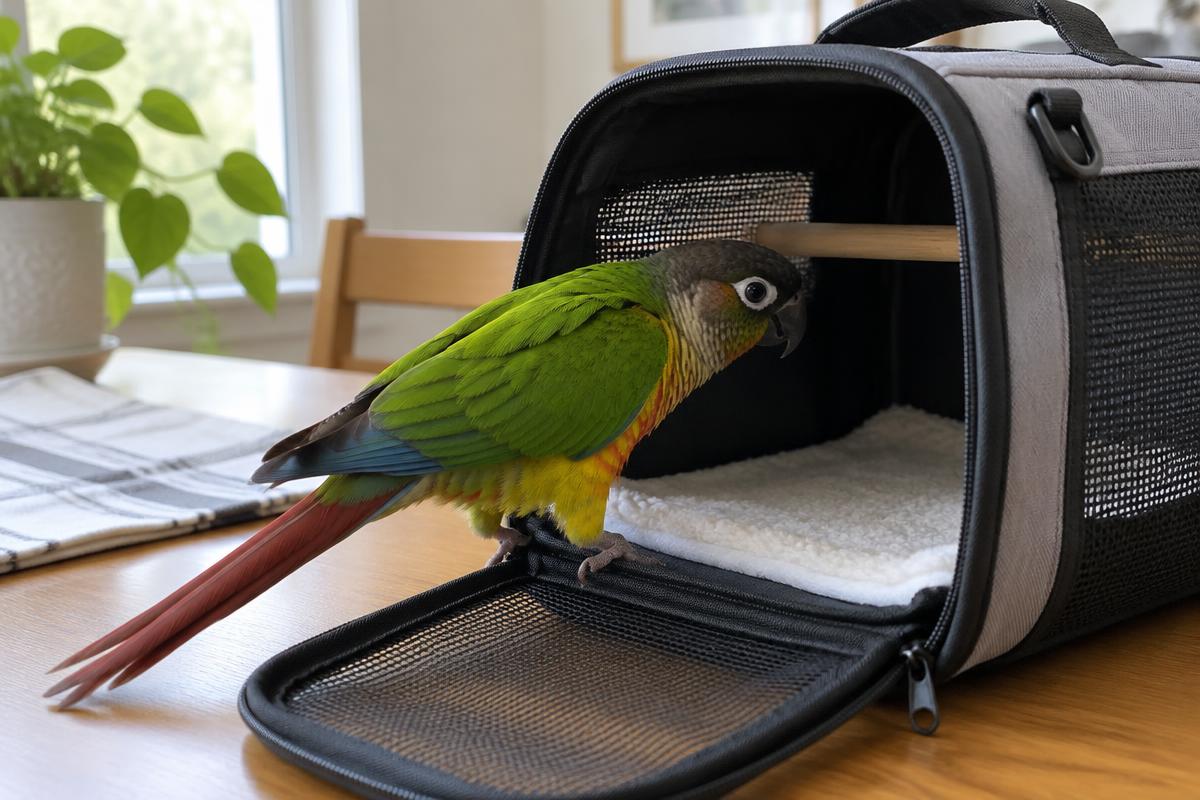
Place the carrier with its door open near your bird's usual area. Put a favourite treat or toy inside. Let your bird explore without pressure over several days.
Step 3: Reward steps toward and inside
Reward looking at the carrier, approaching it and stepping onto the edge. Then place treats further inside. Target training or step-up cues can help guide your bird in.
Step 4: Close the door briefly
When your bird enters happily, close the door for a few seconds, reward through the bars and open it. Build up to a few minutes.
Good to know: Cover part of the carrier with a light cloth if your bird feels exposed.
Step 5: Practise short movements
Lift the carrier gently and walk around the room, then set it down and reward. Progress to short car journeys that end back home, not only at the vet.
Step 6: Travel safely
Secure the carrier with a seatbelt, avoid temperature extremes and never leave your bird in a parked car. Offer juicy fruit or vegetables for moisture on longer trips.
This guide was drafted with AI assistance and published by the Pawlito team. It has no formal source list yet. Spotted an error? Tell us and we'll correct it. Read our editorial policy.

Ask about this guide
Leave a comment or a question. Comments are public, so use a first name only and don't include emails, phone numbers or addresses. An automated assistant may reply straight away with general suggestions — it can't diagnose your pet.