How to Create a Calm Sleep Routine for Your Pet Bird
Plan predictable evenings, a quiet sleeping area, and safe lighting without overheating the cage or assuming every bird has identical needs.
- Written by
- Pawlito Editorial Team · AI-assisted guide
- Professional review
- Not yet reviewed by a veterinarian
- Published
- Last updated
In this guide (7 steps)
Step 1: Consider species and individual needs
A regular sleep routine helps make evenings predictable, but appropriate sleep conditions vary by species, age, health, and seasonal behavior. Ask an avian veterinarian what suits your bird rather than applying a rigid universal number of hours. Note when your bird naturally settles and wakes. Persistent daytime sleepiness, breathing changes, or reduced appetite should be assessed medically instead of addressed only by changing bedtime.
Step 2: Choose a quiet, well-ventilated area
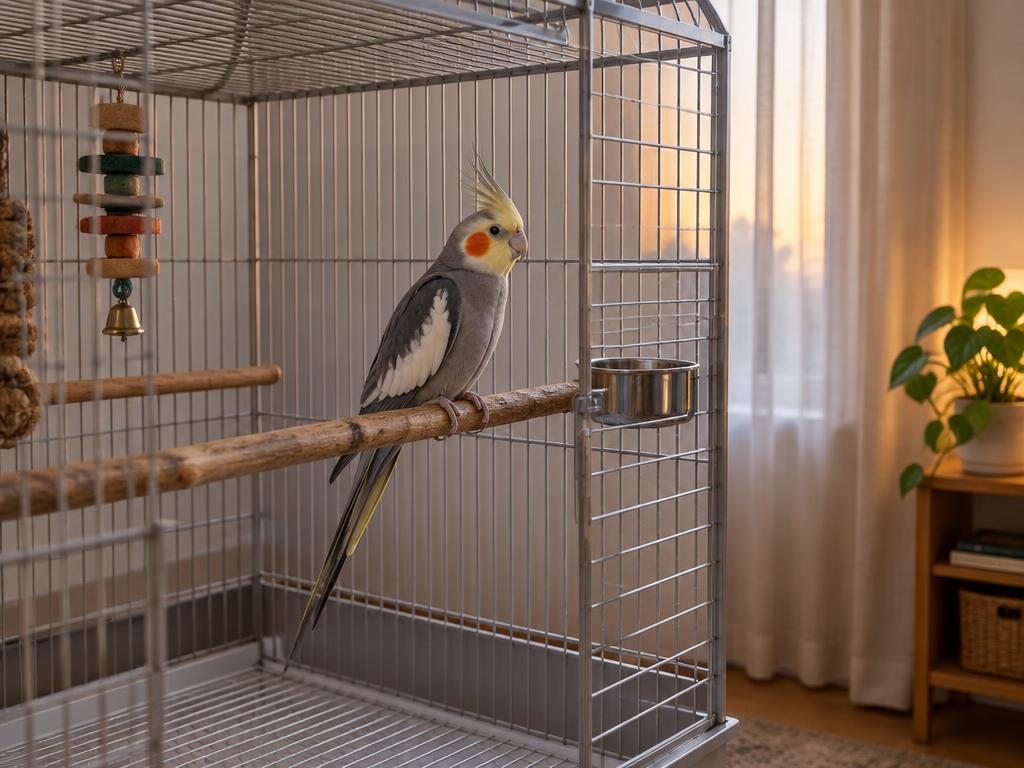
Locate the sleeping cage away from televisions, late-night household traffic, kitchens, drafts, and strong artificial light. Avoid rooms with smoke, sprays, scented products, or heated non-stick appliances. A separate sleep cage can work if your bird already accepts it and it has appropriate space and safe perches. Moving an anxious bird to an unfamiliar room abruptly may make settling harder, not easier.
Step 3: Build a predictable evening wind-down
Reduce loud activity and intense play gradually before your bird’s usual settling time. Complete food and water checks while there is enough light for comfortable movement. Use a consistent gentle phrase or quiet household routine to signal the transition. Do not chase the bird into the cage after a long exciting session; practice returning voluntarily during calmer daytime periods as a separate skill.
Step 4: Adjust light without blocking ventilation
Dim surrounding light gradually and avoid leaving bright screens facing the cage. Some birds rest well without a cover. If you use one, choose safe breathable material, keep it away from the beak, and maintain airflow. Never wrap the cage tightly or add heat under the cover. For birds prone to night frights, discuss a suitable low-level light and cage arrangement with an avian veterinarian.
Good to know: A cover is not a remedy for daytime screaming and should not be used as punishment.
Step 5: Reduce nighttime hazards
Check that perches are secure and that toys cannot trap toes or wings if your bird startles. Avoid unfamiliar hanging objects immediately before bedtime. Keep other pets out of the sleeping area and make sure cage latches close reliably. Household lights, headlights, sudden noises, or moving shadows may disrupt sleep, so address those environmental triggers before repeatedly adjusting the bird’s routine.
Step 6: Respond calmly to night frights
If your bird thrashes at night, turn on a gentle light and approach quietly so they can orient themselves. Do not grab a panicking bird unless immediate safety requires trained handling. Once calm, check for bleeding, abnormal posture, or breathing difficulty and contact a veterinarian when injury is suspected. Repeated episodes need a review of lighting, cage layout, health, and household disturbances.
Step 7: Review the routine without constant changes
Track settling, waking, daytime activity, and any nighttime disturbances for a short period. Adjust one environmental factor at a time so you can judge its effect. Continue appropriate daytime social interaction, exercise, and foraging rather than extending cage time to compensate for every behavior problem. If your bird appears ill or unusually sleepy, seek avian veterinary guidance promptly; this routine is educational husbandry advice, not diagnosis.
This guide was drafted with AI assistance and published by the Pawlito team. It has no formal source list yet. Spotted an error? Tell us and we'll correct it. Read our editorial policy.

Ask about this guide
Leave a comment or a question. Comments are public, so use a first name only and don't include emails, phone numbers or addresses. An automated assistant may reply straight away with general suggestions — it can't diagnose your pet.