How to Help a Bird Through a Moult
Help your bird stay comfortable through a moult with safe bathing, balanced nutrition, gentle handling and clear signs to call your vet.
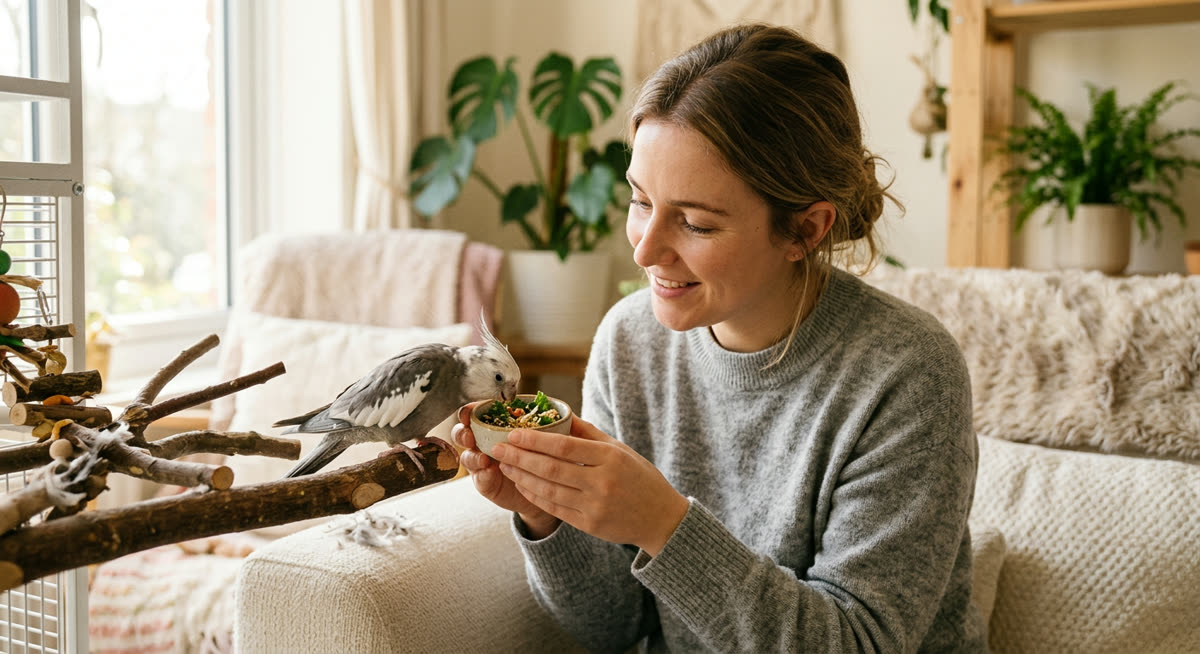
A calm, safety-first approachThis guide provides general education. Contact your veterinarian when symptoms are painful, persistent, or unusual.
- 1
1. Check that the feather changes fit a routine moult
Look for shed feathers in the cage and short, sheathed new feathers, known as pin feathers, appearing among the existing plumage. During a routine moult, feather replacement is generally gradual, and your bird should continue eating, perching and moving around normally. The timing and intensity vary with species, age and living conditions, so compare changes with your bird’s usual pattern rather than a fixed calendar. Do not assume that bare patches, damaged skin or repeatedly broken feathers are part of normal moulting. Contact an avian vet if feather loss is sudden, uneven or accompanied by persistent scratching, reduced appetite or unusual droppings. Seek urgent veterinary help for breathing difficulty, collapse, active bleeding or a bird sitting weakly on the cage floor.
- Gradual feather shedding
- New pin feathers appearing
- Normal eating and perching
- No exposed or injured skin
Good to know: Take a clear photograph at the start so you can compare feather coverage without repeatedly catching or handling your bird.
- 2
2. Prepare a clean, calm space and a monitoring routine
Keep the cage in its familiar position, away from draughts, cooking fumes, smoke and sudden temperature changes. Replace the cage liner daily so you can check droppings and remove shed feathers before they become scattered or soiled. Wash food and water containers every day, rinse them thoroughly and replenish drinking water whenever it becomes dirty. If your bird already steps willingly onto a gram scale, record its weight at the same time each day, ideally before breakfast without withholding food. Do not chase or restrain an untrained bird just to obtain a weight; ask your vet how best to monitor it instead. Record appetite, activity, droppings and any feather changes, and contact your vet about a clear downward weight trend or a sudden change.
- Fresh cage liner
- Clean food and water bowls
- Gram scale, if already accepted
- Simple daily observation log
Good to know: Place plain paper beneath the usual perches to make changes in droppings easier to spot.
- 3
3. Support feather growth with an appropriate balanced diet
Continue offering a balanced diet suited to your bird’s species, because growing replacement feathers requires reliable nutrition. For many companion parrots, this includes formulated pellets alongside suitable vegetables, but other birds have different dietary requirements. If your bird eats mainly seed or you are unsure whether its food is complete, ask an avian vet for a species-specific feeding plan. Avoid a sudden diet conversion during the moult, and never remove familiar food to force your bird to accept something new. Offer appropriate fresh foods in small portions, remove leftovers promptly and check that your bird actually eats rather than merely shreds them. Do not add protein powders, vitamins, calcium or products marketed as moulting supplements unless your vet recommends them for your individual bird.
- Usual species-appropriate staple food
- Suitable fresh vegetables
- Fresh drinking water
- No unprescribed supplements
Good to know: Check beneath seed husks before judging the food bowl, as an apparently full dish may contain very little edible food.
- 4
4. Protect sleep and reduce avoidable stress
Keep feeding, waking and bedtime routines consistent so your bird can rest without frequent interruptions. Many companion parrots benefit from around 10–12 hours of quiet, dark sleep, but check the appropriate light schedule for your species with your avian vet. Use a quiet sleeping area rather than leaving the bird beside a television or in a room with lights switching on throughout the evening. If your bird is accustomed to a cage cover, use it only with good ventilation and where the bird cannot pull loose fabric through the bars. Avoid introducing major cage rearrangements, unfamiliar pets or repeated visitors during a demanding moult. Allow extra quiet breaks during the day, while treating marked sleepiness, weakness or loss of interest in food as reasons to contact your vet rather than simply increasing rest.
Good to know: Set a regular household quiet time so bedtime stays predictable even when your own evening routine changes.
- 5
5. Offer gentle bathing without forcing it
Offer your bird its preferred bathing method, such as a stable shallow dish or a fine mist of plain, comfortably lukewarm water. Use a clean container reserved for bathing, and never use a spray bottle that has held cleaning chemicals. If your bird enjoys misting, let droplets fall gently from above rather than directing a jet towards its face or nostrils. Allow the bird to approach or move away freely, and stop if it freezes, struggles or tries repeatedly to escape. Bathe earlier in the day so the plumage can dry naturally in a comfortably warm, draught-free room before bedtime. Avoid soaps, feather sprays, oils and hairdryers, and ask your vet before bathing a bird that seems unwell.
- Plain, comfortably lukewarm water
- Stable dish with shallow water
- Freedom to move away
- Time to dry before sleep
Good to know: A small amount of drinking or splashing may be all your bird wants at first; do not chase it with the mist to achieve a thorough soaking.
- 6
6. Handle sensitive feathers carefully
Let your bird do most of its own preening, because growing feathers can be tender and some still contain a blood supply. If your bird normally invites head scratches, offer brief, light contact around the head and neck while avoiding visibly sensitive areas. Only help loosen a sheath if it is already dry, flaky and crumbles under an extremely gentle touch. Leave firm, smooth or dark-centred sheaths alone, and never pinch, pull or bend a growing feather. Stop immediately if your bird flinches, moves away, vocalises sharply or turns to bite, even if it usually enjoys handling. Do not rub the body, beneath the wings or around the tail base as a moulting treatment, and ask an avian vet to demonstrate safe assistance if you are unsure.
Good to know: Let your bird lower its head and invite contact rather than assuming that visible pin feathers need your help.
- 7
7. Adjust activity without removing normal enrichment
Continue offering familiar toys, gentle interaction and opportunities for movement rather than treating your bird as though it needs complete inactivity. Shorten training sessions if your bird loses interest, and reward easy, familiar behaviours instead of pushing for new skills. Make foraging straightforward enough that food remains easy to find, especially if your bird seems less enthusiastic than usual. Supervise out-of-cage time in a bird-safe room with closed windows, covered hazards and ceiling fans switched off. If flight control seems poorer, prevent access to high-risk launch points and contact your avian vet rather than assuming that moulting explains a new flying problem. Keep perches and feeding stations easy to reach, but avoid unnecessary changes if your bird is navigating its cage comfortably.
- Short, familiar training sessions
- Easy food-finding activities
- Supervised exercise
- Accessible perches and bowls
- 8
8. Respond promptly to feather damage or unusual changes
Contact your avian vet if you see bald areas, sore skin, repeated feather chewing or a moult that seems unusually prolonged for your bird. Share your photographs, weight records and notes about diet, sleep and recent household changes to help the vet assess what is happening. If a growing feather breaks and bleeds, keep the bird quiet and contact an avian vet or emergency veterinary service immediately. If the bleeding point is accessible without a struggle, hold clean gauze gently against it while arranging help, but never compress the chest or obstruct breathing. Do not pull out a damaged feather, pick at a clot or apply household powders or products unless a vet specifically directs you. Even if bleeding stops, obtain prompt veterinary advice and minimise handling while preparing a secure, well-ventilated carrier if you are told to attend.
- 9
9. Review recovery and keep the helpful habits
As shedding settles, compare your notes and photographs to check that new feathers are filling in and your bird’s usual activity is returning. Continue the balanced diet, regular sleep schedule and preferred bathing opportunities after the obvious moult has finished. Remove loose feather debris during daily cleaning, and inspect toys and perches for rough edges that could damage fresh plumage. Gradually return to longer play or training sessions according to your bird’s enthusiasm rather than a fixed deadline. Keep a record of when the moult began and eased, as future comparisons may help you notice a meaningful change. Arrange a veterinary review if feathers fail to regrow, new feathers repeatedly look damaged or appetite, weight or behaviour does not return to your bird’s usual pattern.
Good to know: Save a brief summary of each moult with your bird’s health records so you have a useful reference for the next one.
Ask about this guide
Leave a comment or a question about your own pet and the Pawlito assistant replies right away with practical next steps.