How to Introduce a Second Bird to Your Existing Bird
Make introducing a second bird safer with expert guidance on quarantine, cage setup, supervised meetings, and signs to slow down.
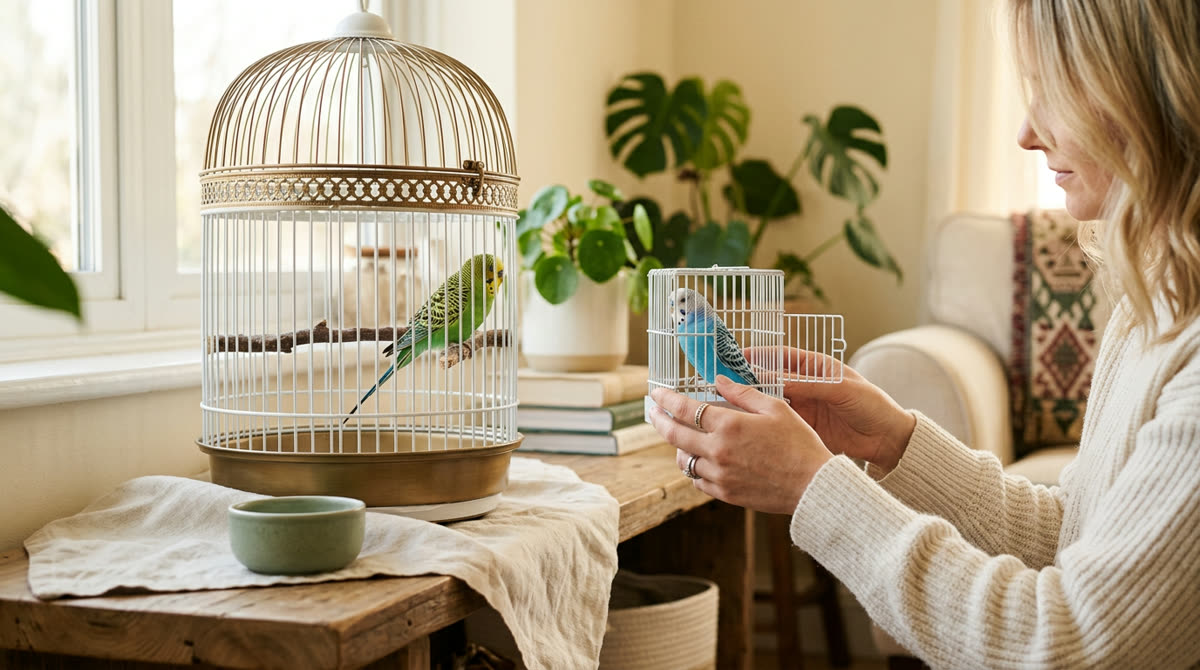
A calm, safety-first approachThis guide provides general education. Contact your veterinarian when symptoms are painful, persistent, or unusual.
- 1
Choose a Compatible Bird and Set Realistic Expectations
Before introducing a second bird, plan for two independently housed pets rather than assuming your existing bird will welcome a cage mate. Birds of the same species and similar size may communicate more easily, but individual temperament, maturity, previous social experience, and breeding behavior all affect compatibility. A significant difference in beak strength makes direct interaction especially risky: a large parrot can seriously injure a budgie, finch, or cockatiel in an instant. Ask the rescue, breeder, or previous caregiver about the newcomer’s age, diet, health history, and behavior around other birds, including chasing or guarding food. Consider whether your resident bird already defends its cage or your attention, because a newcomer may intensify those behaviors rather than relieve boredom. Budget for two complete cage setups, separate veterinary care, and potentially permanent separate living spaces, even if both birds belong to a normally social species. Success can mean two relaxed birds enjoying each other’s company from separate cages; touching, preening, and sharing housing are not required.
- Check species, adult size, and beak-strength differences.
- Ask about health records and previous bird interactions.
- Budget for two suitable cages and separate supplies.
- Commit to separate housing if friendship never develops.
Good to know: Do not acquire a second bird as the first response to sudden screaming, withdrawal, or feather damage. Have an avian veterinarian assess new behavioral changes before treating them as loneliness.
- 2
Prepare Separate Housing and a Quarantine Area
Set up the newcomer’s cage before arrival in a separate room with a closed door, ideally with separate air handling where practical, rather than beside your resident bird. A cage across the living room is not quarantine, because feathers, respiratory secretions, contaminated hands, and shared equipment can spread infectious material. Choose species-appropriate bar spacing and enough usable space for normal movement and full wing extension without striking toys, bars, or perches; active finches and canaries also need horizontal flight space. Equip each cage with its own food and water bowls, several appropriately sized perches, plain paper liners, and separate cleaning tools. Initially, offer the newcomer’s familiar food and accessible dishes instead of combining relocation stress with an abrupt diet change. Keep both cages away from drafts, cooking fumes, aerosols, and overheating windows, and maintain a predictable sleep routine appropriate to the species, commonly around 10–12 quiet, dark hours nightly for many companion parrots. If your home cannot provide meaningful separation, arrange a suitable quarantine location with veterinary guidance before bringing the bird home.
- Separate room with a door that stays closed.
- Dedicated bowls, liners, cleaning tools, and food scoops.
- Safe cage dimensions and species-appropriate bar spacing.
- Familiar food and an undisturbed sleeping area.
Good to know: Never use scented sprays or an air purifier as a substitute for quarantine. Shared household ventilation can limit isolation, so discuss your actual home layout with your avian veterinarian.
- 3
Complete Quarantine and an Avian Veterinary Check
Arrange an avian veterinary examination promptly after arrival, ideally within the first few days, and keep the birds physically separated while the veterinarian reviews the newcomer’s history and recommends any testing. Plan for at least 30–45 days of quarantine unless your veterinarian specifies a different period; symptoms, exposure history, or test results may require longer isolation. Attend to your resident bird first and the quarantined bird last, washing your hands with soap and water between them and changing clothing if it becomes contaminated with droppings or feather dust. Do not share play stands, toys, bathing dishes, or cleaning equipment, and remove cage liners carefully rather than shaking dried debris into the air. Each day, record appetite, activity, breathing, and droppings, and obtain a baseline weight on an appropriately sensitive gram scale if the bird will step onto it without stressful restraint. Contact an avian veterinarian promptly for reduced eating, persistent changes in droppings, nasal discharge, unusual sleepiness, or a clear downward weight trend, and seek urgent care for breathing difficulty, collapse, or uncontrolled bleeding. Do not end quarantine simply because the bird looks healthy or one test is negative; confirm with the veterinarian when it is reasonable to begin introductions.
- Book an early examination with an avian veterinarian.
- Log food intake, droppings, activity, and weight trends.
- Handle and clean for the resident bird first.
- Complete the veterinarian’s recommended isolation period.
Good to know: Quarantine separates the birds from each other, not the newcomer from all human companionship. Provide calm daily interaction and enrichment using supplies reserved for that room.
- 4
Start With Distant Visual Contact
After quarantine is complete and your veterinarian has advised that introductions can begin, place the birds in separate cages in a spacious room, initially about 6–10 feet apart if the layout allows. Keep the resident bird’s established cage location and daily routine as consistent as possible, since suddenly surrendering its familiar space can add territorial stress. Give each bird an easy retreat from the other’s view, such as a perch behind a partial external visual barrier that does not block ventilation or provide chewable fabric through the bars. Begin with approximately 10–15 minutes of visual contact while you remain nearby, then separate their sightlines sooner if either bird freezes, repeatedly flees, or cannot settle. Pair calm observation with a tiny piece of a familiar favorite food, placing it in each bird’s own bowl or offering it individually without drawing them closer together. Over several calm sessions across days or weeks, gradually extend viewing time and, if both remain relaxed, reduce the distance by roughly 1–2 feet at a time. Keep enough space between cages that neither bird can reach the other’s toes or beak, and increase the distance again if either stops eating, persistently alarms, or guards the cage front.
Good to know: Birds calling back and forth are not automatically ready to meet. Look for the ability to eat, explore, and settle comfortably in each other’s presence, not just an absence of fighting.
- 5
Build Calm Associations and Practice Separate Handling
Before arranging direct contact, teach or refresh a low-stress way to move each bird individually, such as stepping onto a hand-held perch or following a target to a designated station. For parrots comfortable with training, practice for 2–5 minutes once or twice daily, rewarding voluntary participation rather than pushing a hand against the chest or pursuing the bird around its cage. For finches, canaries, and other birds that do not normally step up, focus instead on familiar return-to-cage routines and an enclosure-based introduction plan suited to their species. Once distant viewing is relaxed, let the birds enjoy parallel activities inside their separate cages, such as eating a favorite vegetable or exploring individual foraging toys. Reward each bird for remaining calmly on its own perch, and use very small treats so training does not replace balanced meals or require withholding normal food. Preserve predictable one-to-one attention for your existing bird while also building trust with the newcomer, since competition for your shoulder or lap can derail an otherwise promising introduction. If either bird becomes fixated on reaching the other, cannot take a familiar treat, or repeatedly abandons its station, add distance and return to easier sessions before progressing.
- Practice each bird’s movement or return routine separately.
- Use short sessions and tiny, familiar rewards.
- Provide parallel activities without shared resources.
- Maintain individual attention for both birds.
Good to know: Never clip a bird’s wings solely to make introductions easier. Reduced escape ability does not create compatibility and can leave a frightened bird unable to avoid conflict.
- 6
Arrange a Brief Meeting in Neutral Territory
For birds suitable for direct interaction, choose a neutral, bird-proofed room or play area that neither bird treats as its personal territory, and turn off ceiling fans, close exits, and cover hazardous glass. Provide two stable stands or perching areas at similar heights, initially several feet apart, with separate rewards and clear routes for moving away. For small, non-hand-tame flock birds, use an avian professional’s species-specific enclosure plan rather than releasing them into an unfamiliar room where recapture could become frightening or dangerous. Keep dogs, cats, children, and unnecessary spectators out, and ideally have one capable adult attend to each bird with a familiar transfer perch readily available. Start with just 3–5 minutes, allowing the birds to observe or approach voluntarily without placing them beak-to-beak, on the same shoulder, or together inside either established cage. End while both are still calm, and immediately separate them if one repeatedly pursues, corners, lunges at, pins, or bites the other. Do not attempt unprotected contact between birds with a major size or beak-strength mismatch; separate-cage companionship may be the safest long-term arrangement.
- Use neutral territory rather than either bird’s cage.
- Switch off fans and secure windows and doors.
- Set up two perching stations and transfer perches.
- Keep the first meeting to approximately 3–5 minutes.
- Return each bird to its own cage afterward.
Good to know: Never put bare fingers between fighting birds. Use a solid divider to block contact if safe, move them into separate secure spaces, and seek urgent veterinary care for bleeding, eye injuries, punctures, or difficulty perching.
- 7
Extend Meetings According to Both Birds’ Behavior
Repeat short, supervised sessions once daily or less often if either bird appears tired or unsettled, keeping the setup predictable while they gain experience. After several relaxed meetings, add about 2–5 minutes at a time rather than jumping from a brief encounter to an afternoon together. Look for loose, comfortable posture, ordinary exploration, independent eating, and the ability to move away without being followed or blocked. Voluntarily sitting closer or gentle mutual preening may develop, but neither is necessary, and a bird becoming motionless can reflect fear rather than acceptance. Interpret signals in context: eye pinning, raised crest feathers, or an open beak can have different meanings across species and are not reliable friendship or aggression tests on their own. Maintain two reward locations and avoid shared bowls, favorite enclosed toys, or access to your shoulder if those resources trigger guarding. Continue using separate cages between meetings and whenever you cannot actively supervise, because several peaceful encounters do not guarantee safety during the next one.
- 8
Pause and Reset When Problems Appear
If introductions trigger repeated lunging, frantic flight, persistent alarm calling, or one bird preventing the other from resting or eating, end the session and return to the last arrangement where both were comfortable. Allow at least a day or two of low-pressure routine before trying an easier session, but wait longer if either bird has not returned to its usual behavior. Review the likely trigger—insufficient distance, an overly long session, a valued perch, attention competition, or a stimulating nest-like space—and change one element at a time so you can identify what helps. Do not shout, spray water, shake a perch, or hold the birds near each other to make them “work it out,” because punishment and forced proximity can strengthen negative associations. Remove nest boxes, fabric huts, and access to dark cavities unless you are following a specialist-managed breeding plan, and ask an avian veterinarian about persistent reproductive behavior or egg laying. Stop introductions and contact an avian veterinarian if you notice injury, reduced appetite, weight loss, altered droppings, unusual inactivity, or a sudden personality change rather than assuming the problem is simply jealousy. If repeated slow attempts still produce fear or aggression, consult a qualified avian behavior professional and accept permanent separate housing or separate out-of-cage schedules as a valid outcome.
- Increase distance or restore separate sightlines.
- Shorten the next session instead of forcing progress.
- Remove guarded objects and nest-like spaces.
- Check health changes with an avian veterinarian.
Good to know: Feathers can hide bite wounds, so inspect both birds visually after any scuffle without stressful restraint. Contact your avian veterinarian after a bite even when the injury appears minor.
- 9
Choose Safe Long-Term Housing and Monitor Both Birds
After weeks or months of relaxed interactions, decide whether the birds benefit most from separate cages or whether shared housing is appropriate for their species, size, and individual relationship. For many companion parrots, separate cages with supervised social time remain an excellent permanent solution, while compatible small flock birds may do well together in a properly planned enclosure. If shared housing is suitable, use a sufficiently large neutral enclosure, ideally one neither bird already owns, with multiple escape routes, perches at comparable heights, and at least two widely separated food and water stations. Begin with closely supervised daytime trials, retain both original cages, and do not leave the birds housed together unattended until repeated observation shows that both can reliably eat, drink, move, and rest without interference. Check each bird’s access to resources daily and weigh each individually about weekly once settled, using the same scale and similar time of day, or follow a different schedule advised by your veterinarian. Separate them immediately if one begins losing weight, monopolizing resources, displacing the other repeatedly, or disrupting sleep, and remember that maturity or reproductive changes can alter a previously peaceful relationship. Maintain individual handling, species-appropriate enrichment, routine avian veterinary care, and a brief record of behavior changes so introducing a second bird leads to two secure pets rather than an ongoing competition.
- Keep backup cages ready even after successful cohabitation.
- Provide multiple feeding, drinking, and resting locations.
- Monitor each bird’s weight and resource access separately.
- Reassess compatibility when behavior or life stage changes.
Good to know: A bonded pair is not automatically a safe breeding pair. If eggs appear or you suspect the birds could reproduce, ask an avian veterinarian for species-specific management advice rather than adding a nest box.

Ask about this guide
Leave a comment or a question about your own pet and the Pawlito assistant replies right away with practical next steps.