How to Keep Your Bird Entertained While You Are at Work
Prevent loneliness and boredom with foraging, sound, rotation and smart setup for the hours you are away.
- Written by
- Pawlito Editorial Team · AI-assisted guide
- Professional review
- Not yet reviewed by a veterinarian
- Published
- Last updated
In this guide (8 steps)
Step 1: Understand the challenge
Parrots and budgies are flock animals who would spend all day with their companions in the wild. Eight or nine hours alone is genuinely hard for them, and chronic boredom leads to screaming, feather plucking and depression. The goal is to make solo time stimulating, not just tolerable. A combination of foraging, sound, toys and routine covers most needs.
Step 2: Make food a puzzle
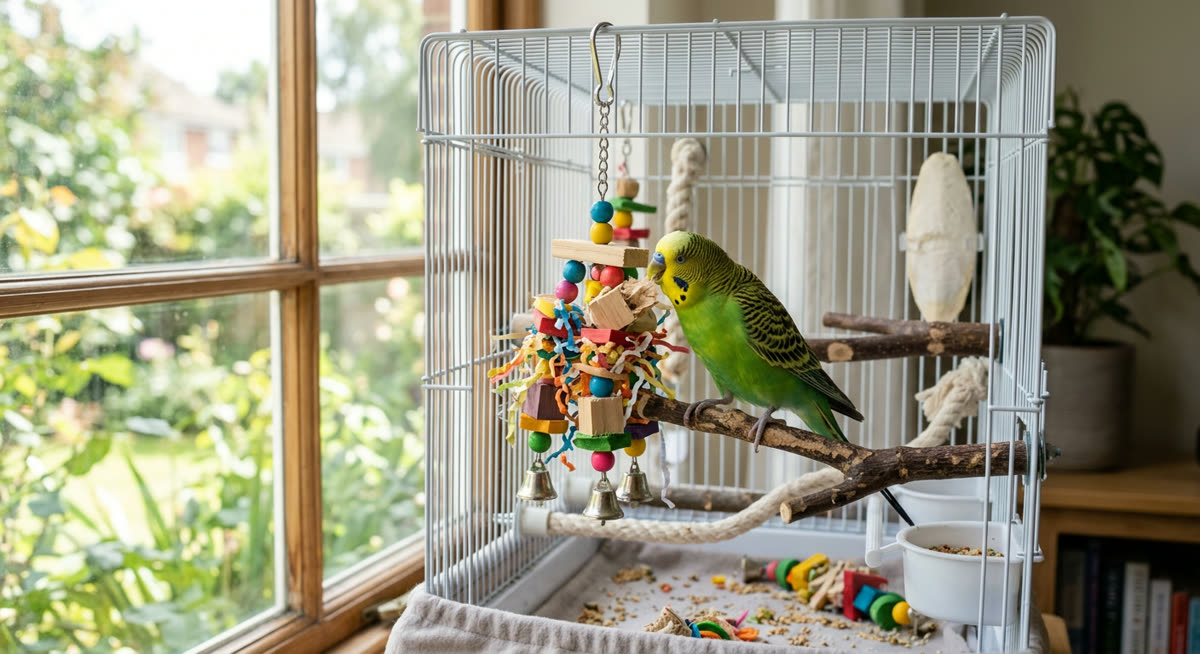
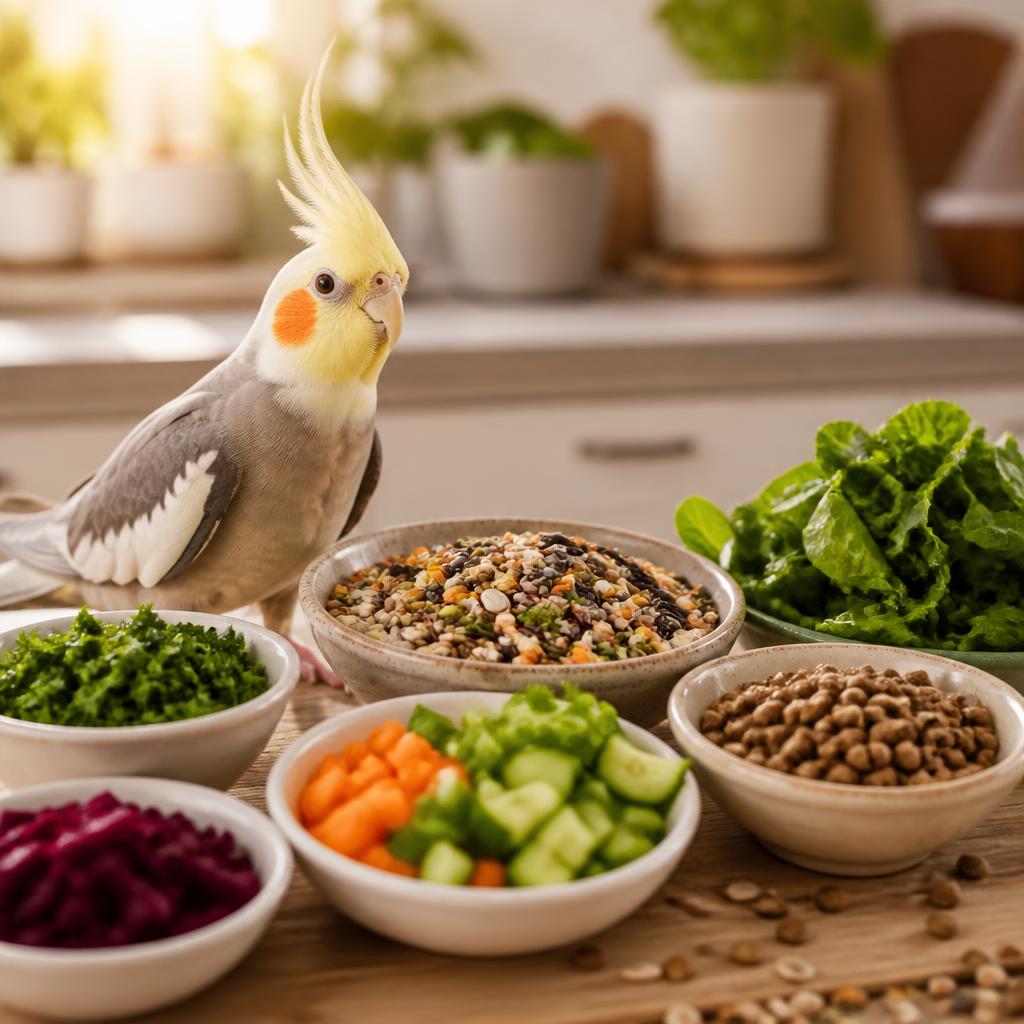
Wild birds spend hours finding food, so foraging is the most natural entertainment available. Wrap portions of food in paper cups, hide treats in foraging toys, or skewer vegetables on a stainless steel kabob. Start easy so your bird learns the game, then increase difficulty. A bird busy foraging for hours is not a bored bird.
Good to know: Scatter some of the daily food in a foraging tray rather than a bowl — instant activity.
Step 3: Rotate toys on a schedule
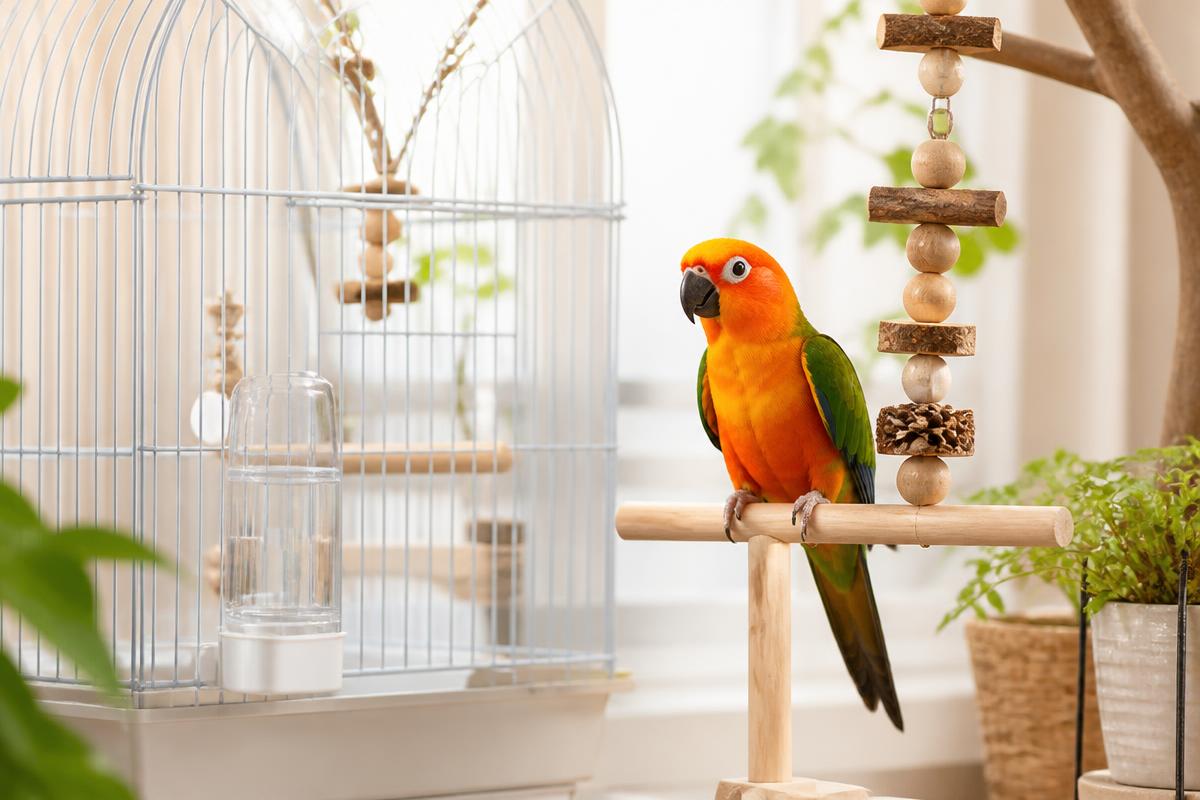
Keep a collection of toys and swap two or three every few days so the cage always has something 'new'. Include shredding toys, which satisfy the urge to destroy, plus swings, ladders and puzzle toys. Check toys daily for frayed rope or broken parts that could trap a toe. Natural materials like palm leaf, seagrass and untreated wood are favourites.
Step 4: Provide sound and sight
Leave a radio on at low volume or play a playlist of gentle music or nature sounds — silence makes many flock birds anxious. A cage position with a safe window view provides hours of watching. Some owners play recordings of budgie flock calls, which can comfort single birds. Avoid leaving televisions on loud, startling channels.
Step 5: Create a consistent daily routine
Birds thrive on predictability. Uncover the cage, feed and interact at the same times each morning, and keep evening routines consistent too. A bird who knows you return at a certain time settles more easily while you are gone. Give a proper greeting and attention session every morning before you leave — a bird whose social tank is filled copes better alone.
Step 6: Consider a companion bird carefully
Two budgies keep each other company, which genuinely helps during long work days. However, a second bird is a real commitment — more space, more cost, and quarantine requirements — and a bonded pair may be less interested in human interaction. Never add a bird impulsively just as a toy for the first. If you do, introduce them gradually after quarantine.
Step 7: Make homecoming count
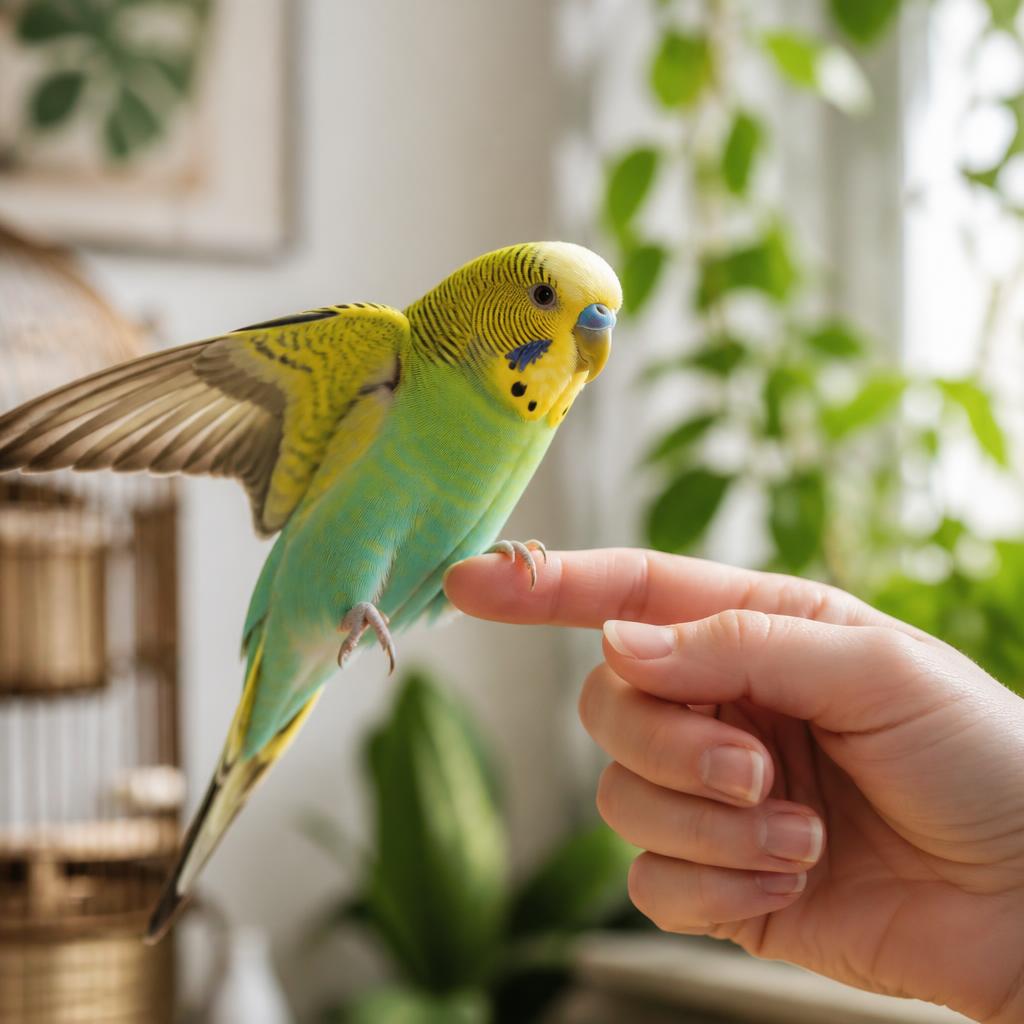
When you return, give your bird focused attention: talking, training, or out-of-cage time in a safe room. This daily reunion is the highlight of your bird's day and reinforces that your departure is temporary. Even twenty minutes of real interaction makes a difference. Birds who get reliable evening attention show far fewer boredom behaviours.
Step 8: Watch for signs it is not working
Feather plucking, repetitive pacing, excessive screaming or a bird who sits fluffed and quiet during the day may signal loneliness or stress. A pet camera lets you see what actually happens while you are away. If problems appear, increase enrichment and interaction, and consult an avian vet to rule out illness before assuming behaviour is the cause.
Good to know: A cheap pet camera is the best diagnostic tool for daytime boredom — you may find your bird sleeps more than you think.
This guide was drafted with AI assistance and published by the Pawlito team. It has no formal source list yet. Spotted an error? Tell us and we'll correct it. Read our editorial policy.
Ask about this guide
Leave a comment or a question. Comments are public, so use a first name only and don't include emails, phone numbers or addresses. An automated assistant may reply straight away with general suggestions — it can't diagnose your pet.