How to Keep a Pet Bird Warm in Winter
Learn how to keep pet bird warm in winter with safe room heating, draft control, comfortable sleeping arrangements, and a practical power-outage plan.
A calm, safety-first approachThis guide provides general education. Contact your veterinarian when symptoms are painful, persistent, or unusual.
- 1
Step 1: Set a safe temperature target for your bird
Start by finding out what a comfortable winter environment looks like for your bird’s species, age, health, and usual living conditions rather than choosing a temperature based on your own comfort alone. Many healthy companion parrots are comfortable in a stable room around 70–80°F (21–27°C), but this is a general starting point, not a requirement for every pet bird. Birds that are very young, elderly, underweight, poorly feathered, or unwell may need a veterinarian’s individualized advice about warmth and monitoring. If your bird normally lives outdoors or in an unheated aviary, ask an avian veterinarian about appropriate winter housing before cold weather arrives. Place a reliable digital thermometer near the cage at perch height, keeping the device, batteries, and any cords completely out of reach. Check the temperature early in the morning, after sunset, and during heating cycles because a comfortable afternoon reading can hide a chilly overnight drop. Aim for a steady, suitable environment, and avoid abrupt, unnecessary temperature changes when moving the cage or adjusting the thermostat.
- Confirm species-specific needs
- Measure at perch height
- Check overnight lows
- Keep batteries and cords inaccessible
Good to know: A thermometer that records minimum and maximum temperatures can reveal overnight fluctuations you would otherwise miss.
- 2
Step 2: Move the cage away from drafts and cold surfaces
Choose a quiet, occupied room where you can maintain a consistent temperature and notice changes in your bird’s behavior throughout the day. Position the cage away from exterior doors, drafty windows, poorly insulated walls, and the direct airflow of heating or cooling vents. To check for drafts, hold a light tissue outside the cage near its corners and watch for movement without letting your bird grab or shred it. Close gaps around windows and doors with appropriate household weatherstripping, keeping adhesives, foam, and loose material beyond your bird’s reach. Leave space between the cage and windows or exterior walls, since nearby glass and masonry can remain cold even when the room thermostat looks reassuring. Keep the cage out of kitchens, garages, and rooms with smoke or strong fumes, even if those areas happen to feel warmer. Preserve normal ventilation rather than sealing the room completely, and recheck the cage-level temperature after you change its location.
- Avoid doors and drafty windows
- Keep clear of supply vents
- Check for cool exterior walls
- Maintain fresh-air ventilation
Good to know: Check the cage area when someone opens the nearest outside door; a brief blast of cold air may not show up in your usual temperature checks.
- 3
Step 3: Warm the room with carefully selected equipment
When possible, use a properly maintained household heating system to warm the room evenly instead of directing intense heat at the cage. If you need supplemental heat, choose a thermostatically controlled electric heater with overheat protection and, for portable models, an automatic tip-over shutoff. Ask the manufacturer about PTFE and other fluoropolymer coatings on heated components, because overheated nonstick materials can release fumes that are extremely dangerous to birds. Labels such as ceramic, oil-filled, or pet-safe do not by themselves establish that a heater is suitable around birds, so verify the specific model before use. Follow the manufacturer’s clearance requirements, keep the appliance away from cage covers and other flammable materials, and prevent all access to hot surfaces, cords, and plugs. Avoid unvented fuel-burning heaters, open flames, and scented heating products, and maintain working smoke and carbon monoxide alarms where appropriate. Never use an oven to heat the home or improvise with heat lamps, hot rocks, or household heating pads inside the cage; ask an avian veterinarian before adding any bird-specific warming device.
- Verify heated-component materials
- Use thermostat and safety shutoffs
- Respect fire-safety clearances
- Keep cords and surfaces inaccessible
- Maintain smoke and carbon monoxide alarms
Good to know: Inspect and test any supplemental heater before winter, following its instructions, and do not expose your bird to a new appliance that produces odors or fumes.
- 4
Step 4: Create a comfortable nighttime routine
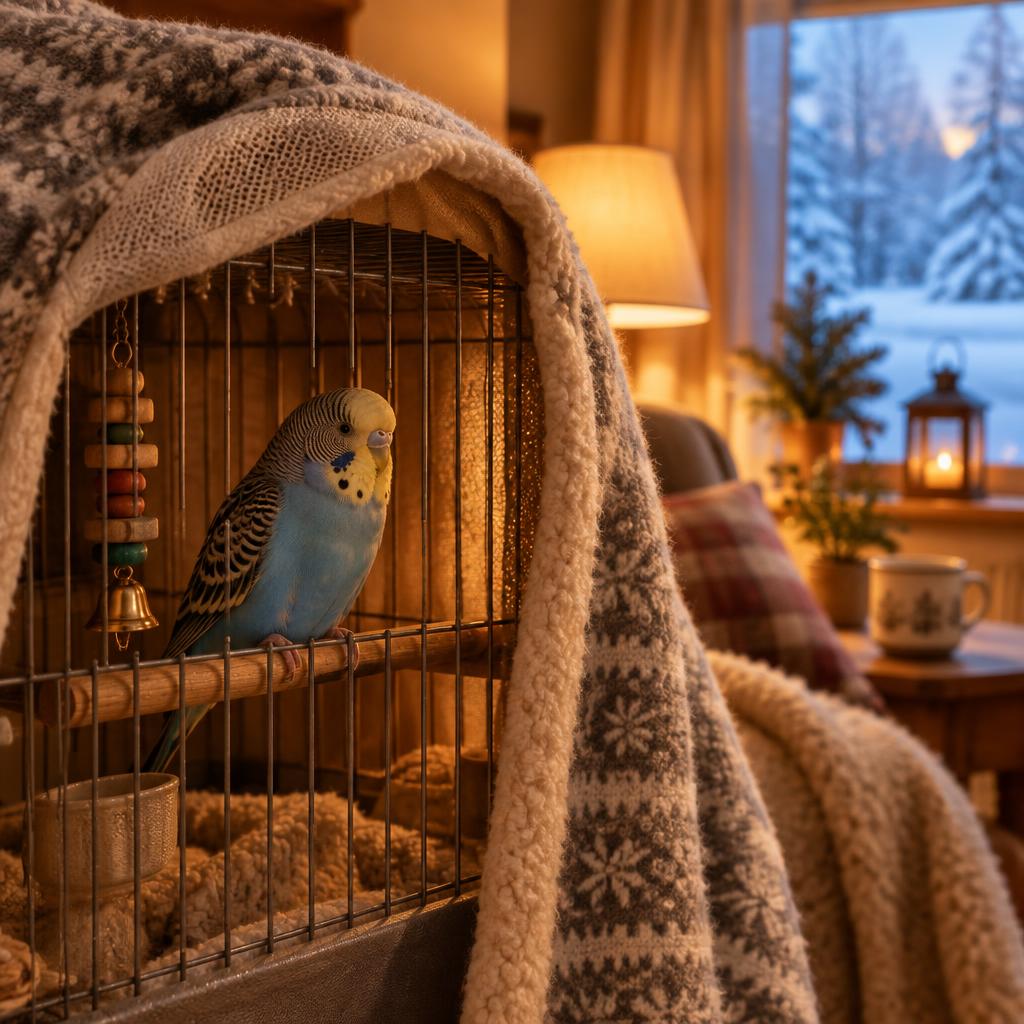
Keep your bird’s sleeping area comfortably heated overnight rather than relying on a cage cover to compensate for a cold room. A cover does not generate heat, although a suitable one may reduce light and some minor air movement around the cage. If your bird already sleeps calmly under a cover, use a clean, breathable fabric positioned outside the bars and beyond chewing reach wherever possible. Leave ventilation openings, avoid heavy blankets or plastic sheeting, and make sure no fabric can contact a heater or hot vent. If covering causes distress, leave the cage uncovered or partly covered and focus instead on a quiet room with an appropriate light schedule. Do not add fuzzy sleeping huts, loose bedding, or nest boxes solely for warmth, because these can create entanglement, ingestion, or unwanted nesting concerns. Check the temperature near the sleeping perch after the room has settled for the night, and keep a consistent sleep routine appropriate to your bird’s species.
- Heat the room, not just the cover
- Use breathable fabric if tolerated
- Leave ventilation openings
- Avoid loose threads and fuzzy huts
Good to know: Keep the thermometer readable without repeatedly uncovering or disturbing your sleeping bird.
- 5
Step 5: Balance winter warmth with healthy indoor air
Heated winter air can become dry, so monitor humidity alongside temperature rather than assuming that a warmer room is automatically a better environment. For many homes, roughly 40–50 percent relative humidity is a practical starting point, but your bird’s species, veterinary guidance, and signs of condensation should shape your target. If additional moisture is needed, place a properly maintained cool-mist humidifier outside the cage area where your bird cannot reach it and mist does not blow directly onto feathers or perches. Follow the manufacturer’s water recommendations, empty and dry the tank regularly, and clean the unit as instructed to avoid spreading contaminants into the air. Do not add essential oils, fragrances, disinfectants, or other unapproved substances to the water, and avoid room sprays or scented products around your bird. Continue offering normal bathing opportunities if your bird enjoys them, choosing a warm part of the day and allowing plenty of time for feathers to dry before bedtime. Keep a wet bird away from drafts, never force a bath for humidity control, and do not use a hair dryer or direct heater to dry the plumage.
- Track humidity with a hygrometer
- Keep mist away from the cage
- Clean humidifiers as directed
- Use no fragrances or essential oils
- Watch for condensation and mold
Good to know: If windows stay wet or mold appears, reduce added humidity and address ventilation rather than continuing to increase moisture.
- 6
Step 6: Maintain food, water, and gentle daily activity
Support your bird through winter with its usual balanced, species-appropriate diet rather than automatically adding fatty seeds, supplements, or extra treats for warmth. A bird living in a properly heated home may not need more calories, and significant dietary changes are best discussed with an avian veterinarian. Keep fresh drinking water available, wash bowls daily, and check that food and water remain easy to reach if you have rearranged the cage. Offer familiar foraging activities and supervised movement in a comfortably warm, bird-safe room, without forcing exercise or using it as a substitute for heating. Watch how much your bird actually eats, since a bowl full of seed hulls can look deceptively like uneaten food. If your bird is comfortable stepping onto a gram scale, record its weight at a consistent time and ask your veterinarian what changes should trigger a call. Contact a veterinarian about reduced appetite, unexpected weight changes, or altered droppings instead of assuming that these changes are normal seasonal adjustments.
- Continue the usual balanced diet
- Refresh water and clean bowls
- Offer familiar foraging activities
- Track appetite and weight trends
Good to know: Keep a simple winter log of cage temperature, appetite, and weight so you can give your veterinarian clear observations if concerns arise.
- 7
Step 7: Recognize warning signs and seek veterinary help
Learn your bird’s normal posture, activity, breathing, and vocal patterns so that you can recognize a meaningful change rather than judging comfort from one behavior. Brief feather fluffing during rest can be normal, but persistent puffing up, trembling, unusual quietness, reduced eating, or reluctance to move deserves prompt attention. These signs can have several causes, including medical problems, and should not be diagnosed at home as simply feeling cold. Move an affected bird to a quiet, comfortably warm, draft-free setting while contacting an avian veterinarian for advice, without delaying care to see whether warmth solves the problem. Difficulty breathing, open-mouth breathing at rest, pronounced tail bobbing with each breath, collapse, or inability to perch requires urgent veterinary attention. Avoid direct intense heat, tightly wrapping the bird, force-feeding, or giving medication unless a veterinarian specifically instructs you to do so. If your bird pants or holds its wings away from its body after heating is increased, reduce excessive heat and seek urgent advice if the signs persist or breathing appears difficult.
- Notice persistent behavior changes
- Call a vet for medical concerns
- Treat breathing difficulty as urgent
- Avoid force-feeding and improvised treatment
Good to know: Save the contact details for your avian veterinarian and a bird-treating emergency clinic before a cold-weather problem occurs.
- 8
Step 8: Prepare for outages and cold-weather travel
Make a power-outage plan before the first severe cold spell, including a backup location that accepts birds and has reliable heating and safe indoor air. Keep a secure travel carrier, familiar food, water, paper lining, veterinary contacts, and any prescribed supplies together where you can reach them quickly. During an outage, monitor the temperature near your bird and move to a smaller, safely heated room if one is available, without blocking necessary ventilation. If you cannot maintain suitable conditions, relocate early instead of waiting until your bird appears distressed or roads become unsafe. For travel, warm the vehicle first, secure the carrier, and use a breathable cover over part of it while keeping ventilation openings clear and checking the interior temperature. Do not place chemical hand warmers, hot-water bottles, or other improvised heat sources against the bird or inside the carrier where they can cause burns, overheating, or chewing injuries. Never run a generator, barbecue, or outdoor fuel-burning appliance indoors or in a garage, and contact your veterinarian if your bird develops concerning signs during or after cold exposure.
- Arrange a heated backup destination
- Pack a ready-to-go carrier kit
- Monitor temperature during outages
- Leave before conditions become unsafe
- Keep combustion equipment outdoors
Good to know: Practice calm, short carrier sessions in advance so an emergency move is less stressful for both you and your bird.
Ask about this guide
Leave a comment or a question about your own pet and the Pawlito assistant replies right away with practical next steps.