How to Prepare Care Instructions for a Bird Sitter
Create practical bird-sitting instructions covering meals, safe handling, household hazards, daily checks, and emergency contacts.
- Written by
- Pawlito Editorial Team · AI-assisted guide
- Professional review
- Not yet reviewed by a veterinarian
- Published
- Last updated
In this guide (7 steps)
Step 1: Describe your bird and normal routine
Record name, species, waking and sleeping times, and observable normal behavior. Explain whether interaction is welcomed or company at a distance is preferred. Describe familiar cues and signals requesting space, such as leaning away. Include a recent identification photo. Keep essential instructions concise with details in clearly labeled sections. Avoid vague personality labels that different people may interpret differently.
Good to know: Describe observable behavior rather than calling a bird friendly or difficult.
Step 2: Write exact food and water directions
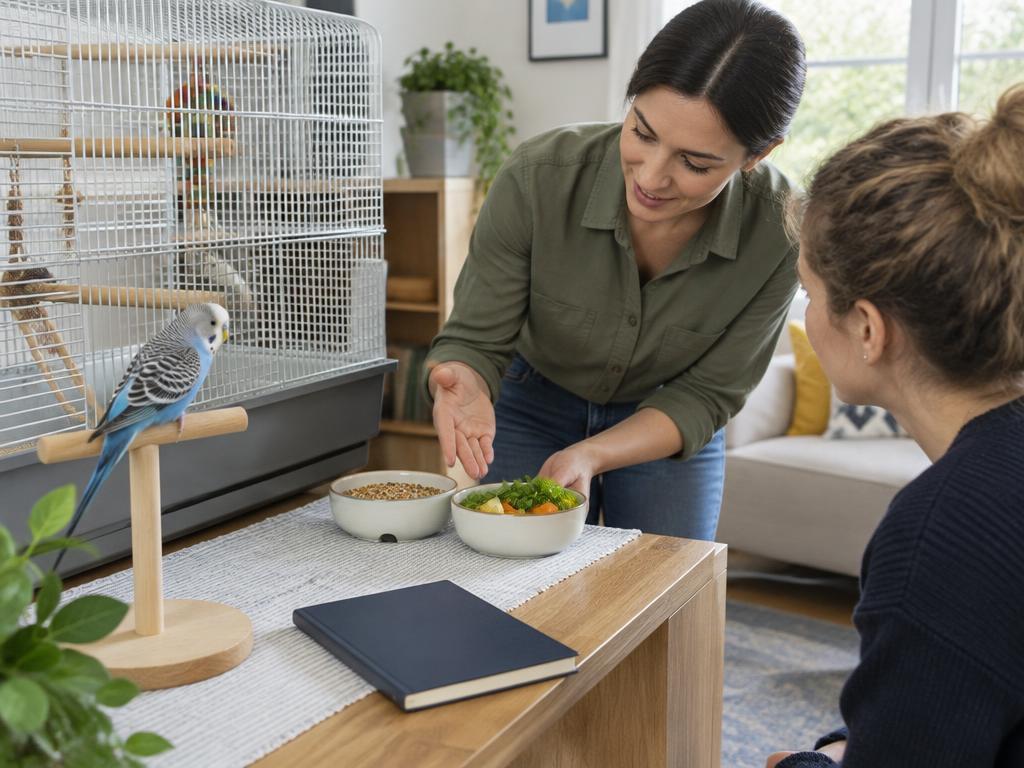
List foods, measured portions, times, and storage locations. Explain bowl washing, refreshing water, and prompt removal of perishables based on temperature and veterinary advice. State prohibited foods and no improvised dietary changes. Describe normal eating so leftovers are noticed. For prescribed medication, provide written veterinary instructions and rehearse administration with a capable sitter rather than expecting them to learn while you are away.
- Label containers and show the correct scoop.
- Provide backup support for medication difficulties.
Step 3: Make airborne and escape hazards explicit
Explain risks from smoke, sprays, cleaning fumes, and overheated nonstick coatings. Specify prohibited cooking appliances and cleaners within shared airspace. Require secure exterior doors and windows, switched-off ceiling fans during approved free time, and physical separation from other animals. Never permit outdoor trips without a secure suitable carrier. Keep visitors and children from opening the cage. Explain safety measures even to sitters with other pet experience.
Step 4: Set handling boundaries
State exactly which interactions are allowed. An inexperienced sitter may be safest servicing a suitable cage and familiar enrichment rather than attempting transfers. Demonstrate approved cues and safe reward placement. Never instruct chasing, grabbing, punishing, or forced contact. Explain when to stop if your bird refuses and whom to call. Arrange experienced support for tasks that cannot be done safely without skilled handling.
Good to know: Rehearse the actual routine together before leaving.
Step 5: Describe daily checks and cleaning
Provide a sequence for liners, bowls, latches, and damaged toys. Ask for observations of eating, droppings, activity, and breathing without diagnosis. Explain that birds can hide illness. Unusual low sitting, breathing difficulty, bleeding, and marked weakness need urgent veterinary attention. The sitter should not wait for your reply before seeking emergency care for serious signs. Show servicing methods that prevent escape gaps.
- Request daily photos and brief observations.
- Demonstrate secure bowl servicing.
Step 6: Prepare an actionable emergency plan
List the regular avian veterinarian and an emergency clinic confirmed to accept birds, with addresses and phone numbers. Confirm after-hours access, payment, and consent arrangements. Leave a carrier ready and demonstrate normal entry. Include your contact and a nearby backup. Toxin exposure, injury, escape, or serious illness requires immediate action, not home remedies. Make sure the sitter understands practical transport and access.
Good to know: Locate carrier and emergency details together during rehearsal.
Step 7: Run a complete practice visit
Watch the sitter find supplies, change water, secure doors, and check latches. Clarify confusion and remove unnecessary tasks. Leave enough familiar supplies for delays. Explain lighting and sleep without adding new covers or devices during your absence. Agree visit frequency, updates, and backup arrangements for missed visits. Place the final instructions somewhere obvious and keep a copy accessible remotely for clarification.
This guide was drafted with AI assistance and published by the Pawlito team. It has no formal source list yet. Spotted an error? Tell us and we'll correct it. Read our editorial policy.
Ask about this guide
Leave a comment or a question. Comments are public, so use a first name only and don't include emails, phone numbers or addresses. An automated assistant may reply straight away with general suggestions — it can't diagnose your pet.