How to Reduce Night Frights in Pet Birds
Help birds that thrash in the dark sleep more safely with night lights, calm cage placement and good routines.
- Written by
- Pawlito Editorial Team · Pet Care Writers
- Professional review
- Not yet reviewed by a veterinarian
- Published
- Last updated
In this guide (6 steps)
Step 1: Understand night frights
Some birds, especially cockatiels, panic at night due to sudden noises, shadows or movement. They may flap and injure themselves in the cage.
Step 2: Add a dim night light
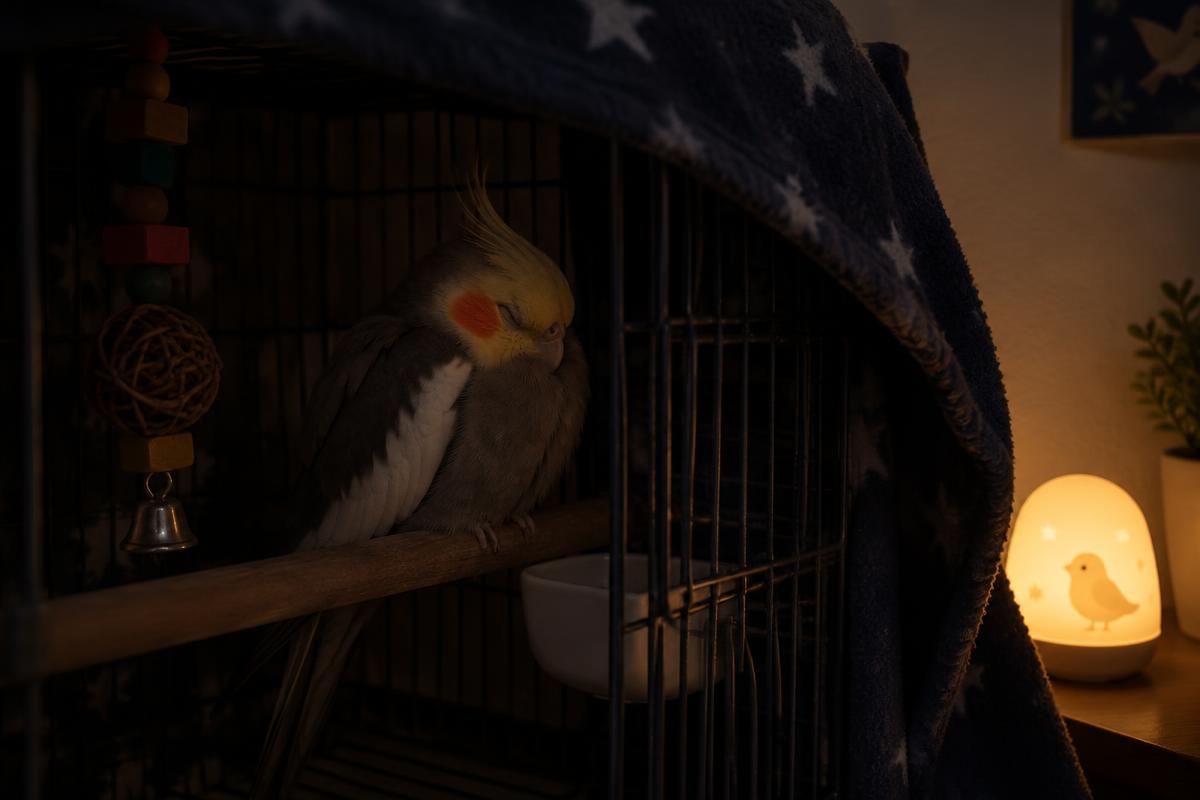
A soft night light near the cage lets your bird see their surroundings if startled. Keep it dim enough not to disturb sleep.
Step 3: Choose a quiet location
Place the cage away from windows with passing headlights, doors and busy hallways. Consider a separate sleep cage in a calm room.
Step 4: Cover thoughtfully
Some birds sleep better partly covered, others panic with full covers. Try covering three sides and leaving the front open.
Good to know: Remove extra toys at night so there is more space if your bird flaps.
Step 5: Keep a routine
Offer consistent sleep times in a quiet, dark environment, following guidance for your species.
Step 6: Check after an episode
Turn on a low light, speak calmly and check for bleeding, especially from feathers. Bleeding or injuries need an avian veterinarian's attention.
This guide was drafted with AI assistance and published by the Pawlito team. It has no formal source list yet. Spotted an error? Tell us and we'll correct it. Read our editorial policy.

Ask about this guide
Leave a comment or a question. Comments are public, so use a first name only and don't include emails, phone numbers or addresses. An automated assistant may reply straight away with general suggestions — it can't diagnose your pet.