How to Give a Pet Bird Safe Out-of-Cage Time
Make out-of-cage time safer and more rewarding with a bird-proof room, gentle training and a calm return-to-cage routine.
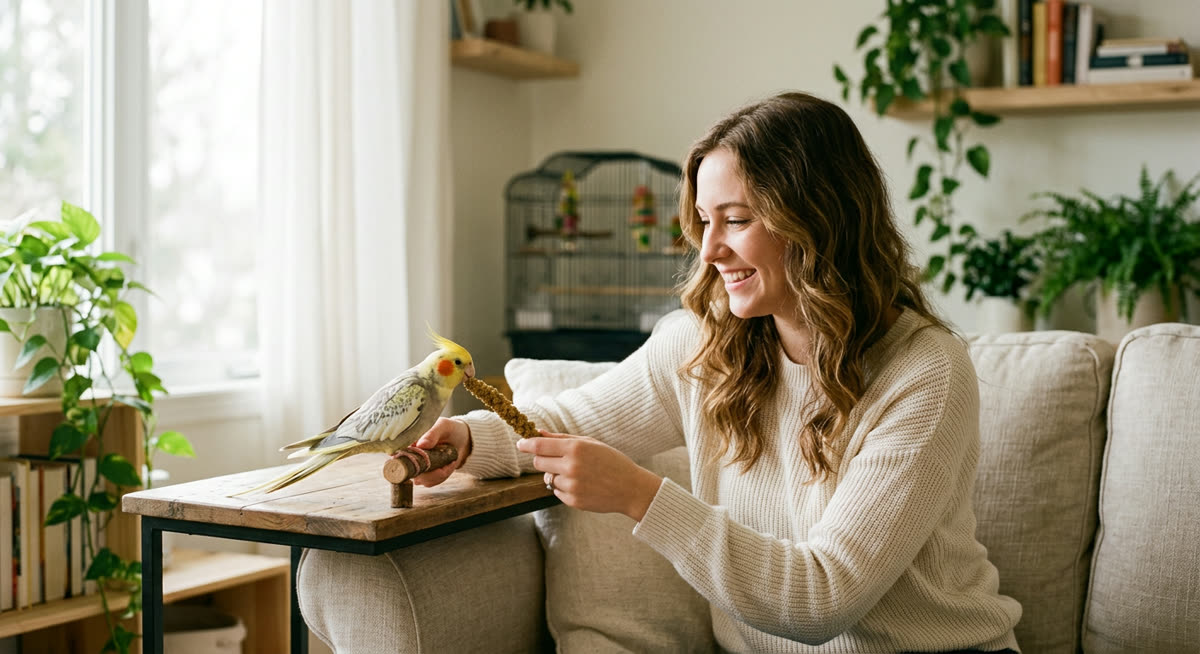
A calm, safety-first approachThis guide provides general education. Contact your veterinarian when symptoms are painful, persistent, or unusual.
- 1
1. Check your bird is ready and choose a quiet time
Choose a time when you can stay in the room throughout the session and have plenty of time afterwards to guide your bird back without rushing. Before opening the cage, check that your bird is alert, breathing comfortably and moving as they normally do. Postpone the session and contact your vet if you notice a change in balance, breathing, appetite or activity, rather than using exercise to test whether your bird is well. For a newly arrived or very nervous bird, first establish a predictable routine and give them time to eat, rest and explore their cage comfortably in your presence. Plan an initial session of around 10–15 minutes, with a generous buffer for returning, and build up according to your bird’s confidence and stamina. Keep normal food and water available, and never make your bird hungry or thirsty to encourage cooperation.
- Uninterrupted supervision arranged
- Bird behaving normally
- Quiet household period chosen
- Extra time allowed for returning
Good to know: Schedule early sessions before a familiar feeding routine so returning to the cage fits naturally into the day, without delaying food.
- 2
2. Secure and bird-proof one room
Start in one manageable room, close all external doors and windows, and tell everyone at home not to enter without checking with you. Switch off ceiling fans and wait until the blades stop completely, then cover windows and mirrors with secure, bird-safe coverings to reduce collision risk. Keep cats, dogs and other animals behind a closed door elsewhere, even if they usually seem calm around the cage. Use a room away from cooking and remove hot drinks, open water containers, toxic plants, accessible medicines, small swallowable objects and anything sharp. Block gaps behind furniture, secure blind cords and electrical cables, and keep recliners, rocking chairs and other moving furniture out of use. Do not use smoke, aerosols, scented candles or diffusers nearby, and prevent exposure to cooking fumes, especially fumes from overheated non-stick cookware.
- Doors and windows shut
- Fans off and glass covered
- Other animals kept elsewhere
- Water, heat and choking hazards removed
- Cords and furniture gaps secured
Good to know: Check the room from floor level as well as standing height, because a bird may land or walk somewhere you would not expect.
- 3
3. Set up clear landing places and supplies
Place a stable bird stand or securely mounted perch close to the cage entrance so your bird has an obvious first destination. Add another suitable landing spot within easy reach, leaving an uncluttered route between the two rather than asking your bird to cross the whole room. Choose perches that suit your bird’s foot size and grip, and position them away from windows, heaters and doorways. Provide a clear, clean floor area beneath the activity space, without loose threads or slippery coverings that could catch feet or cause falls. Keep familiar treats, a handheld perch and a simple bird-safe toy within reach so you do not need to leave the room. For a bird with limited flight or mobility, use lower perches and accessible routes, and ask your avian vet about any individual adjustments needed.
- Stable perch near the entrance
- Clear route to a second landing spot
- Familiar rewards ready
- Handheld perch within reach
- Clean, unobstructed floor area
Good to know: A familiar perch moved just outside the cage can feel less daunting than a completely new play stand.
- 4
4. Practise a voluntary way to move together
Before relying on out-of-cage handling, practise a simple step-up or target-following cue through an open cage doorway when your bird is comfortable. Offer your hand or a stable handheld perch near their feet without pressing it into their chest or pursuing them around the cage. Say your chosen cue once, reward a voluntary approach or step, and allow your bird to move away if they decline. If hands make your bird uneasy, begin by rewarding calm interest in a perch or target rather than attempting to touch them. Keep practice brief and pause if your bird repeatedly retreats, lunges or becomes increasingly agitated. If your bird is not yet comfortable stepping up, prepare to guide them back using familiar landing places and rewards instead of assuming you will be able to pick them up.
Good to know: Use the same short cue and reward immediately after the action you want, so your bird can connect the two.
- 5
5. Open the cage and let your bird choose to emerge
Complete a final room check, then secure the cage door open so it cannot swing shut against your bird. Stand or sit slightly to one side of the entrance, leaving the doorway and nearby landing perch unobstructed. Invite your bird towards the opening with a familiar cue or a small reward, but do not pull them out, shake the cage or reach in to chase them. Let them spend time looking out, climbing around the entrance or sitting on the outside of the cage before expecting further exploration. If your bird stays inside, treat the session as quiet doorway practice and try again another time rather than increasing pressure. Keep the cage accessible throughout the session so it remains a safe retreat rather than a place your bird cannot re-enter.
Good to know: For an uncertain bird, reward a calm pause at the doorway instead of placing treats so far away that reaching them becomes a challenge.
- 6
6. Supervise closely and offer manageable activity
Stay in the room and keep your bird in sight, putting away distractions such as headphones or tasks that pull your attention elsewhere. Encourage short, voluntary journeys between familiar perches, and let your bird rest whenever they choose. Offer simple activities such as shredding bird-safe paper or finding a visible treat in a shallow, stable dish, removing anything they begin swallowing or becoming tangled in. Move slowly, avoid sudden loud noises and ask anyone sharing the room to check seats and the floor before sitting or stepping. Do not assume a bird with clipped wings cannot fly, escape or fall, and never toss a bird into the air to encourage flight. Finish active play when your bird loses interest or appears tired, and seek veterinary advice promptly for unusual breathing, weakness or repeated loss of balance.
- Bird kept in sight
- Short journeys with rest breaks
- Toys checked during use
- Feet and seats checked before moving
- Cage entrance left accessible
- 7
7. Respond calmly to reluctance, panic or accidents
If your bird lands somewhere inconvenient but safe, stop approaching and offer a familiar perch or reward from a position that leaves them room to move. If they begin flying frantically, reduce noise and movement, keep the room evenly lit and give them space to land without people following underneath. Never chase, spray with water, punish or repeatedly grab your bird, as these responses can increase panic and injury risk. If your bird bites during a step-up attempt, steady your hand or perch, avoid jerking them off and allow them to step onto a safe nearby surface before reassessing. After a collision or fall, stop the session and contact an avian vet promptly, even if your bird seems to recover; breathing difficulty, collapse, bleeding or inability to perch require urgent veterinary attention. If urgent containment is needed for transport, ask the vet how to do this safely and never compress your bird’s chest.
Good to know: Keep your avian vet’s number and an emergency veterinary contact saved on your phone before the first session.
- 8
8. Guide your bird back without a chase
Begin the return routine while your bird is still calm, rather than waiting until you must leave or they are overtired. Make the cage entrance easy to reach and place a small familiar reward inside where your bird can see it. Use the practised step-up or target cue to guide them towards the entrance, then allow them to step or climb inside voluntarily. If they hesitate, pause and offer a shorter move towards the cage instead of repeatedly bringing a hand close to their body. Once your bird is fully inside, check that feet, wings and tail are clear before closing and securing the door. Praise calmly and let them enjoy the reward, while avoiding food deprivation or switching the room into darkness to force a return.
- Return started before time runs short
- Entrance clear and accessible
- Familiar reward placed inside
- Feet, wings and tail clear of the door
- Door latch checked
Good to know: Sometimes reward a voluntary return and allow another short outing, so entering the cage does not always predict the immediate end of play.
- 9
9. Check your bird and improve the next session
After returning, watch from a comfortable distance to check that your bird settles, perches normally and resumes their usual behaviour. Make sure fresh water and their normal food are available, and provide quiet time without immediately starting another handling session. Contact your vet if you notice limping, a drooping wing, unusual quietness, altered breathing or any other change following the outing. Clear away droppings, food scraps and damaged toys, using a bird-safe cleaning method and following product directions before the next use. Note which landing places worked, what caused hesitation and how easily your bird returned, then change one aspect of the setup at a time. Build towards regular daily opportunities that suit your bird’s species, health and preferences, increasing freedom only when the room, supervision and return routine remain reliable.
Ask about this guide
Leave a comment or a question about your own pet and the Pawlito assistant replies right away with practical next steps.