How to Set Up a Cage for a New Parrot
Create a safe, comfortable home for your new parrot, with practical advice on cage size, perches, feeding stations and settling in.
A calm, safety-first approachThis guide provides general education. Contact your veterinarian when symptoms are painful, persistent, or unusual.
- 1
1. Choose a cage that suits your parrot
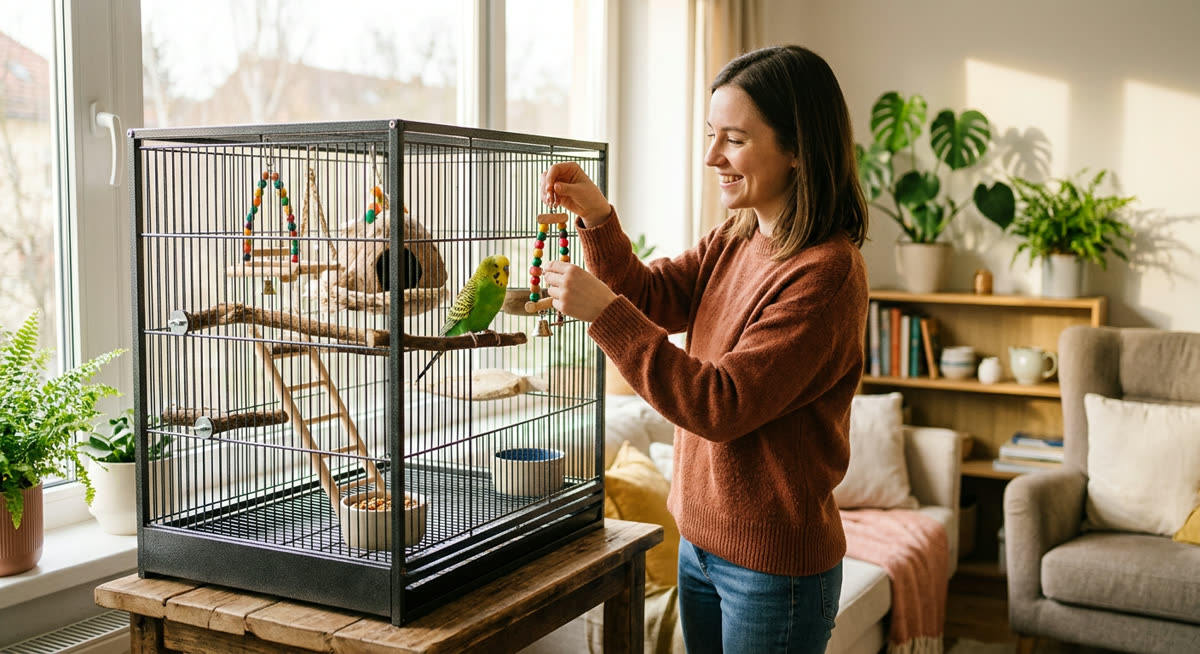
Before buying a cage, confirm your parrot’s species, expected adult size and any mobility needs with the rescue, breeder or an avian vet. Choose the largest practical cage with enough usable horizontal space for your bird to stretch both wings fully, turn around and move between perches without striking bars, bowls or toys. Treat full wing extension as a minimum clearance check, not proof that a cage provides enough living space or exercise. Ask an avian vet or reputable species-specific rescue to confirm suitable bar spacing and bar strength, because a gap that allows the head through can cause entrapment. Select a sturdy cage designed for parrots, with secure door latches and intact stainless steel or a reputable manufacturer’s bird-safe powder-coated finish. Reject cages with rust, peeling coatings, sharp welds, unknown metal composition or accessible lead or galvanised zinc components that your parrot could chew.
- Species-appropriate bar spacing and strength
- Room to move after furnishings are added
- Secure main doors and feeding hatches
- Stable stand with lockable wheels
- Easy access for daily cleaning
Good to know: Mark the cage footprint on the floor before ordering, then check that doors and cleaning trays can open fully.
- 2
2. Pick a safe, sociable location
Position the cage in a room where your parrot can observe everyday family activity without sitting in a busy walkway or being surrounded on every side. Place one side against a wall and keep the cage away from draughts, radiators, air-conditioning outlets and direct sunlight that could overheat the bird. Keep it out of the kitchen and away from smoke, vaping, aerosols, scented candles and cooking fumes, including fumes from overheated non-stick coatings. Move electrical leads, houseplants, curtain cords and other chewable hazards beyond reach through the bars, allowing for your parrot’s beak and feet. Plan for around 10–12 hours of quiet, uninterrupted darkness each night, adjusting the routine with advice for your particular species rather than keeping the bird beside a late-night television. If you already have birds, prepare the newcomer’s cage in a separate room with separate equipment and ask your avian vet for a quarantine and health-screening plan before introductions.
- Away from kitchens and airborne fumes
- No reachable cables or curtain cords
- Protected from direct sun and draughts
- Quiet sleeping arrangements
- No unsupervised access for other pets
Good to know: Sit beside the proposed cage position at several times of day to check sunlight, noise and household traffic before committing to it.
- 3
3. Assemble, clean and line the cage
Assemble the cage according to its instructions, tighten every fixing and check that the frame remains stable when you gently test it from different sides. Run a cloth carefully over accessible edges to help reveal snags, and check that doors, feeding hatches and removable panels close securely without trapping toes. Wash the cage, tray, bowls and washable fittings with warm water and a little mild, unscented washing-up liquid, then rinse thoroughly and let everything dry. For a second-hand cage, ask your avian vet about suitable disinfection, follow the product’s dilution and contact-time instructions, and never mix cleaning chemicals. Line the base tray with plain paper or paper towels so that droppings and discarded food are easy to inspect and remove. Avoid sandpaper liners, scented substrates, wood shavings and loose bedding, and ensure any fitted grate is secure, clean and free of foot-trapping gaps.
- All bolts and fittings tightened
- No sharp edges or protruding wire
- Doors and trays securely seated
- Cleaning products fully rinsed away
- Plain, easily replaced tray liner
- 4
4. Arrange perches for comfortable movement
Fit several perches of different suitable diameters and textures so your parrot does not grip an identical surface all day. Prioritise untreated, bird-safe natural wood from a reputable supplier, and avoid unidentified garden branches that may carry pesticides or come from unsuitable plants. Choose diameters that allow a comfortable grip without forcing the feet to remain nearly flat or tightly closed on every perch. Place a stable resting perch in the upper part of the cage while leaving enough clearance above the bird’s head and behind its tail. Arrange lower perches as practical routes to food and water, keeping the central area open and avoiding positions directly above bowls or other perches. Check that every mounting is secure, avoid abrasive perch covers, and ask your avian vet about lower, more accessible arrangements if your bird has difficulty balancing or climbing.
- Varied, comfortable gripping surfaces
- Secure mountings with no wobble
- Clear head and tail space
- No perch directly above a food bowl
- Open routes between key areas
Good to know: Start with fewer well-positioned perches and add another only if you identify a useful route or resting place.
- 5
5. Set up accessible food and water stations
Install secure, easy-to-clean food and water bowls where your parrot can reach them from a stable perch without stretching awkwardly. Keep bowls away from droppings, falling toy debris and the cage floor, and position water so that splashing does not continually soak food. Offer fresh drinking water in a familiar bowl on arrival, and do not rely solely on a bottle unless you have confirmed that your bird uses it reliably. Obtain a supply of the food your parrot currently recognises, because moving home is not the time for an abrupt dietary change. Discuss a balanced, species-appropriate diet and any gradual transition with an avian vet, particularly for parrots with specialised feeding needs. Use separate dishes for dry food and fresh produce, offer modest portions to limit waste, and remove perishable leftovers promptly, usually within two hours and sooner in warm conditions.
- Familiar food ready before arrival
- Fresh water in a secure bowl
- Separate dish for fresh produce
- Spare clean bowls available
- No grit offered to parrots
Good to know: For the first few days, note which feeding position your parrot actually uses before moving or removing any familiar station.
- 6
6. Add a small selection of safe enrichment
Choose a few species-appropriate toys that offer different activities, such as shredding untreated paper, chewing suitable wood and investigating a simple foraging holder. Match every toy to your parrot’s size and chewing strength, since small parts or weak fittings can become hazards for a powerful beak. Inspect attachments for sharp edges, exposed clips, open hooks and gaps that could catch a toe, beak or head, using securely closed bird-safe fittings. Avoid fabric sleeping huts, frayed ropes, long cords and accessible fibres that could be swallowed or wrap around the bird’s body. Hang toys away from food and water and leave enough room for your parrot to turn, climb and stretch without pushing through hanging objects. Introduce unfamiliar toys gradually, placing them outside the cage at a comfortable distance first if your bird appears worried rather than filling the cage all at once.
- Safe chewing or shredding material
- Appropriately sized, secure attachments
- No loose threads or long loops
- Unobstructed routes to bowls
- Space reserved for movement
Good to know: Keep the first foraging activity easy, with food visible, and never make a newly arrived parrot solve a puzzle to obtain its main meals.
- 7
7. Introduce your parrot without rushing
Finish the setup before arrival, fill the bowls and keep the room calm while children and other pets remain elsewhere. Close external doors and windows, switch off ceiling fans, and secure the room against escape before opening the travel carrier. If the carrier and cage can be aligned securely without an escape gap, allow your parrot to move across voluntarily while you supervise. Otherwise, use an already familiar step-up or transfer method advised by the bird’s previous carer, rather than chasing, grabbing or tipping the bird into the cage. Once your parrot is inside, secure every door and give it space while you quietly observe whether it can perch comfortably and locate food and water. Keep handling and visitors limited initially, maintain familiar feeding times, and arrange a new-bird health appointment with an avian vet rather than assuming a quiet bird is simply settling in.
Good to know: Ask the previous carer for a photo of the old cage layout so you can reproduce a familiar bowl position or resting perch.
- 8
8. Troubleshoot the layout and watch for warning signs
Observe your parrot from a little distance during the first day, noting whether it moves confidently, reaches both bowls and rests without its tail pressing against the bars. If access looks awkward, adjust one perch or bowl at a time while the bird is safely separated from the area you are working on. If a toy causes repeated retreat, frantic movement or avoidance of food, remove it calmly and reintroduce it later at a greater distance. Check food rather than judging by a full-looking bowl, because seed husks can hide how little edible food remains, and monitor the number and appearance of droppings on the liner. Contact an avian vet promptly if you cannot confirm that your parrot is eating, or if you notice markedly fewer droppings, unusual inactivity, persistent fluffed posture or repeated loss of balance. Seek urgent veterinary help for laboured breathing, collapse, bleeding or suspected fume exposure, and do not give medication, force-feed or wait for a cage adjustment to solve the problem.
- 9
9. Establish a cleaning, sleep and exercise routine
Replace the paper liner daily, remove wet or spoiled food promptly, and wash food and water bowls with thorough rinsing before refilling them. Check water more often if your parrot dunks food or bathes in its bowl, and replace it whenever it becomes contaminated. Inspect perches, toys, latches and bars every day for droppings, loose fixings, frayed material or damage, removing unsafe items immediately. Give the cage a thorough clean at least weekly, or more often when soiled, with your parrot safely housed elsewhere and all surfaces rinsed and dried before its return. Maintain predictable quiet nights, and use a cage cover only if your bird tolerates it, ventilation remains clear and the fabric cannot be pulled inside and chewed. Once your parrot is settling and you have a safe return-to-cage plan, provide daily supervised time outside the cage in a bird-proofed room, because even a spacious cage cannot replace exercise and social contact.
- Daily liner change and bowl washing
- Daily toy, perch and latch checks
- Weekly thorough cage clean
- Consistent, uninterrupted sleep
- Supervised exercise and interaction
Good to know: Keep a second set of bowls and spare liners beside your cleaning supplies so routine care stays quick and consistent.
Ask about this guide
Leave a comment or a question about your own pet and the Pawlito assistant replies right away with practical next steps.