How to Set Up Your First Budgie Cage the Right Way
Everything a new budgie owner needs: cage size, perches, placement, food and the first days at home.
- Written by
- Pawlito Editorial Team · AI-assisted guide
- Professional review
- Not yet reviewed by a veterinarian
- Published
- Last updated
In this guide (8 steps)
Step 1: Choose a big enough cage
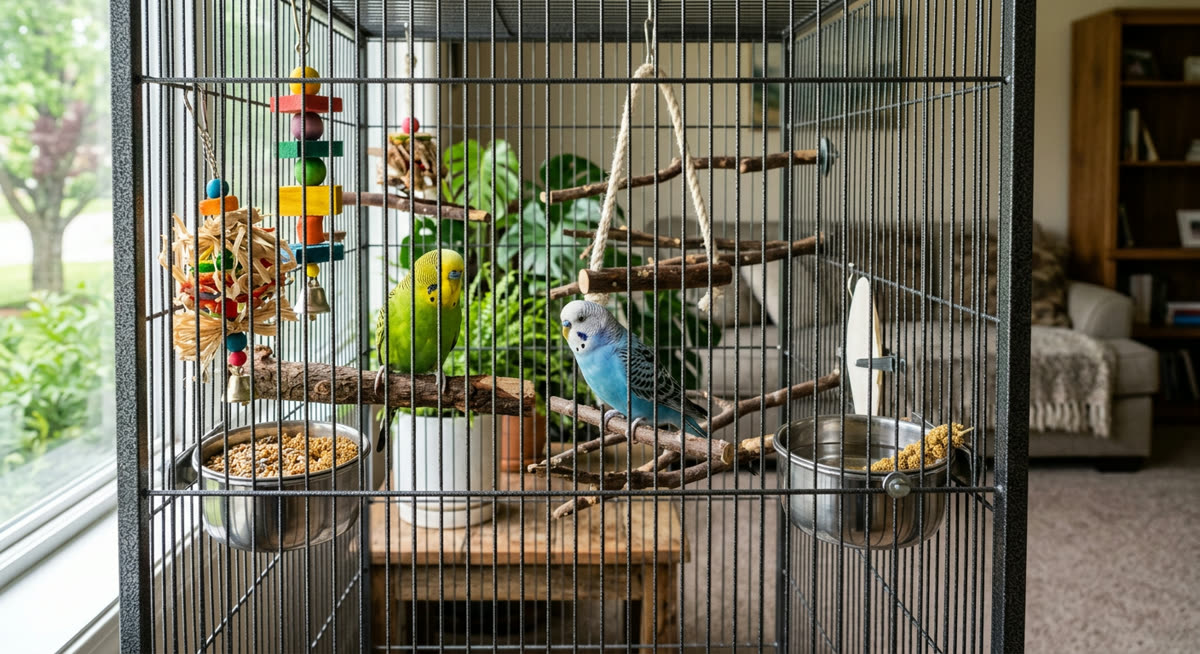
Budgies are active flyers, so buy the largest cage you can fit and afford — a minimum of 60 centimetres wide for one budgie, and wider is always better. Width matters more than height because birds fly horizontally. Bar spacing should be no more than 1.2 centimetres so your budgie cannot get their head stuck. Horizontal bars on at least two sides help climbing.
Step 2: Position the cage thoughtfully
Place the cage at chest height or higher, against a wall so your budgie feels secure from behind. Avoid kitchens, where cooking fumes — especially from non-stick pans — are deadly to birds. Keep it away from draughts, radiators and direct all-day sunlight. A spot with family activity nearby suits these social birds, but not somewhere constantly chaotic.
Good to know: Never keep birds in a kitchen or near non-stick cookware — overheated PTFE fumes can kill a bird within minutes.
Step 3: Furnish with natural perches
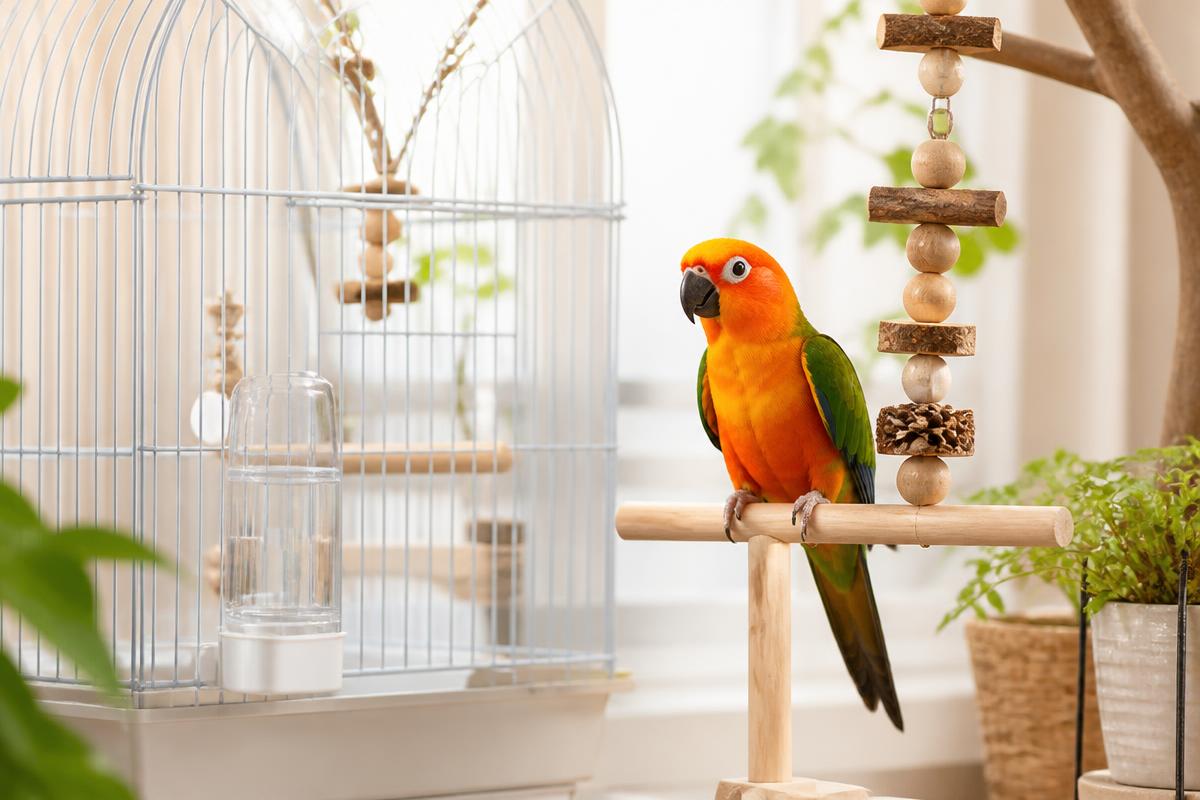
Provide perches of varying diameters and textures — natural branches like apple or willow are ideal. Varying thickness exercises foot muscles and prevents arthritis. Avoid sandpaper perch covers, which damage feet. Position perches so droppings do not fall into food and water bowls, and leave open space for short flights.
Step 4: Set up food and water correctly
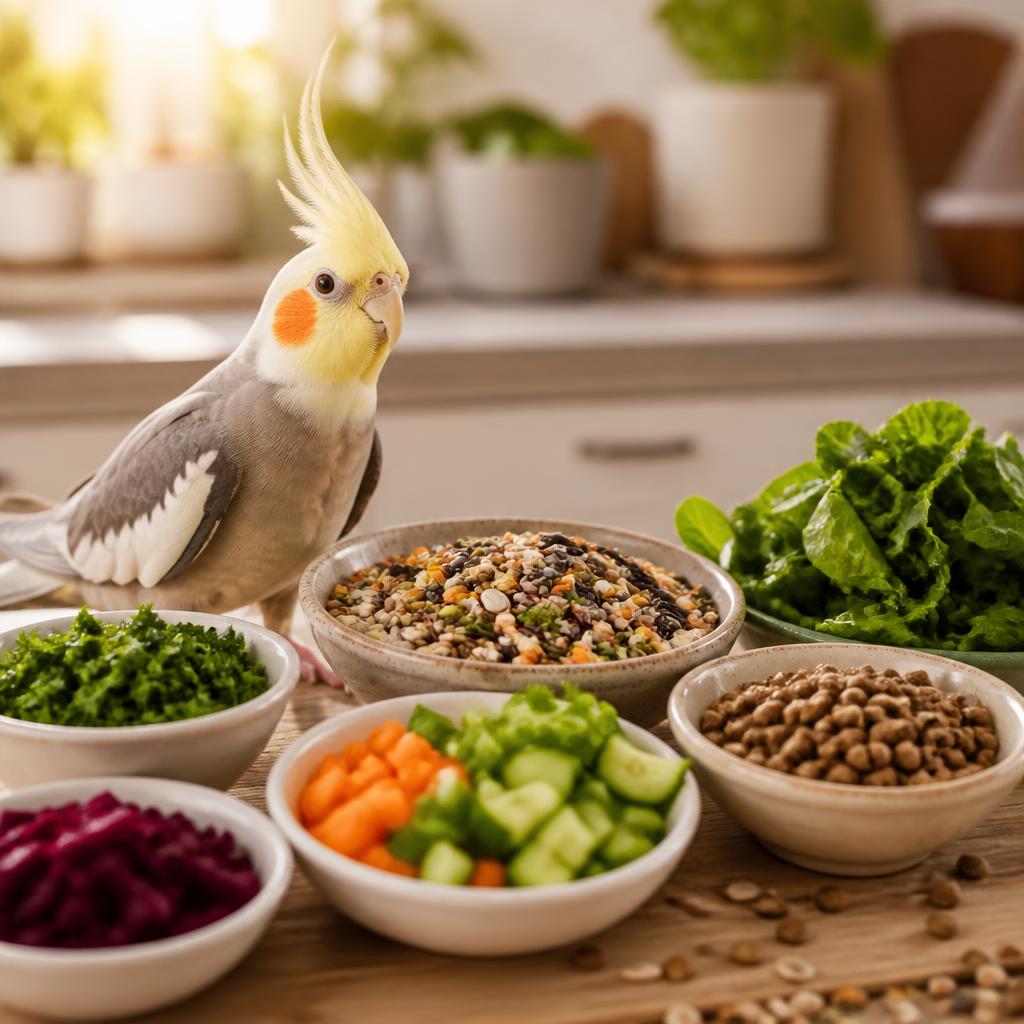
Use two or three sturdy bowls: one for water, one for seed or pellets, one for fresh food. Wash water bowls daily — they grow bacteria fast. A quality pellet-based diet with some seed and daily fresh vegetables is far healthier than seed alone. Introduce new foods gradually and remove fresh food after a few hours.
- Pellets as the dietary base, seed as a smaller part
- Daily fresh vegetables like broccoli, carrot and leafy greens
- Never feed avocado, chocolate, caffeine or onion — all are toxic
Step 5: Add toys and enrichment
Budgies are intelligent and need mental stimulation. Provide a mix of shredding toys, swings, bells and foraging toys, but do not crowd the cage — your budgie still needs room to move. Rotate toys weekly to keep things fresh. A mirror is fine as one toy among many, but a lone budgie with only a mirror can become obsessed with it.
Step 6: Cover the cage at night
Budgies need ten to twelve hours of quiet, dark sleep. Cover the cage with a breathable cloth at a consistent time each evening, leaving one side partially open for airflow. A regular sleep schedule prevents hormonal and behavioural problems. Keep the room quiet and avoid late-night bright lights near the cage.
Step 7: Settle your new budgie in gently
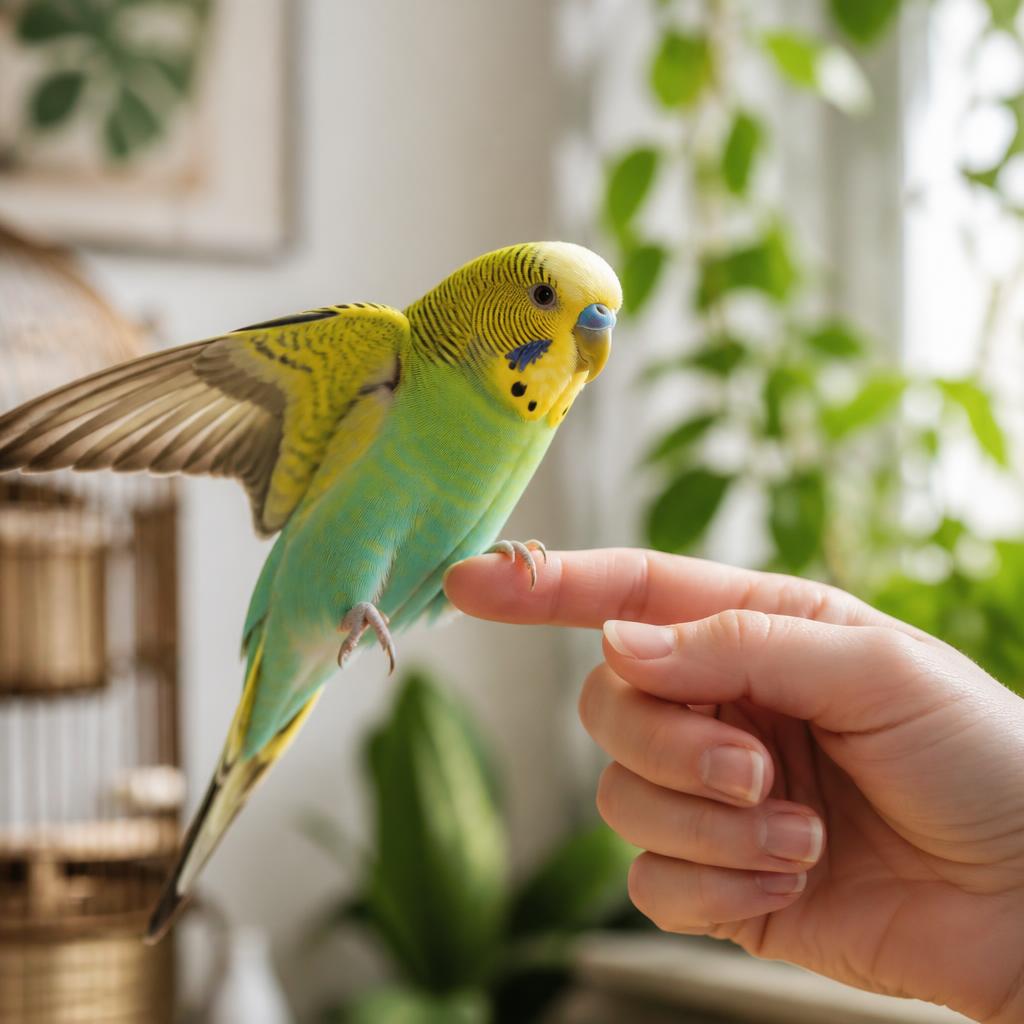
For the first few days, keep interaction minimal — talk softly near the cage but do not try to handle your budgie. Let them learn the layout, find food and water, and get used to household sounds. Watch that they are eating and drinking; a new bird who does not eat within twenty-four hours needs an avian vet. Begin hand-taming only once your budgie seems calm.
Step 8: Establish a cleaning routine
Line the cage bottom with paper and change it daily — this also lets you monitor droppings, an early health indicator. Wash bowls daily and do a full cage clean weekly with bird-safe disinfectant or hot soapy water, rinsed well. A clean cage prevents most common infections. Budget ten minutes a day and half an hour a week.
Good to know: Learn what normal droppings look like — changes are often the first sign of illness in birds.
This guide was drafted with AI assistance and published by the Pawlito team. It has no formal source list yet. Spotted an error? Tell us and we'll correct it. Read our editorial policy.
Ask about this guide
Leave a comment or a question. Comments are public, so use a first name only and don't include emails, phone numbers or addresses. An automated assistant may reply straight away with general suggestions — it can't diagnose your pet.