How to Spot Early Signs of Illness in a Pet Bird
Learn to spot early signs of illness in birds through daily checks of weight, droppings, appetite, breathing, and behavior.
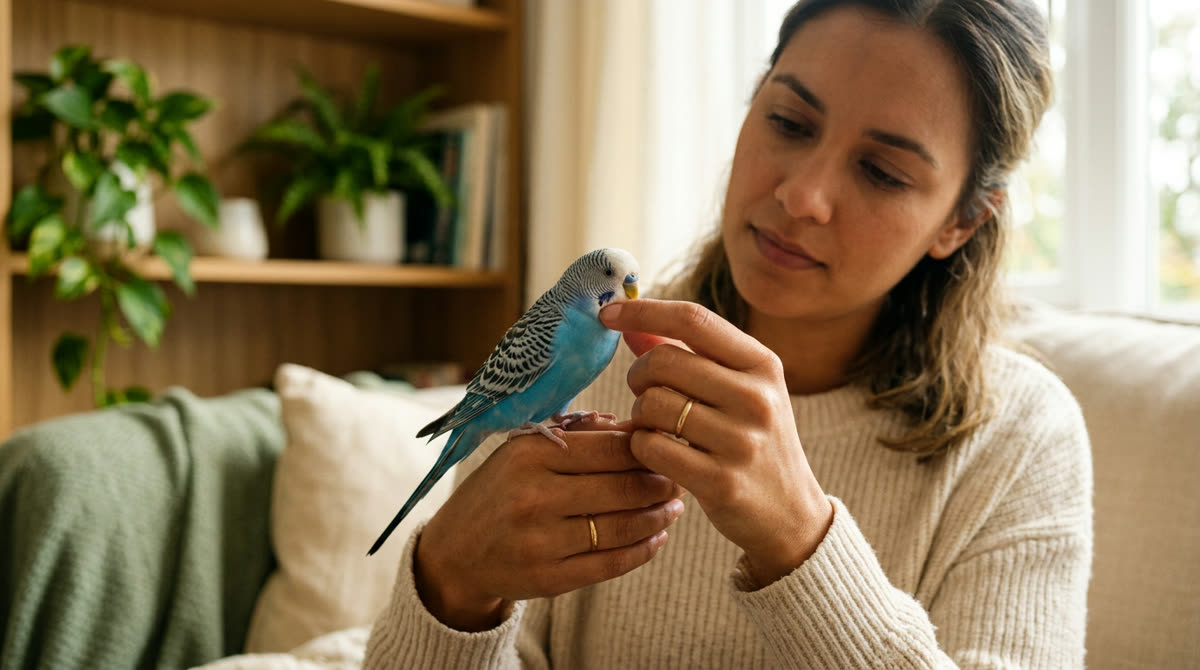
A calm, safety-first approachThis guide provides general education. Contact your veterinarian when symptoms are painful, persistent, or unusual.
- 1
Establish Your Bird’s Healthy Baseline
Spotting early signs of illness in birds starts with knowing what is normal for your individual pet, because birds often conceal weakness until illness has progressed. Spend 5–10 minutes observing your bird each morning and evening, noting its usual activity, posture, vocalizations, appetite, and interactions before you approach the cage. Record these observations in a notebook or phone log for 7–14 healthy days, alongside your bird’s species, age, usual diet, and any ongoing veterinary concerns. Notice species-specific habits: a budgie may chatter throughout the morning, while a cockatiel may have predictable quiet periods that are not concerning on their own. Take a few clear photos of your bird’s normal posture and typical overnight droppings so you have useful comparisons when something changes. Arrange a wellness examination with an avian veterinarian, or a veterinarian experienced with birds, rather than relying on an apparently healthy appearance to establish that all is well. Save that clinic’s number and identify an emergency hospital that actually treats birds, since some general emergency practices cannot provide avian care.
- Record normal morning and evening behavior.
- Photograph typical posture and droppings.
- List the usual foods and daily routine.
- Save avian and emergency veterinary contacts.
Good to know: If you have just acquired a bird, do not assume quietness or low appetite is simply adjustment stress; arrange a prompt veterinary check and report any concerning changes.
- 2
Weigh Your Bird Consistently
Use a stable digital scale that reads in grams, ideally with 0.1-gram resolution for very small birds, and attach a secure perch or place a familiar container on it. Tare the scale with the perch or container in place, then encourage your bird to step on voluntarily using a familiar cue or a small reward after weighing. During baseline tracking, weigh daily at approximately the same time, preferably after the first morning dropping and before the usual breakfast without delaying food or imposing a fast. Once your bird’s weight is stable, ask your veterinarian whether daily or weekly weighing best suits its species, age, and medical history. Record the actual number rather than judging body size through feathers, and calculate percentage loss by dividing the grams lost by the usual weight and multiplying by 100. For example, a fall from 100 grams to 95 grams is a 5% loss and warrants a same-day call to your avian veterinarian if unexplained, while a smaller continuing downward trend also deserves advice. Recheck an unexpected reading once if your bird is comfortable, but treat sudden loss approaching 10%, or any weight loss accompanied by weakness or breathing trouble, as an urgent veterinary concern.
- Use the same scale and weighing setup.
- Record weight in grams, not rounded ounces.
- Compare readings taken at similar times.
- Flag steady losses as well as sudden drops.
Good to know: Never chase or tightly restrain a breathless or weak bird just to obtain a weight; the stress can worsen its condition, and veterinary care takes priority.
- 3
Inspect Droppings Before Cleaning
Line the cage tray with plain white paper placed where your bird cannot chew contaminated sheets, and inspect it before replacing it each day. A typical dropping contains fecal material, usually green or brown depending on diet, chalky white urates, and a variable amount of clear urine. Compare the number, size, color, and moisture of droppings over similar periods, such as overnight or a 2-hour morning window, because output varies considerably with species, meals, and activity. Watery-looking droppings may reflect extra urine after drinking, bathing, stress, or juicy foods, whereas poorly formed fecal material is a different change that a veterinarian should assess. Photograph unusual droppings in good light and note recent foods, since berries, colored pellets, and leafy vegetables can alter appearance without proving illness. Contact your veterinarian the same day for persistent unexplained changes, distinctly fewer or smaller droppings, repeatedly discolored urates, or soiling around the vent, especially when appetite or activity also changes. Suspected blood, black tar-like feces, repeated straining, or little to no output accompanied by distress requires urgent veterinary assessment rather than waiting for the next cage cleaning.
- Check feces, white urates, and clear urine.
- Compare output over equivalent time periods.
- Note colorful foods and unusual treats.
- Photograph changes before removing the liner.
Good to know: Ask the clinic whether to bring the cage liner or a fresh dropping sample and how to store it; an old, dried sample may not be useful for every test.
- 4
Confirm That Your Bird Is Actually Eating
At each feeding, watch your bird swallow food rather than assuming that time spent beside a bowl means it is eating normally. Seed dishes can look full when they contain mostly empty hulls, and a bird may crumble pellets or scatter food while consuming very little. Offer measured portions of the familiar diet and check leftovers at consistent intervals, using a gram scale or measuring spoon while allowing for spilled food and waste. Refresh water at least daily and whenever contaminated, confirming that bottles dispense properly and bowls remain accessible from a stable perch. Note subtle changes such as abandoning favorite foods, taking unusually long to eat, dropping food repeatedly, or needing to pause during meals. Call an avian veterinarian the same day if intake clearly decreases or your bird repeatedly misses its usual daytime meals, and seek urgent assessment when reduced eating occurs with weakness, vomiting, markedly reduced droppings, or inability to perch. Avoid treating apparent pickiness with an abrupt diet conversion, because a sick bird may fail to recognize or accept unfamiliar food and lose further energy.
- Separate empty seed hulls from intact seeds.
- Observe swallowing, not just bowl visits.
- Check water-bottle flow and bowl access.
- Track food offered, leftovers, and spills.
Good to know: Do not wait 24 hours for a small bird that has stopped eating, and never syringe-feed food or water unless a veterinarian has specifically instructed and trained you; aspiration can be fatal.
- 5
Check Posture, Plumage, Eyes, and Vent
Observe your bird from a short distance while it is awake and undisturbed, because a frightened bird may temporarily straighten up and conceal an abnormal resting posture. Brief fluffing during sleep, preening, or a comfortable rest can be normal, but remaining puffed up through an ordinarily active period is more concerning, particularly with closed eyes or reduced responsiveness. Look for a hunched stance, drooping wings, a newly low perch preference, difficulty balancing, or spending time on the cage floor when that is unusual for your bird. Check the eyes and nostrils for discharge, swelling, crusting, or persistent wetness, and examine the beak visually for new damage or an unexpected change in alignment. Notice feathers that remain disheveled, become stained around the face, or show new bald areas, while remembering that a routine molt should not by itself explain marked lethargy or poor appetite. Inspect the vent area without turning your bird upside down or pressing its abdomen, and report stuck droppings, swelling, repeated straining, or an unusually wide stance promptly. Inability to perch, collapse, active bleeding, or tissue protruding from the vent calls for immediate veterinary attention rather than home cleaning, manipulation, or trimming.
Good to know: Do not pull away material stuck to swollen tissue or push protruding tissue back inside; prevent unnecessary handling and contact an emergency veterinarian.
- 6
Notice Changes in Behavior and Sleep
Compare your bird’s behavior with its own baseline rather than a general idea of how a healthy parrot, canary, or finch should behave. Early changes may include less singing, reluctance to leave the cage, reduced interest in toys, unusual irritability, or withdrawing from familiar people or flockmates. Track when the change began and whether it continues through the bird’s normally active periods, rather than repeatedly waking or provoking it to test its response. Provide a predictable nighttime routine, commonly around 10–12 hours of quiet darkness for many companion birds, with species-specific guidance from your veterinarian. More daytime sleeping despite an adequate night’s rest, a suddenly altered voice, or a bird that stops responding to familiar cues warrants a prompt call when unexplained. Record a 30–60-second video from outside the cage to document intermittent behaviors, such as unusual head movements or episodes of food coming back up. Courtship-related regurgitation can occur in some parrots, but new, repeated, forceful, or messy food expulsion cannot safely be labeled behavioral without veterinary advice, especially if the bird seems unwell.
Good to know: Stress, molt, and hormonal behavior can overlap with illness signs; do not use those explanations to dismiss a combination of low appetite, reduced activity, and weight loss.
- 7
Assess Breathing Without Causing Stress
Watch breathing while your bird is resting quietly, allowing several minutes after ordinary activity or excitement if it otherwise appears comfortable. Look for open-mouth breathing at rest, exaggerated chest movement, pronounced tail bobbing with each breath, neck stretching, or wings held away from the body together with breathing effort. Listen for new wheezing, clicking, or other respiratory noises, while recognizing that birds can have serious breathing problems without making an obvious sound. A slight tail movement can occur normally, so the concern is a new, pronounced, rhythmic movement or any breathing change paired with reduced activity or distress. Review recent exposures to smoke, aerosols, paint, essential-oil diffusers, strong cleaning fumes, and overheated nonstick or PTFE-containing equipment, all of which can make the surrounding air hazardous. If breathing is labored, stop handling immediately, move the bird away from any suspected airborne hazard only if you can do so safely, and call an emergency veterinarian that treats birds while arranging transport. Do not delay after suspected toxic-fume exposure even if your bird seems to improve, and do not attempt steam treatments, inhalers, chest massage, or forced fluids at home.
- Observe at rest, not immediately after flight.
- Check for open-mouth breathing and effort.
- Note new sounds or pronounced tail bobbing.
- Report any possible smoke or fume exposure.
Good to know: Never compress a bird’s chest during restraint; birds need free movement of the breastbone to breathe, and respiratory distress makes even brief handling risky.
- 8
Match the Warning Signs to the Right Urgency
Use the pattern and severity of changes to decide how quickly to act, but remember that a single serious sign outweighs an otherwise normal-looking morning. Seek emergency care for labored breathing, collapse, seizures, inability to perch, significant or ongoing bleeding, suspected poisoning, serious trauma, or straining accompanied by weakness. Any cat or dog bite or mouth contact also needs urgent veterinary assessment, even when feathers hide the wound or no puncture is visible. Make a same-day veterinary call for clearly reduced appetite, unexplained weight loss, persistent abnormal droppings, new discharge, or ongoing lethargy, and describe combinations of signs rather than reporting only that your bird seems quiet. Brief observation is reasonable only for an isolated mild change with a clear temporary trigger, such as a wetter dropping after watery produce, when eating, breathing, posture, and activity remain entirely normal. If that change repeats, persists through subsequent checks, or develops alongside another symptom, stop home monitoring and obtain veterinary advice rather than waiting for an arbitrary number of days. When calling, give your bird’s species, age, latest weight, symptom start time, food intake, dropping changes, and possible exposures, and send photos or videos if the clinic accepts them.
- Emergency: breathing difficulty, collapse, seizures, trauma.
- Same-day call: appetite loss, lethargy, unexplained weight change.
- Report bites and possible toxin exposures immediately.
- Ask where to go if the avian clinic is unavailable.
Good to know: Do not give human medicines, leftover antibiotics, pet-store remedies, or new supplements to see whether they help; they may be harmful and can delay appropriate treatment.
- 9
Provide Safe Support and Track Recovery
While arranging care, keep your bird in a quiet, draft-free space with minimal handling, and ask the veterinary team whether its condition warrants supplemental warmth. Do not place a heat lamp or heating pad directly against the cage, cover the enclosure so tightly that ventilation is restricted, or keep adding heat to a panting bird. For transport, use a secure, ventilated carrier with a paper-lined floor and a low stable perch only if your bird can balance; a weak bird may be safer without a perch, following clinic guidance. Keep familiar food and shallow water within easy reach while waiting at home, but ask about transport arrangements and never force either into the beak. If you have other birds, separate the unwell bird into a different room when feasible without delaying care, use separate bowls and cleaning equipment, and wash hands between birds. After the examination, follow the written care plan exactly and log appetite, droppings, activity, and weight at the frequency your veterinarian recommends, avoiding stressful checks in an unstable bird. Attend scheduled rechecks and contact the clinic sooner for worsening signs or failure to improve within the stated timeframe, because one lively hour does not establish recovery.
- Prepare a secure carrier before an emergency.
- Bring weight records, diet details, and videos.
- Use separate supplies for an unwell bird.
- Confirm the expected improvement and recheck timeline.
- Report new symptoms instead of changing treatment yourself.
Good to know: Ask for clear instructions on what should trigger an overnight emergency visit and whom to call; a specific follow-up plan is safer than simply being told to monitor your bird.
Ask about this guide
Leave a comment or a question about your own pet and the Pawlito assistant replies right away with practical next steps.