How to Stop a Bird From Flying Into Windows
Make windows safer for wild and pet birds with effective markings, simple home changes and clear advice on what to do after a collision.
A calm, safety-first approachThis guide provides general education. Contact your veterinarian when symptoms are painful, persistent, or unusual.
- 1
1. Identify the windows that put birds at risk
Walk around your home during daylight and look for windows that reflect trees, shrubs or open sky, as birds can mistake these reflections for a clear flight path. Check glazed doors, conservatories and glass balcony panels as well as ordinary windows. Look through corner windows and rooms with windows opposite each other, where birds may see what appears to be a route straight through the building. Repeat your checks at different times of day because changing light can make a previously unobtrusive pane highly reflective. Note any feathers, impact marks or previous collisions, and prioritise those panes even if their reflections seem faint. Inspect upper-storey windows from the ground, and arrange professional help rather than leaning out or using a ladder in an unsafe position.
- Reflections of trees or sky
- Clear views through the building
- Glass beside feeders or vegetation
- Previous impact marks or collisions
Good to know: Photograph problem windows from outside in the morning and afternoon to help you spot changes in their reflections.
- 2
2. Choose a closely spaced, exterior treatment
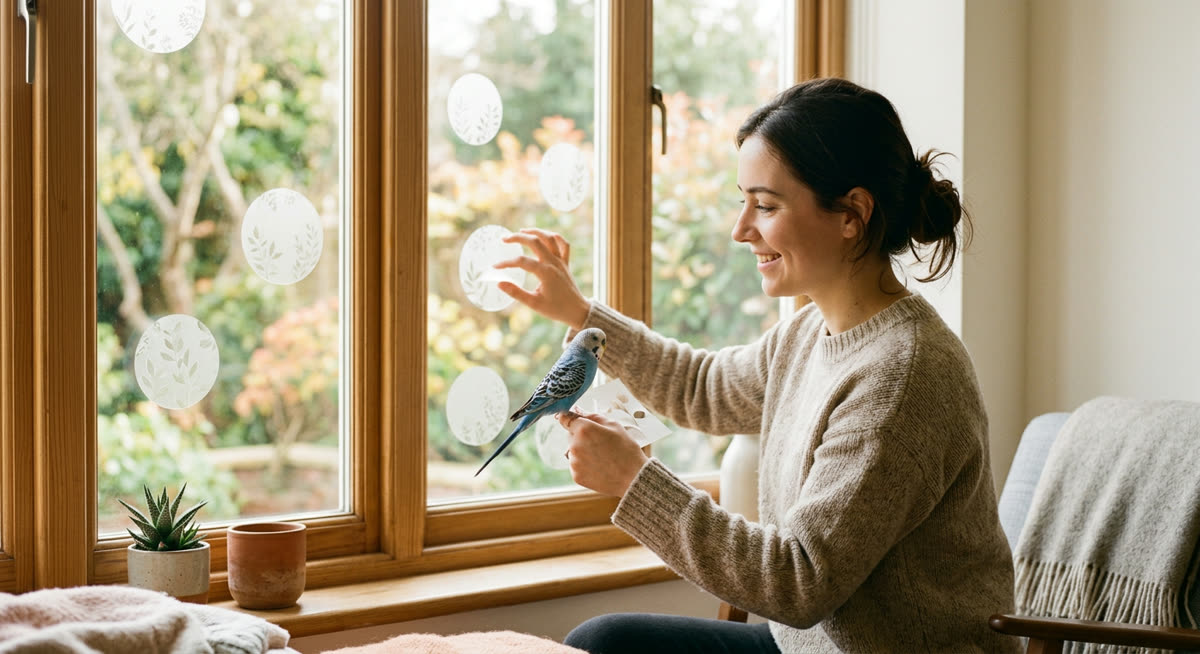
Choose a treatment that makes the glass visibly obstructed across its whole surface, rather than placing a single decorative sticker in the centre. For wild birds, position markings on the outside face of the window so they interrupt the reflection instead of sitting behind it. Select contrasting dots, stripes or a purpose-made bird-safe film, and keep gaps between markings no greater than 5 cm both horizontally and vertically. Use dots at least 6 mm across or lines at least 3 mm wide, checking that they remain visible against the reflected background. Avoid relying on solitary bird-of-prey silhouettes, internal blinds or products that are effectively invisible to people unless there is credible independent evidence of their effectiveness. Read the glass and treatment manufacturers’ instructions before buying, particularly for coated or double-glazed windows where unsuitable films can cause problems.
- Full-pane coverage
- Exterior placement
- Gaps no greater than 5 cm
- Clearly visible, contrasting marks
- Compatibility with your glazing
Good to know: A dense, simple pattern is more useful than an attractive design with large empty spaces.
- 3
3. Apply the markings across every dangerous pane
Clean the outside glass using a product suitable for your windows, rinse away residue if required and let the surface dry fully. Measure and plan the pattern before applying it, using a ruler or a temporary guide on the inside of the pane to maintain consistent spacing. Apply your chosen dots, tape or film according to its instructions, extending the pattern across the complete pane and close to its edges. Treat each section of a glazed door or conservatory separately so that small unmarked panes do not remain as apparent escape routes. If you need an immediate temporary measure, draw a close-spaced pattern with an exterior-suitable, washable glass marker, then check it after rain. Once finished, step outside and inspect the window from several angles to confirm that no broad, reflective gaps remain.
Good to know: Start with one safely accessible pane so you can check the product’s appearance and application method before treating the rest.
- 4
4. Add a safe external screen where practical
Consider a securely fitted exterior insect screen or purpose-made bird-collision screen for windows where markings are impractical or extra protection is needed. Choose a system designed for your window and install it with enough separation from the glass to cushion contact, following the manufacturer’s guidance. Make sure the screen covers the full pane and that its frame, fixings and edges cannot loosen in wind. Do not drape loose garden netting over windows, as birds can become caught in slack material or unsecured edges. Avoid improvised hanging cords or loops that could entangle wildlife, children or pets. Use a competent installer for inaccessible windows, and keep ventilation, emergency exits and window-opening mechanisms unobstructed.
- Full coverage of the glass
- Secure frame and fixings
- Safe separation from the pane
- No loose mesh or loops
- Unobstructed emergency exits
- 5
5. Adjust feeders, plants and evening lighting
Review feeders and bird baths near untreated glass, and temporarily remove or reposition them while you make the window safe. Where the layout allows, place a feeder within about 1 metre of a treated window so a bird leaving it has less distance in which to gain speed, but do not treat placement alone as protection. Choose a spot with a clear view of approaching predators, and avoid low positions or nearby hiding places that give cats an easy ambush. Move indoor plants away from untreated windows if they appear to offer a landing place through the glass, while retaining useful outdoor habitat wherever possible. After dusk, switch off unnecessary indoor and outdoor lighting and close curtains or blinds to reduce light spilling outside, especially during migration periods. Use shielded, downward-facing outdoor lights with timers or motion sensors where lighting is necessary, remembering that night-time changes do not replace daytime glass treatment.
- Treat glass before attracting birds nearby
- Check feeder positions for cat access
- Move tempting indoor plants
- Close curtains after dark
- Reduce unnecessary outdoor lighting
Good to know: Check reflections again after moving a feeder, because its new approach route may expose birds to a different pane.
- 6
6. Make windows safe before letting a pet bird fly
If you keep a pet bird, prepare a secure flight room before opening its enclosure, and keep all windows and exterior doors shut. Cover glazing and mirrors with curtains, cordless blinds or another securely fitted, bird-safe covering so the bird cannot mistake them for open space. Stop ceiling fans, remove other obvious flight hazards and keep cats, dogs and unsupervised children out of the room. Introduce the room calmly, providing stable, familiar perches well away from glass and allowing your bird to choose when to leave its enclosure. Supervise every flight session and never chase the bird or deliberately fly it towards a window to teach it that glass is solid. If it repeatedly heads towards a pane, end the session calmly using its familiar return cue or perch, improve the covering and ask your avian vet for advice if the behaviour continues.
Good to know: Do a fresh room check before every flight session, as a visitor opening a blind or door can undo your usual precautions.
- 7
7. Respond safely if a bird hits the glass
If a wild bird strikes a window, keep people and pets away and contact a wildlife rescue centre or vet promptly, even if the bird appears only stunned. If it is on the ground and can be safely contained, prepare a small cardboard box with ventilation holes and a smooth paper lining, then use gloves or a clean cloth to lift it gently without squeezing its chest. Close the box securely and keep it somewhere quiet, dark and comfortably temperate, away from direct sun, radiators and household animals. Do not offer food or water, attempt treatment or throw the bird into the air to test whether it can fly. Tell the rescue service about any bleeding, unusual breathing, inability to stand or contact with a cat, and seek expert help rather than handling a large bird, heron or bird of prey yourself. For a pet bird, contact an avian vet urgently after a collision and follow their advice on safe containment and transport.
- Keep pets and onlookers away
- Use a secure, ventilated box if safe
- Keep the bird quiet and undisturbed
- Give no food, water or medication
- Contact a rescue service or vet promptly
- 8
8. Troubleshoot repeated collisions or pecking
If collisions continue, check whether your treatment is outside the glass, visible in the current light and spaced closely enough over the entire pane. Look for missed sections above doors, beside window frames or on neighbouring panes, then extend or strengthen the pattern where needed. Add an appropriate exterior screen if reflections remain strong or you cannot maintain a reliable marking system. If a bird repeatedly lands beside a window and pecks at its reflection rather than flying into it at speed, temporarily obscure that reflection with an opaque, securely attached exterior covering suitable for the glass. Avoid sticky repellents, traps, lasers or attempts to frighten the bird by chasing it, and do not disturb a nearby nest. Record when and where the behaviour happens so you can judge whether each change helps, and contact a wildlife rescue service if the bird appears injured or exhausted.
Good to know: Repeated pecking and high-speed collisions can need different immediate fixes, but both benefit from removing the misleading reflection.
- 9
9. Maintain the protection and follow through after an incident
Check treated windows regularly and after storms or window cleaning, replacing faded markings, detached stickers or damaged screens promptly. Reassess the glass when seasons change, trees lose their leaves or you rearrange the garden, as these changes can create new reflections and flight routes. Tell household members and window cleaners which treatments must stay in place, and keep spare materials ready for repairs. After a collision, follow the rescue centre’s or vet’s instructions rather than assuming that a bird is uninjured because it becomes active again. If a wild bird flies away before help arrives, do not chase it; record the incident and improve the window protection immediately. Keep a simple log of collisions and near misses so you can identify remaining problem panes and maintain effective protection throughout the year.
Ask about this guide
Leave a comment or a question about your own pet and the Pawlito assistant replies right away with practical next steps.