How to Stop Feather Plucking in Parrots
Learn how to address parrot feather plucking with veterinary care, safer routines, better enrichment, and a practical recovery plan.
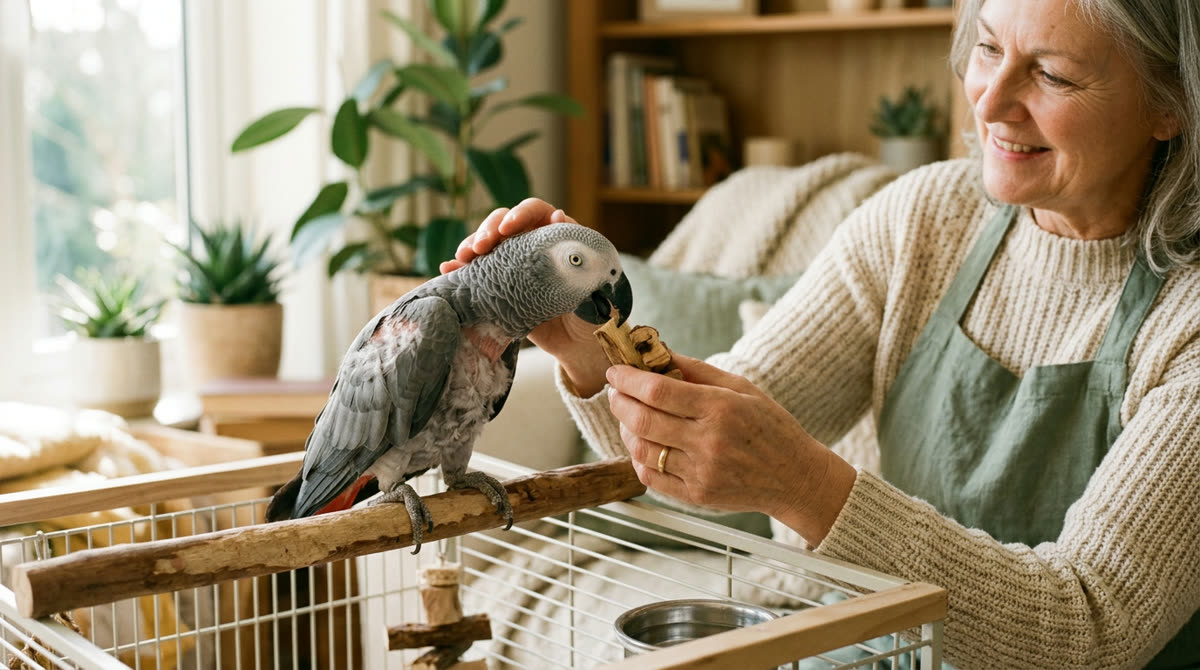
A calm, safety-first approachThis guide provides general education. Contact your veterinarian when symptoms are painful, persistent, or unusual.
- 1
Book an avian veterinary exam before changing behavior
The first step in addressing parrot feather plucking is to book an appointment with an avian veterinarian, because damaged feathers can reflect physical discomfort, environmental problems, behavioral factors, or several issues together. Arrange the earliest practical appointment for new bald patches, repeated feather chewing, or sudden increases in plucking, even if your bird otherwise seems cheerful and active. Seek urgent veterinary care for active bleeding, open wounds, marked lethargy, breathing difficulty, sitting on the cage floor, or reduced eating, because birds may hide illness until they are seriously unwell. Bring photographs, a list of foods and supplements, details of the cage and sleep schedule, and a short video of the behavior if you can record it without provoking your bird. The veterinarian may recommend tests based on the examination rather than assuming the problem is boredom, hormones, parasites, or an infection. Normal molting generally involves gradual feather replacement rather than persistent bare patches, but appearance alone cannot reliably establish what is happening. Until the appointment, keep routines predictable and avoid starting supplements, skin treatments, or major diet changes that could complicate assessment.
- Find a veterinarian experienced with parrots.
- Describe when the feather damage first appeared.
- Report changes in appetite, droppings, activity, or breathing.
- Ask which symptoms require emergency care.
Good to know: If bleeding is active, stop training, bathing, and unnecessary handling and contact an emergency veterinarian. Never pull out a damaged blood feather yourself.
- 2
Record a baseline and identify likely triggers
Start a simple daily log while waiting for the appointment, noting when feather damaging occurs, which body areas are affected, and what happened immediately beforehand. For 7 to 14 days, record sleep hours, foods actually eaten, bathing, household activity, time alone, and any changes involving people, pets, cages, or toys. Distinguish ordinary preening from repeated biting, shredding, or pulling by describing exactly what you see rather than labeling every grooming session as plucking. Take photographs from the same angle and distance once a week, without spreading wings or restraining your bird solely to document damage. If your parrot already steps comfortably onto a gram scale, weigh them at the same time each morning, ideally before breakfast, and record the result without withholding food. Report a persistent downward trend to your veterinarian, and contact them promptly for an unexplained loss of about 5% from a stable baseline, or sooner if appetite or behavior changes. These records help reveal patterns and measure progress more reliably than counting loose feathers, which can also increase during a normal molt.
- Time and approximate duration of damaging episodes
- Body area and type of feather damage
- Sleep, meals, enrichment, and social contact
- Weight, appetite, and dropping changes
- Weekly photographs under similar lighting
Good to know: A camera can help you observe what happens when you leave the room. Position cords and equipment completely outside your parrot’s reach, and never recreate a frightening event to capture it.
- 3
Make the cage and surrounding room feel safe
Review the cage for practical stressors: your parrot should be able to stretch both wings fully, turn around, and move between perches without repeatedly rubbing feathers against bars or crowded accessories. Check that bar spacing is appropriate for the species, and remove sharp hardware, flaking coatings, accessible lead or zinc components, and frayed materials that could trap toes or be swallowed. Offer several bird-safe natural-wood perches of different suitable diameters, with food and water positioned where droppings will not fall into them. Place the cage where your bird can participate in family life but retreat from constant traffic, staring pets, loud speakers, and frightening activity outside a window. A position with one side near a wall can provide security, but avoid isolating the bird in an unfamiliar room as a supposed cure for feather plucking. Keep the environment comfortably stable and away from direct heating or air-conditioning drafts, tobacco smoke, aerosols, scented products, and cooking fumes, especially overheated nonstick coatings. Make necessary safety corrections immediately, then introduce nonurgent changes one at a time over several days so that a complete cage makeover does not create another source of stress.
- Clear space for stretching and moving
- Secure hardware and species-appropriate bar spacing
- Comfortable perches without abrasive covers
- Clean food and water stations
- A retreat from pets, noise, and heavy traffic
Good to know: Do not use sandpaper perch covers to wear down nails; they can irritate feet. If your parrot seems painful or reluctant to perch, arrange veterinary assessment rather than simply buying another perch.
- 4
Improve nutrition without forcing a food conversion
Ask your avian veterinarian to review the actual diet, because nutritional imbalance can affect skin and feather health, but changing food alone will not resolve every case of parrot feather plucking. For many companion parrots, an appropriate formulated pellet provides a useful dietary foundation alongside vegetables and measured amounts of other foods, although species such as lories and lorikeets require specialized plans. If your bird currently eats mostly seeds, introduce a suitable pellet gradually over several weeks or longer while keeping familiar food available until you have confirmed that the new food is being swallowed. Offer small portions of washed vegetables, such as chopped bell pepper, broccoli, or leafy greens, and experiment with size, texture, and presentation instead of assuming one refusal means permanent dislike. Use preferred seeds or tiny nut pieces as measured training rewards where appropriate, counting them as part of the daily diet rather than adding unlimited treats. Monitor morning weight and droppings during a conversion, remove fresh food after about 2 hours or sooner in warm conditions, and provide clean drinking water every day. Do not add vitamins, oils, protein powders, or “feather growth” supplements unless your veterinarian recommends them, because unnecessary supplementation can unbalance a formulated diet and delay attention to the actual problem.
- Request a species-specific feeding plan.
- Confirm new foods are eaten, not merely crumbled.
- Track weight throughout dietary changes.
- Wash bowls daily and discard spoiled food.
Good to know: Never try to make a parrot accept pellets by starving them or abruptly removing their only accepted food. Contact your veterinarian promptly if intake or droppings decrease during a diet change.
- 5
Build consistent sleep and gentle bathing routines
Aim for a predictable sleep schedule that offers most companion parrots about 10 to 12 hours of quiet, uninterrupted darkness each night, adjusting the plan with your veterinarian for the individual bird. Set a regular bedtime and move evening television, conversation, and bright screens away from the sleeping area, because a covered cage in a busy room may still prevent restful sleep. Use a cover only if your parrot is comfortable with it, ventilation remains adequate, and the fabric cannot be pulled through the bars and chewed. For birds prone to night frights, discuss a dim night-light or a different sleeping arrangement rather than insisting on complete darkness despite repeated panic. Offer plain lukewarm water for voluntary bathing several times a week, using a shallow dish, a gentle mist above the bird, or another method your parrot already enjoys. Bathe early enough for feathers to dry in a comfortably warm, draft-free room before bedtime, and stop if your bird retreats, panics, shivers, or shows breathing difficulty. Avoid shampoo, essential oils, forced showers, and heated blow-drying; bathing supports normal feather care but does not treat an underlying cause of plucking.
Good to know: If indoor air is very dry, discuss humidity with your veterinarian rather than aiming for a universal target. Any humidifier should be kept out of reach and cleaned exactly as directed to avoid dispersing contaminants.
- 6
Teach easy foraging and safe independent play
Give your parrot acceptable ways to use the beak by starting with simple foraging tasks that take less than a minute to solve, rather than immediately presenting a complicated puzzle. Place a few pieces of the usual food in an open paper cup or loosely folded piece of plain paper, demonstrate where the food is, and let your bird investigate without pressure. Once the bird succeeds consistently, add a second fold or use a species-appropriate, easy-release foraging toy, increasing difficulty in small stages over several days. Offer two or three manageable activities at a time, such as shredding untreated paper, chewing bird-safe wood, and searching for part of a familiar meal. Keep regular food readily accessible until your parrot reliably uses the devices, and supervise new toys for breakage, trapping hazards, swallowed fibers, or signs of frustration. Rotate one item every few days rather than replacing everything at once, and move unfamiliar objects closer gradually if your bird fears them. Schedule short independent-play opportunities before predictable plucking periods, because successful enrichment works best as an everyday outlet rather than a toy delivered only after feathers are pulled.
- Begin with visible, easy-to-reach food.
- Use clean, bird-safe chewing materials.
- Match toy size and strength to the beak.
- Remove frayed ropes and broken pieces.
- Increase difficulty only after repeated success.
Good to know: Foraging should create achievable choices, not hunger or frustration. If your parrot gives up, make the task easier and confirm they can still access their normal food.
- 7
Reward calm alternatives and offer predictable attention
Plan two or three positive-reinforcement sessions of about 3 to 5 minutes daily, practicing familiar skills such as stepping onto a perch, touching a target, or moving to a play stand. Reward immediately with a tiny preferred treat, praise, or another response your bird genuinely enjoys, and finish before attention or enthusiasm fades. Outside training sessions, reinforce relaxed play, appropriate chewing, and calm independent activity so these behaviors become worthwhile before feather damage begins. If you notice a predictable pre-plucking pattern, such as abandoning a toy and repeatedly focusing on one feather area, calmly offer a familiar alternative before damaging behavior starts whenever possible. Avoid shouting, tapping the cage, spraying water, grabbing the beak, or staging an excited rescue each time, because punishment can increase fear and intense attention may strengthen part of the pattern in some birds. Keep social contact reasonably predictable, building independence with brief, comfortable separations rather than suddenly leaving a highly dependent parrot alone for hours. Limit petting to areas your bird welcomes around the head and neck, avoid stroking the back or under the wings, and discuss nesting-related behavior or reproductive concerns with your veterinarian instead of assuming hormones explain everything.
Good to know: A hands-off response to attention-seeking behavior does not mean ignoring injury. If your bird damages skin, bleeds, or seems distressed, stop the session and contact a veterinarian.
- 8
Troubleshoot setbacks without using quick fixes
When plucking increases, compare the previous 48 to 72 hours with your baseline log for changes such as disrupted sleep, visitors, construction noise, a new toy, altered meals, or reduced interaction. Address the clearest low-risk trigger first, then keep other nonessential variables stable for roughly 1 to 2 weeks so you can judge whether the adjustment helps. Do not wait through that observation period if damage is worsening, skin becomes exposed or injured, appetite falls, or your bird seems unwell; arrange veterinary reassessment instead. Avoid bitter sprays, fragranced feather products, essential oils, human creams, and unapproved remedies, because parrots can inhale or ingest substances placed on their feathers. Never fit a homemade collar, wrap the body, tape feathers, or use clothing to block access without veterinary guidance, since protective devices can interfere with eating, movement, balance, or safe breathing. If a veterinarian recommends a collar or other barrier for an injured bird, ask for a supervised fitting, an eating and drinking check, and clear instructions for monitoring and removal. When medical needs are being addressed but damaging behavior persists, ask your avian veterinarian for referral to a qualified parrot behavior professional who uses reward-based methods and can assess the household routine.
- Check recent changes against your log.
- Reverse frightening nonessential changes gradually.
- Avoid topical deterrents and homemade barriers.
- Escalate worsening damage to your veterinarian.
Good to know: There is no reliable universal “anti-plucking” product. A barrier may temporarily protect tissue when professionally managed, but it does not replace investigating and addressing the underlying contributors.
- 9
Measure recovery and maintain long-term follow-up
Agree on a follow-up schedule with your veterinarian before leaving the initial appointment, since a bird with wounds or active medical concerns may need reassessment much sooner than one with stable feather damage. Review your log weekly for fewer damaging episodes, intact new feathers, better engagement with toys, stable weight, and normal eating rather than expecting an immediate return to perfect plumage. Feather replacement may take weeks to months and depends on the molt cycle and whether feathers were lost or merely damaged; long-standing follicle injury can also limit regrowth. Do not pull broken feathers to encourage replacement or pick at sensitive pin feathers, and ask your veterinarian about any area that becomes swollen, painful, crusted, or newly bare. Continue effective sleep, nutrition, enrichment, and training routines after visible improvement, because abruptly withdrawing support can allow old patterns to return. During travel, holidays, household moves, or caregiver changes, provide written feeding and bedtime instructions and retain familiar perches, toys, and safe daily activities wherever practical. Although some parrots need ongoing management rather than a complete cosmetic recovery, reducing injury and distress while improving everyday welfare is meaningful progress, and a renewed increase in plucking deserves another assessment rather than blame.
- Compare photographs once a week.
- Track comfort and behavior as well as feathers.
- Keep scheduled veterinary rechecks.
- Maintain successful routines after improvement.
- Seek reassessment for new or worsening damage.
Good to know: Recovery is often uneven, and an occasional setback does not mean you have failed. Prioritize a comfortable, active bird with healthy skin over a deadline for full feather regrowth.
Ask about this guide
Leave a comment or a question about your own pet and the Pawlito assistant replies right away with practical next steps.