How to Stop a Parrot From Screaming for Attention
Reduce parrot screaming with humane, step-by-step training that rewards calmer communication while protecting your bird’s health and well-being.
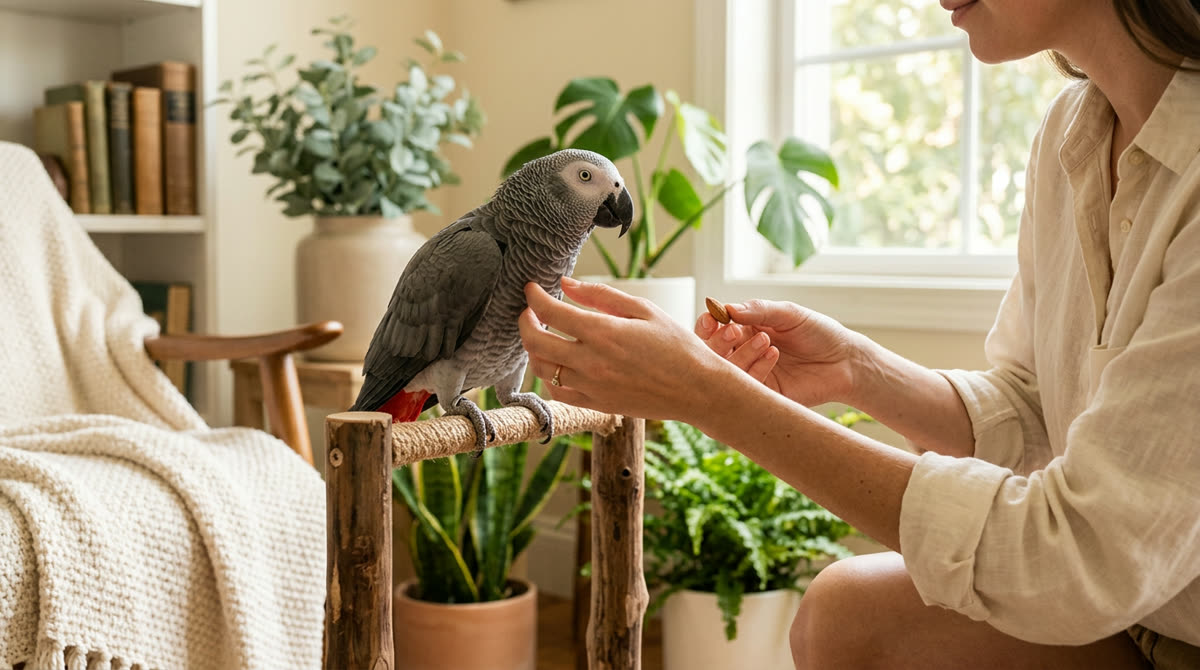
A calm, safety-first approachThis guide provides general education. Contact your veterinarian when symptoms are painful, persistent, or unusual.
- 1
Check for distress before treating screaming as a habit
To reduce parrot screaming for attention, first make sure your bird is not calling because of pain, fear, hunger, isolation, or another unmet need. Parrots naturally make loud contact calls, and many become especially vocal around sunrise and sunset, so the realistic goal is less excessive screaming—not a silent bird. If the screaming started suddenly, sounds different, or comes with reduced appetite, unusual droppings, fluffed posture, reduced activity, or changes in balance, stop behavior training and contact an avian veterinarian promptly. Labored breathing, open-mouth breathing at rest, collapse, or inability to perch require urgent veterinary care rather than a wait-and-see approach. Even without obvious illness, arrange an examination for a persistent, unexplained change in vocal behavior, because parrots can conceal signs of illness. Before each training session, check that fresh water and the usual food are accessible, the room is comfortable, and nothing nearby is frightening the bird, such as a cat staring at the cage. Never withhold food, water, companionship, or needed care to make a parrot more motivated to stop screaming.
- Compare appetite, droppings, posture, and activity with normal.
- Check food and water access, including blocked bowls.
- Look for frightening pets, objects, or outdoor movement.
- Identify an avian veterinarian before an emergency arises.
Good to know: Do not assume a loud bird is being stubborn or manipulative. Treat new or unusual screaming as information to investigate before choosing a training response.
- 2
Track when screaming happens and what follows
Keep a simple behavior log for 5–7 days, without deliberately provoking screaming, to identify what your parrot gains or avoids when it calls. For each episode, record the time, what happened immediately beforehand, how long it lasted, and what every nearby person did afterward. Include small responses such as looking toward the cage, saying “quiet,” walking back into the room, or offering a treat, because even a brief reaction can make attention-seeking calls more likely. Look for repeated patterns, such as screaming within 30 seconds of you leaving, during telephone conversations, or just before the bird’s usual out-of-cage time. Also note alarm triggers, prolonged periods alone, sleep disruptions, and normal morning or evening calling so you do not label every loud sound as attention-seeking. Choose a practical baseline measure, such as total screaming minutes during the same 30-minute afternoon window, rather than trying to count every individual squawk. If feasible, use a short recording from a safely positioned camera to observe departures, but keep cords and equipment completely outside the bird’s reach.
- Before: What changed just before the call?
- Behavior: What did the call sound like, and how long did it last?
- After: Who responded, and what did the bird receive?
- Context: Was the bird eating, playing, resting, or alone?
Good to know: Attention may be only one part of the pattern. A parrot can learn that screaming brings people back while also genuinely struggling with separation or a frightening environment.
- 3
Make the daily routine more predictable
Build a daily routine with reliable opportunities for meals, social contact, exercise, independent play, and sleep, using your log to address gaps before they trigger screaming. Many companion parrots do well with roughly 10–12 hours of quiet, dark sleep opportunity nightly, although species and individual needs vary and should be discussed with an avian veterinarian. Place the cage where your bird can share family life without being trapped beside constant television noise, kitchen fumes, a busy doorway, or a window that repeatedly exposes it to predators. Schedule several manageable interactions throughout the day—for example, 5–10 minutes of training or conversation at three predictable times—in addition to appropriate supervised exercise and companionship. These short sessions are useful starting points, not a complete social-care allowance, and some birds need substantially more interaction to thrive. Before a predictable difficult period, offer a familiar, appropriately sized foraging toy with part of the normal food ration, starting with food plainly visible so the activity does not become another source of frustration. Introduce new toys gradually and supervise their first use, avoiding frayed rope, trapping gaps, and materials your bird breaks into dangerous pieces.
- Protect a consistent overnight sleep period.
- Plan social time before predictable screaming periods.
- Provide safe climbing, movement, and supervised exercise.
- Start with easy foraging and increase difficulty gradually.
- Remove damaged toys promptly.
Good to know: A cage cover is not a treatment for screaming. Never cover the cage, darken the room, or isolate the bird as punishment for making noise.
- 4
Teach a quieter way to ask for attention
Choose one acceptable replacement behavior, such as a soft whistle, a gentle spoken word, or moving to a designated perch, that your parrot can perform comfortably. A quiet contact call is often especially useful because it lets the bird maintain social contact without needing a piercing scream. During a calm period, keep a few tiny pieces of a favorite bird-safe food ready, counting them toward the daily diet rather than adding unlimited treats. When your bird offers the chosen sound or behavior, mark it immediately with a consistent word such as “yes,” then deliver the reward within about 1–2 seconds. Use attention, a brief game, or access to a preferred activity as the reward when those are more valuable than food, and avoid petting unless the bird actively welcomes it. Practice for 2–5 minutes once or twice daily, ending while your bird remains comfortable and engaged rather than waiting for frustration or loss of interest. Once the behavior occurs readily, give your cue just before you expect it and reward the response; repeating a cue over ongoing screams usually teaches little and can add excitement.
- Pick one easy, acceptable signal.
- Keep rewards small and immediately available.
- Mark the exact behavior you want repeated.
- Keep sessions short and voluntary.
- Finish before your bird becomes frustrated.
Good to know: You cannot reliably train a specific word on demand if your parrot does not already say it. Reward an existing soft sound or a simple perch behavior instead.
- 5
Reward calm communication before screaming starts
Make calm behavior effective throughout the day, not just during formal training, by noticing your parrot before it needs to escalate. At first, offer a brief greeting, treat, or interaction after only 1–2 seconds of relaxed quiet or immediately after the agreed soft contact call. Watch for opportunities when your bird is comfortably perched, exploring a toy, or calmly watching you, rather than interpreting a frightened, frozen bird as successfully quiet. If your log shows screaming usually begins after about 2 minutes without interaction, check in sooner while the bird is still calm, then adjust gradually as independent activity becomes easier. After several successful sessions, build a quiet-duration exercise in small increments, such as 2 seconds, 3 seconds, and then 5 seconds, instead of suddenly expecting minutes of silence. Keep responding to appropriate requests reasonably often, because a replacement call will lose value if it almost never brings the social contact it was taught to request. Avoid making treats appear only after a scream followed by a pause, since that repeated sequence can accidentally teach the bird to scream first and become quiet second.
Good to know: Keep some rewards social: answer a soft whistle, walk over for a brief chat, or invite a familiar game. The most useful reward addresses what the parrot was seeking.
- 6
Respond consistently when attention screaming occurs
When a familiar attention-screaming episode begins, first make a brief, low-key safety assessment without rushing into an animated exchange. If your bird is safe and its needs are met, avoid yelling, arguing, laughing, banging the cage, or immediately producing a favorite treat, because these reactions may reward the scream or frighten the bird. For a brief episode, remain neutral and wait for a natural pause or the already-trained softer signal before offering a calm response. If you are playing with the bird, briefly pause the exciting interaction rather than abruptly leaving it alone or turning the moment into a confrontation. Do not use prolonged “cry it out” sessions: sustained escalation, frantic climbing, escape attempts, panting, or other distress means you should stop the exercise, calmly restore security, and reassess the setup. Once the bird is settled, make the next attempt easier by providing attention sooner, reducing a trigger, or shortening the task instead of testing how long it can scream. Agree on the same response with every household member, since one person delivering dramatic attention after a long episode can keep persistent screaming worthwhile.
- Check safety and basic needs first.
- Keep your voice and movements low-key.
- Respond to a pause or the trained softer signal.
- Stop if the bird becomes distressed.
- Use one household plan rather than mixed reactions.
Good to know: Never spray a screaming parrot with water, strike or shake its cage, grab its beak, or force handling. Punishment can damage trust and worsen fear-related vocalizing.
- 7
Practice comfortable, very short separations
If screaming reliably starts when you leave, teach brief, comfortable separations as a separate skill rather than repeatedly walking away until your bird stops calling. Begin when the parrot is relaxed on a safe perch or in its cage with a familiar activity, and use the same short departure phrase each time. Start below its reaction threshold, which may mean taking just one step away for 1 second while remaining visible, then returning calmly before distress appears. Repeat three to five easy trials, and only after consistent relaxed responses increase one element at a time, such as distance or duration, using small changes like 1 second to 2 seconds to 3 seconds. If the bird calls softly, you can answer with its familiar contact whistle from nearby, provided that exchange remains calm rather than growing into louder call-and-response. If it screams or abandons its activity to search frantically, calmly restore a comfortable situation and make the next practice substantially easier; do not wait out panic just to avoid “rewarding” a call. A bird that cannot tolerate even tiny departures, or whose distress creates a risk of injury, needs assessment by an avian veterinarian and a qualified parrot behavior professional using positive reinforcement.
Good to know: A second parrot is not a guaranteed cure for separation-related screaming. Another bird adds separate housing, veterinary, introduction, and social-compatibility responsibilities.
- 8
Troubleshoot stalled progress without escalating pressure
After 7–14 days of consistent practice, compare your records with baseline and look for shorter episodes, lower intensity, quicker recovery, or more use of the replacement call. If there is little improvement, check whether rewards arrive too late, the quieter signal is too difficult, household responses conflict, or the bird spends too much time without meaningful activity. Review background noise as well, because some parrots call more loudly over televisions, music, vacuum cleaners, or lively conversations; lower competing sound and provide a quieter resting option when possible. If screaming briefly increases after your responses change, do not assume you must endure it or that the method is automatically working, since increased calling can also reflect fear, frustration, or missed needs. Return to easier exercises and more frequent reinforcement of calm behavior, and avoid changing several parts of the plan at once because you will not know what helped. For unavoidable noise while you work on the problem, adults may use hearing protection while remaining able to supervise, but never attach noise-control devices to the bird or obstruct ventilation with cage coverings. Contact an avian veterinarian for worsening behavior or any health change, and seek qualified behavior help if screaming remains severe, disrupts essential care, or creates a risk of surrender.
- Are rewards reaching the bird within about 1–2 seconds?
- Does every caregiver reinforce the same softer signal?
- Have sleep, household noise, or schedules changed?
- Is the task too difficult for the bird’s current comfort level?
- Are you measuring comparable times and situations?
- 9
Maintain the new habit and plan for setbacks
Once excessive parrot screaming has decreased, continue rewarding acceptable communication while gradually making food rewards less frequent and keeping appropriate social responses reliable. Shift from rewarding every successful practice response to a varied pattern only when the quieter behavior is well established, and temporarily increase rewards whenever training becomes harder. Keep a brief weekly record for the next 4–6 weeks so you can notice changes before a few difficult days become an established routine. Expect setbacks around visitors, moves, altered work schedules, seasonal changes, or disrupted sleep, and return to shorter separations and easier training rather than punishing the bird for regression. Teach family members and pet sitters the same departure phrase, replacement signal, reward timing, and distress stop signs, ideally on a one-page care sheet kept near supplies. Preserve opportunities for normal parrot vocalization, movement, foraging, and companionship, because successful training supports a healthy bird rather than suppressing every sound. Judge progress by a bird that communicates more comfortably and a household that can respond consistently, with veterinary or behavior follow-up whenever improvement stalls or well-being changes.
Good to know: Some birds improve within days, while established patterns can take weeks or longer. Steady, humane practice matters more than a deadline or a promise of complete silence.

Ask about this guide
Leave a comment or a question about your own pet and the Pawlito assistant replies right away with practical next steps.