How to Tame and Hand-Train a Budgie
Build trust with your budgie through patient daily sessions, from first step-ups to confident hand-taming.
- Written by
- Pawlito Editorial Team · AI-assisted guide
- Professional review
- Not yet reviewed by a veterinarian
- Published
- Last updated
In this guide (8 steps)
Step 1: Let your budgie settle first
Never start taming the day you bring a budgie home. Give them at least a week to learn their cage, recognise household sounds and see that you are not a threat. Signs your budgie is settling include eating in front of you, preening and chirping. Starting too early teaches the bird that hands are scary, which takes far longer to undo.
Step 2: Become a familiar, safe presence
Spend ten to fifteen minutes several times a day sitting near the cage, talking softly. Read aloud, hum or simply chat — your budgie learns your voice and rhythm. Avoid sudden movements and never reach into the cage during this stage. Offer small treats like millet spray through the bars so your presence predicts good things.
Good to know: Millet spray is the ultimate budgie training treat — use it only for training so it stays special.
Step 3: Introduce your hand inside the cage
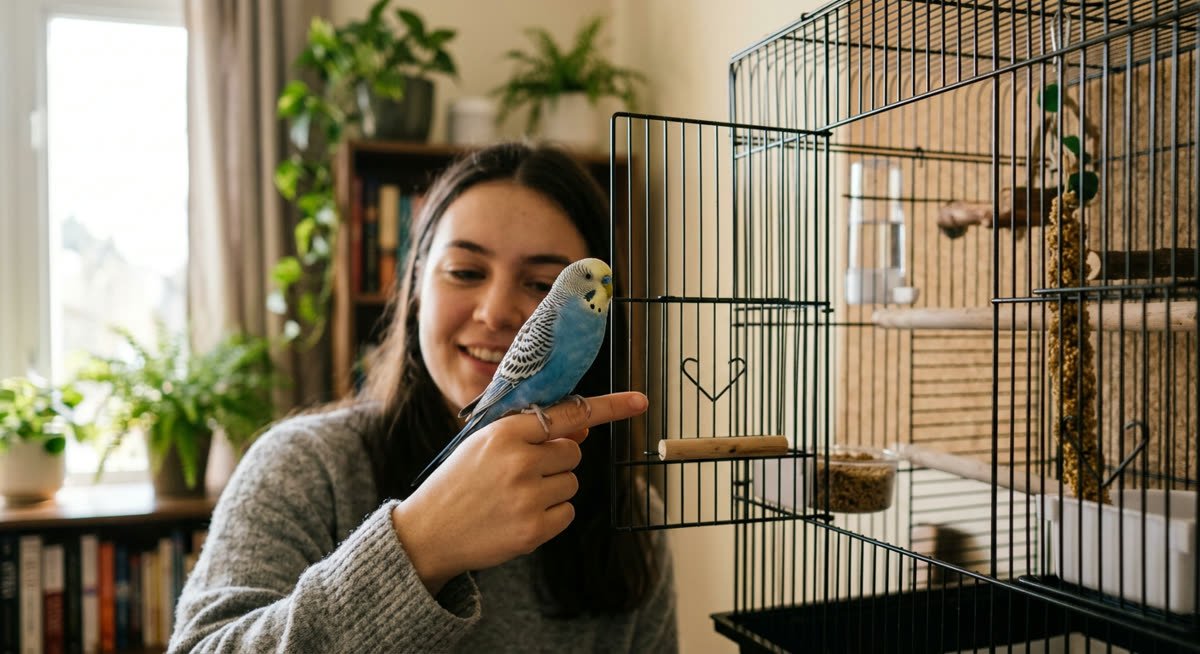
Once your budgie stays calm when you are near, rest your hand inside the cage, holding still, for a few minutes at a time. Hold a piece of millet so your budgie can approach and eat at their own distance. Repeat daily until your budgie comfortably eats near your hand. This stage may take days or weeks — let the bird decide.
Step 4: Teach the step-up
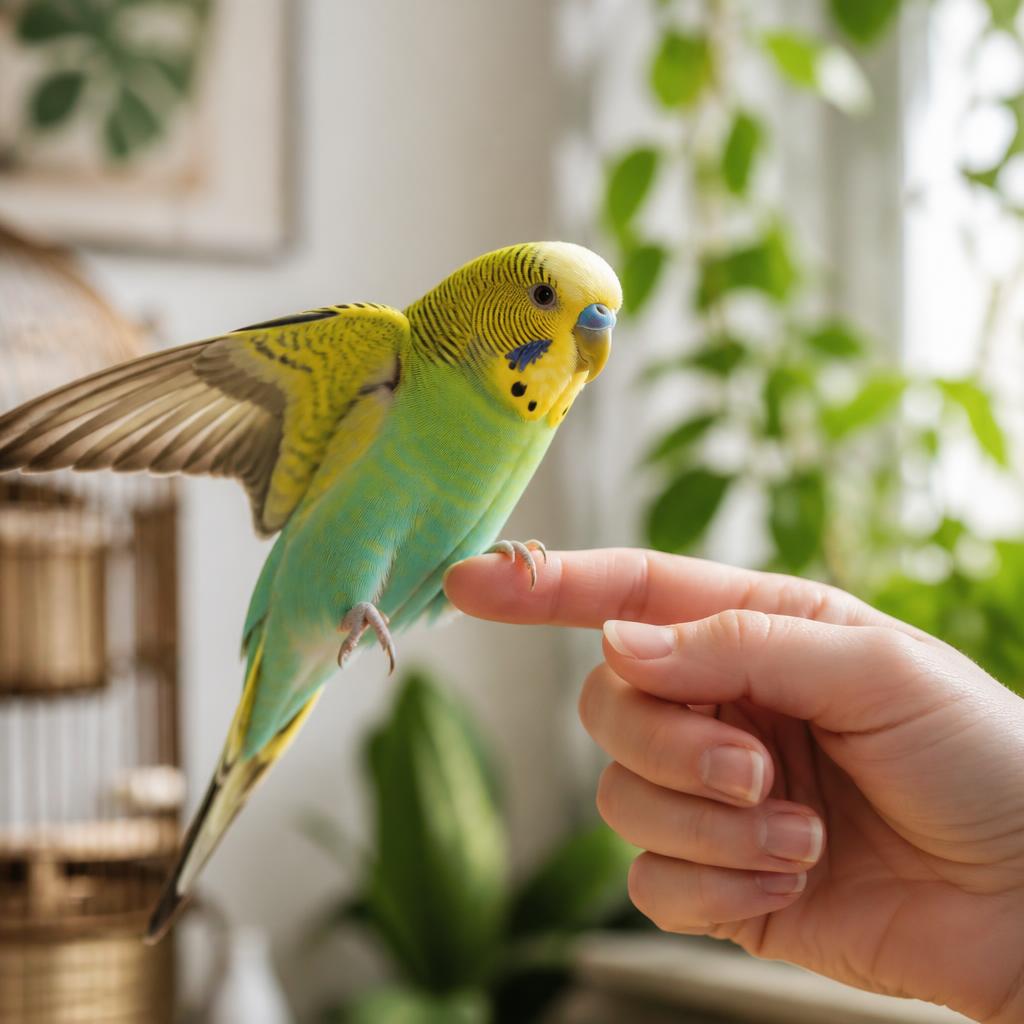
When your budgie eats from your hand confidently, gently press your finger against their lower chest, just above the legs, while holding millet with your other hand as a lure. Most budgies step up to reach the treat. Say 'step up' each time so the cue becomes familiar. Reward every success immediately and keep sessions to five minutes.
Step 5: Build duration and distance
Once stepping up is reliable, hold your budgie on your finger for gradually longer periods, talking softly. Move your hand slowly around the cage, then toward the door. If your budgie flies off, stay calm and let them return — never grab. End every session on a success, however small.
Step 6: Move to out-of-cage training
In a secure room with windows covered and hazards removed, bring your budgie out on your finger or let them come out themselves. Let them explore and return to the cage freely at first. Practise step-ups outside the cage using millet rewards. Short, frequent sessions beat long, tiring ones.
- Cover mirrors and windows to prevent collisions
- Turn off fans and close doors before opening the cage
- Keep other pets out of the room entirely
Step 7: Troubleshoot common problems
A budgie who bites is usually frightened, not aggressive — go back a step and rebuild trust. If progress stalls, check whether sessions are too long or your energy too intense; budgies respond to calm patience. Young birds generally tame faster, but older budgies absolutely can learn with more time. Never punish a bite — it destroys trust instantly.
Step 8: Maintain the bond
Taming is not a one-time achievement. Interact with your budgie daily, even briefly, to keep them hand-confident. Continue offering millet from your hand occasionally so the association stays strong. A tamed budgie who is ignored for months will gradually revert to wildness. Ten minutes a day keeps the friendship alive.
Good to know: Budgies are flock birds — a tamed budgie sees you as their flock, so daily contact is a genuine need, not a bonus.
This guide was drafted with AI assistance and published by the Pawlito team. It has no formal source list yet. Spotted an error? Tell us and we'll correct it. Read our editorial policy.

Ask about this guide
Leave a comment or a question. Comments are public, so use a first name only and don't include emails, phone numbers or addresses. An automated assistant may reply straight away with general suggestions — it can't diagnose your pet.