How to Target Train Your Pet Bird Without Force
Teach a gentle beak-touch target using a safe stick, tiny rewards, and voluntary practice that respects your bird’s body language.
- Written by
- Pawlito Editorial Team · AI-assisted guide
- Professional review
- Not yet reviewed by a veterinarian
- Published
- Last updated
In this guide (7 steps)
Step 1: Prepare a comfortable training space
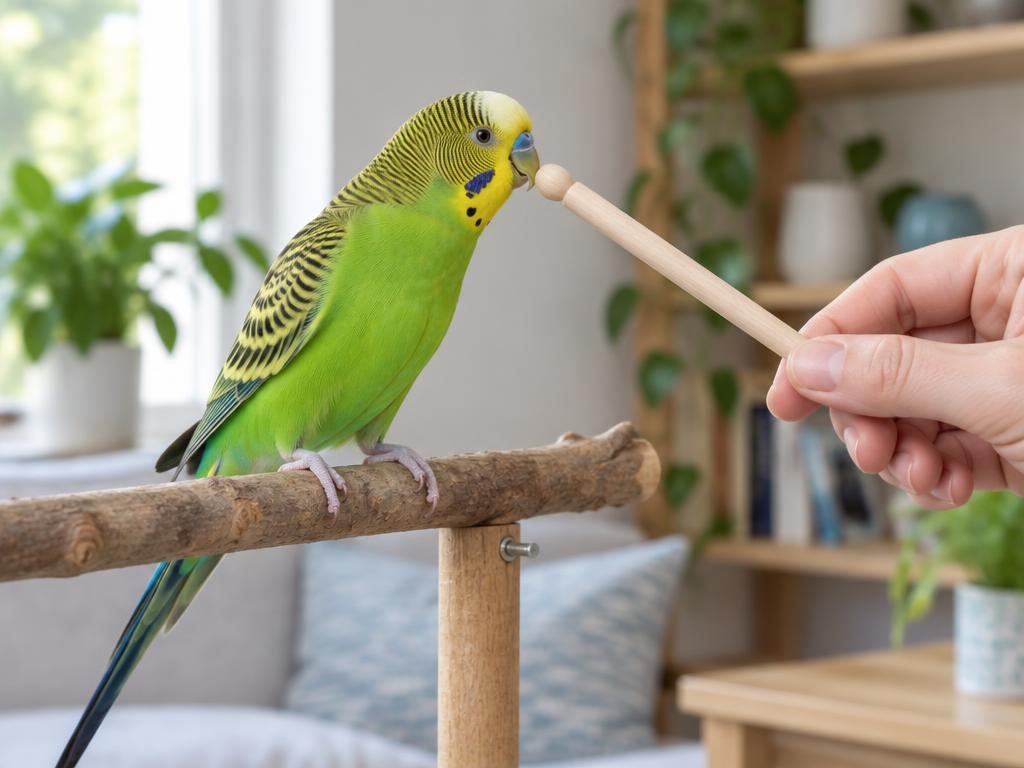
Target training teaches a bird to touch a particular object voluntarily. Choose a quiet familiar perch and a blunt, bird-safe target such as a plain smooth wooden stick. Avoid sharp tips, splinters, painted surfaces, or loose parts. Have tiny pieces of a suitable favorite food ready as part of the usual diet. Begin only when your bird is alert, calm, and already comfortable with you nearby.
Good to know: Do not withhold meals to make a bird participate.
Step 2: Teach a clear reward marker
Choose a soft word such as yes to mark the exact moment you want to reward. Say it, then immediately offer a tiny reward a few times while your bird remains calm. A loud clicker can worry some birds, so a quiet voice may be easier. Keep your movements predictable and end the session if your bird backs away or appears alarmed.
Step 3: Reward noticing the target
Hold the stick at a comfortable distance, not directly against the face. Mark a calm glance toward it and give a reward. If your bird is afraid, move it farther away or put it down. Over later sessions, bring it slightly closer. You are building a positive association with an unfamiliar object, not proving that your bird will tolerate it being pushed into their space.
Step 4: Mark the first gentle beak touch
When your bird investigates willingly, hold the tip just within easy reach. Mark a light beak touch and reward promptly. Remove the target between repetitions so each presentation has a clear beginning. Never tap the beak, chase the head, or push on the chest. If your bird grabs and chews the stick, use shorter presentations and reward the earliest gentle contact.
Step 5: Add a cue before presenting the target
After gentle touching is predictable, say touch once just before showing the target. Let your bird reach comfortably without stretching precariously. Mark and reward the contact. Keep repetitions brief enough that your bird remains interested. If food is being dropped or ignored, the session may be too long or your bird may prefer a break rather than a more enticing treat.
Step 6: Use small movements to build confidence
Move the target slightly to one side so your bird can take a single safe step along the perch. Reward the touch and gradually vary the position. Stay within comfortable reach and never lure the bird across a gap, toward an open window, or into a frightening situation. Targeting can support carrier training later, but the carrier itself must first become familiar and safe.
Step 7: Protect choice and watch for changes
Finish with an easy success and allow your bird to rest. Use target practice as enrichment, not a method of forcing handling or overcoming serious fear. If your bird suddenly loses balance, avoids normal movement, changes appetite, or becomes unusually inactive, stop and contact an avian veterinarian. Training progress can vary widely; consistent trust matters more than reaching a milestone in a particular number of days.
This guide was drafted with AI assistance and published by the Pawlito team. It has no formal source list yet. Spotted an error? Tell us and we'll correct it. Read our editorial policy.
Ask about this guide
Leave a comment or a question. Comments are public, so use a first name only and don't include emails, phone numbers or addresses. An automated assistant may reply straight away with general suggestions — it can't diagnose your pet.