How to Teach Your Bird to Station on a Perch
Teach your bird to settle on a chosen perch using tiny rewards, short sessions, and gradual practice with everyday distractions.
- Written by
- Pawlito Editorial Team · AI-assisted guide
- Professional review
- Not yet reviewed by a veterinarian
- Published
- Last updated
In this guide (7 steps)
Step 1: Choose a comfortable station
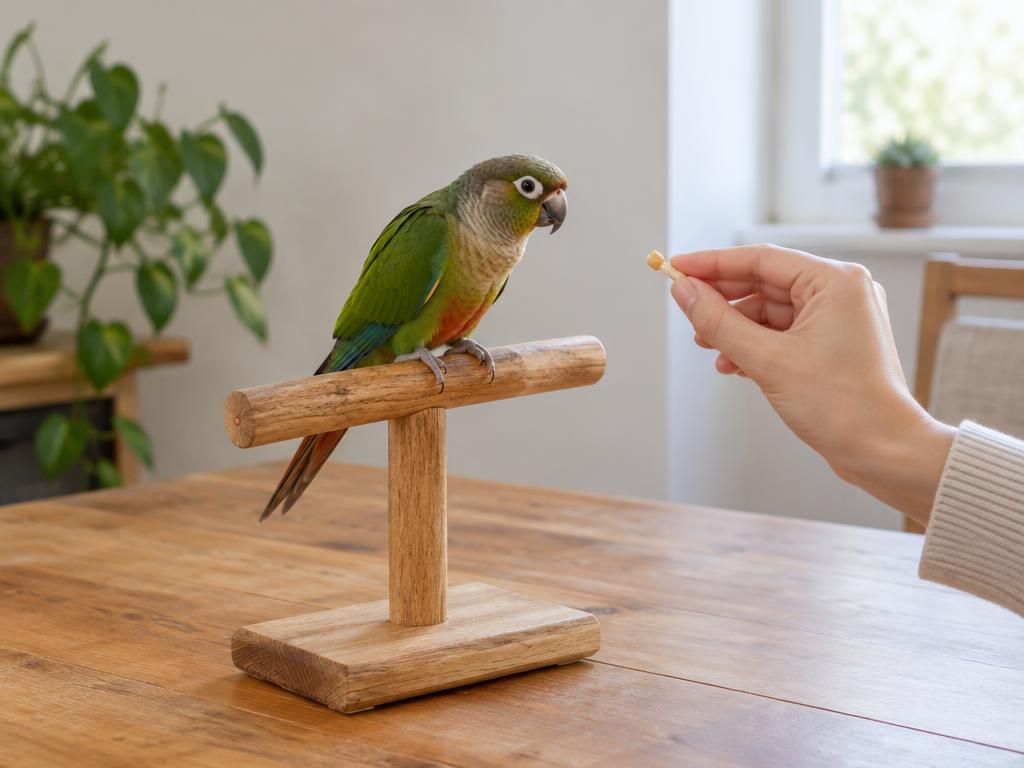
Use a stable perch that supports relaxed feet without overly narrow or slippery surfaces. Position away from kitchens, doorways, and animals. A low station reduces fall risks during early practice, especially with balance problems. It should be a pleasant resting choice, never isolation as punishment. Begin only when approaching is comfortable and inspect attachments before allowing use.
- Use one recognizable perch initially.
- Keep landing areas and travel routes clear.
Step 2: Prepare rewards and a marker
Choose a tiny familiar food reward or valued activity. Include food rewards within the normal diet without withholding meals. Pair a short marker word with immediate rewards, provided the sound is comfortable. The marker identifies the exact successful moment. Prepare supplies before starting so rewards follow promptly. Short sessions should remain voluntary; stop if your bird loses interest rather than escalating pressure.
Good to know: Tiny rewards allow quick eating and avoid long chewing breaks.
Step 3: Reward voluntary arrival
Use familiar targeting or step-up skills to invite movement toward the station, or reward looking, approaching, then one foot touching. Increase expectations until both feet are comfortably supported. Mark and reward immediately. Never push onto the perch or repeatedly replace an escaping bird. Hesitation means simplifying the next attempt. Separate arrival practice from staying duration until the movement itself is easy.
Step 4: Build a short pause and release
Reward a brief pause before departure, initially less than a second if needed. Deliver treats where remaining is comfortable, without stretching or stepping off. Introduce a distinct release word, then invite another familiar perch. Alternate easy short pauses with slightly longer ones and release before restlessness. The goal is clear voluntary waiting, not physically preventing your bird from leaving.
Good to know: If your bird leaves early, reset calmly and shorten the next repetition.
Step 5: Add the station cue
When arrival is predictable, say station just before movement begins. Reward arrival and a comfortable pause, then release. Reduce guiding gestures gradually while keeping the spoken cue consistent. Do not repeat continuously after no response; check comfort, reward, and distractions. Practice only a few successful repetitions and stop before attention fades. Maintain a separate release signal so both parts remain understandable.
- Use one arrival cue.
- Use a different release cue.
Step 6: Build distance and distractions separately
Shift weight or step away slightly, return, and reward. Add distance independently from waiting time. Later introduce mild movements such as touching an empty bowl. Keep visitors and food preparation out of early sessions. Repeated departures or tension mean reducing difficulty. Rehearse tiny parts of household chores before expecting a long stay through the entire task.
Good to know: Actual chores are advanced distractions; break them into manageable movements.
Step 7: Use stationing without relying on it for safety
Apply to brief supervised bowl changes or organizing supplies, rewarding generously and offering release breaks. Never rely on training around exterior doors, hot stoves, operating fans, or other animals. Physical protection remains essential. Sudden performance changes may reflect fatigue, fear, discomfort, or environmental changes. Seek veterinary advice when movement or balance difficulties appear rather than assuming disobedience or extending practice.
This guide was drafted with AI assistance and published by the Pawlito team. It has no formal source list yet. Spotted an error? Tell us and we'll correct it. Read our editorial policy.
Ask about this guide
Leave a comment or a question. Comments are public, so use a first name only and don't include emails, phone numbers or addresses. An automated assistant may reply straight away with general suggestions — it can't diagnose your pet.