How to Teach a Parrot to Talk With Short Daily Sessions
Teach a parrot to talk with short, rewarding daily sessions, realistic goals, and a gentle routine that builds confidence without pressure.
A calm, safety-first approachThis guide provides general education. Contact your veterinarian when symptoms are painful, persistent, or unusual.
- 1
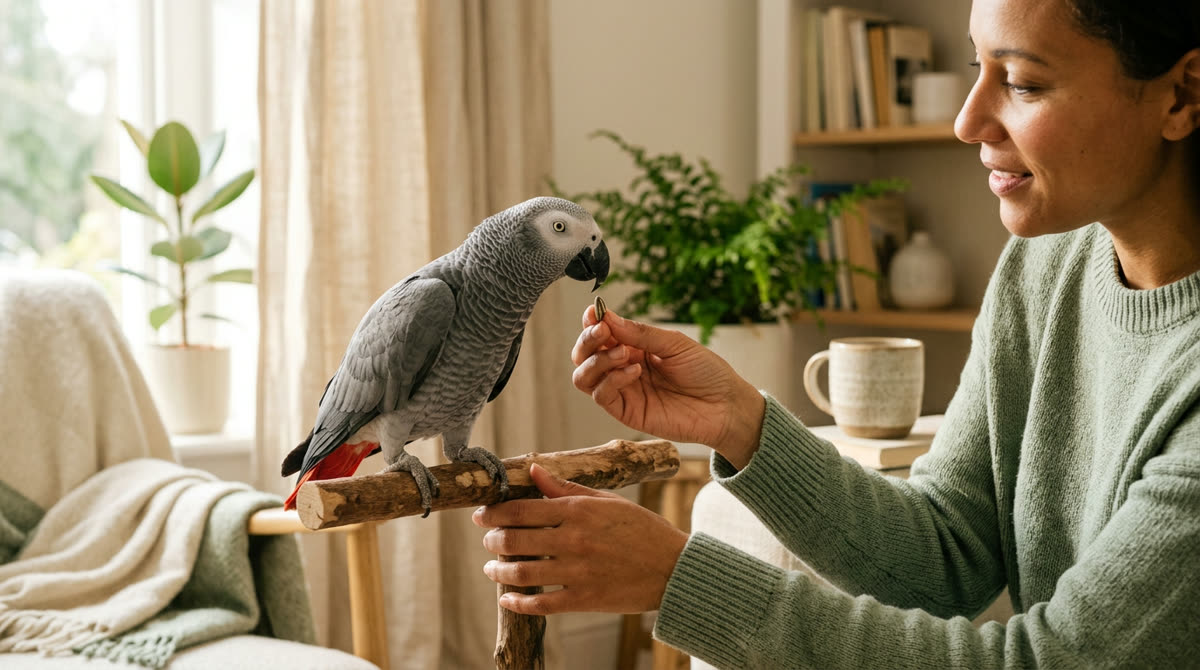
Set realistic goals for your individual parrot
To teach a parrot to talk with short daily sessions, start with a realistic goal: enjoyable communication, not a guaranteed vocabulary or a deadline for the first word. African greys, Amazon parrots, and budgerigars are known for vocal mimicry, but individual ability varies widely, and some parrots never imitate recognizable human speech. Age, previous experience, confidence, and personal interest can influence participation, so an adult bird can still learn while a young bird may initially prefer chirps or whistles. Spend 3–5 days observing when your parrot naturally vocalizes, which household sounds attract attention, and whether it seems comfortable when you speak nearby. Record these observations rather than repeatedly testing the bird, because constant prompting can turn a pleasant social interaction into something it avoids. If your parrot is newly adopted, first establish predictable meals, a suitable sleep routine, and relaxed interactions; readiness matters more than the number of days since arrival. Treat voluntary engagement, relaxed chatter, and shared attention as worthwhile progress even if clear words never develop.
- Notice naturally chatty times of day.
- Identify sounds your bird already enjoys.
- Watch for comfortable, voluntary engagement.
- Set goals without a first-word deadline.
Good to know: A quiet parrot is not necessarily unhappy or poorly trained. Talking ability should never determine how much attention, enrichment, or companionship a bird receives.
- 2
Prepare a quiet, comfortable training spot
Choose a familiar room where you can turn off the television and music, silence phone alerts, and keep other pets from interrupting the session. Let your parrot remain on a stable, familiar perch or inside its cage if that is where it feels secure; coming out or stepping onto your hand is not a prerequisite for speech training. Position yourself roughly 2–3 feet away at first, adjusting the distance until the bird can watch you without leaning away, freezing, or trying to escape. If the bird is outside its enclosure, close exterior doors and windows, switch off ceiling fans, and remove access to hot drinks, cooking areas, and other hazards. Schedule practice during an alert, sociable period, such as after the bird has eaten and settled, rather than interrupting feeding, bathing, or rest. Protect a consistent nighttime sleep opportunity—often around 10–12 hours for companion parrots, with individual needs discussed with an avian veterinarian—because a tired bird is less likely to participate comfortably. Keep the initial setup consistent so your parrot can focus on your voice instead of investigating unfamiliar objects or watching household traffic.
- Use a secure, familiar perch.
- Reduce competing voices and background noise.
- Keep other pets out of the training area.
- Secure windows, doors, and ceiling fans.
- Have rewards ready before inviting participation.
Good to know: Do not isolate a bonded bird from its companion solely to encourage speech. If separation causes distress, train within comfortable sight or hearing distance instead.
- 3
Choose one useful word and a clear model
Begin with one short word or phrase of about 1–3 syllables, such as “hello,” “hi, Pip,” or “good bird,” rather than teaching several unrelated expressions at once. Pick something you genuinely say during an everyday interaction, since a predictable social context gives your parrot more opportunities to connect the sound with an event. Say the target clearly at a normal conversational volume, using a warm, consistent rhythm rather than shouting, stretching every syllable, or pressing your face close to the bird. Keep the wording stable across household members during the early stage; switching among “hello,” “hiya,” and “hello there, sweetheart” makes the intended sound less consistent. A phrase your parrot already hears and seems interested in may be a better starting point than a theoretically easy word that never catches its attention. Avoid choosing profanity, alarm noises, or a scream as your first target, because an amusing imitation can become difficult to live with when repeated for attention. Continue normal conversation outside practice, but reserve deliberate repetition and precise rewards for this single starter phrase until your bird shows a repeatable approximation.
- Choose one short, household-friendly phrase.
- Use the same wording during practice.
- Speak clearly without increasing volume.
- Connect the phrase to a familiar interaction.
Good to know: You do not need a special pitch, accent, or recording to teach a parrot to talk. Comfortable, engaging delivery matters more than trying to sound like another bird.
- 4
Find a reward and practice precise timing
Before asking for speech, identify a reward your parrot willingly accepts, such as a tiny fragment of a familiar, bird-safe nut or seed already allowed in its diet, or a brief burst of enthusiastic attention. Offer two suitable options separately during ordinary interaction and note which one the bird approaches readily; a reward only works if that individual actually values it at that moment. For food rewards, use a size the bird can finish in a few seconds, adjusting to its beak and dietary needs rather than offering a whole nut after every attempt. Count training food within the normal daily food allowance, and never skip meals, restrict water, or make the bird unusually hungry to improve performance. Practice delivering the reward promptly after an easy, voluntary behavior the bird already offers, such as turning toward you, so your own timing is ready before you work on sounds. During speech practice, aim to reward within about 1–2 seconds of a relevant vocal attempt, because a long delay makes it harder to connect the sound with the reward. If reaching toward the bird causes hesitation, place the reward in a familiar accessible dish or use welcome verbal attention instead of insisting on hand-feeding.
- Choose a familiar, diet-appropriate reward.
- Prepare tiny portions before practice.
- Reward promptly after the intended response.
- Include treats in the daily food allowance.
- Use attention if food delivery causes stress.
Good to know: Never offer avocado, chocolate, caffeine, alcohol, or salty snack foods as training treats. Ask your avian veterinarian about suitable rewards if your bird has dietary restrictions.
- 5
Run a two- to five-minute talking session
Start with one 2-minute session each day, then consider two or three sessions lasting 2–5 minutes each if your parrot consistently remains interested. Space additional sessions several hours apart, such as one after breakfast and another in the early evening, without cutting into the bird’s normal rest routine. Begin with a brief friendly greeting, wait for relaxed attention, and say your chosen word once or twice instead of repeating it continuously. Pause for about 5–10 seconds to leave room for a response, recognizing that some birds need a quiet interval before making any sound. If the bird offers a relevant attempt, reward it promptly, allow time to finish the treat, and then begin another brief exchange. Aim for roughly 5–8 unhurried opportunities within a session, but shorten the session if food handling or longer pauses mean you reach the time limit sooner. End while the interaction is still pleasant, using an ordinary closing phrase and returning the bird to its usual activities rather than extending practice until you finally hear something recognizable.
- Begin with one 2-minute daily session.
- Model the phrase once or twice per exchange.
- Leave 5–10 seconds for a possible response.
- Stop within 2–5 minutes, even without a word.
Good to know: A bird that turns away, repeatedly moves off, freezes, lunges, or tries to escape is telling you the interaction is not comfortable. Stop rather than following it with treats or continuing to prompt.
- 6
Reward approximations and build clearer speech
Listen for early approximations, such as the rhythm of “hello,” a similar vowel sound, or a soft mumble that resembles part of your chosen phrase. At first, reward a plausible effort rather than requiring a perfect word, because many parrots produce incomplete or unclear versions before recognizable speech emerges. Once a particular approximation occurs reliably across several sessions, gradually favor attempts that sound a little closer to the target while continuing to model it clearly yourself. Change only one expectation at a time—for example, reward a more complete two-syllable pattern before becoming selective about pronunciation—so success remains achievable. If attempts drop off after you become more selective, return to rewarding the previous approximation for a few sessions instead of repeating the word more loudly or withholding all encouragement. Avoid correcting the bird with “no,” tapping its beak, or laughing dramatically at an unwanted sound, since punishment can damage trust and a big reaction may inadvertently encourage repetition. When your parrot practices quietly outside lessons, offer calm acknowledgment if appropriate, but do not rush over, uncover a sleeping bird, or interrupt every mumble to demand a repeat.
Good to know: Some parrots appear to rehearse sounds when people are not directly engaging them. Quiet practice can be useful progress, but it does not guarantee that a particular word will develop.
- 7
Use the word naturally and track small gains
Once the target becomes recognizable on several occasions, use it in one predictable everyday situation, such as saying “hello” when you enter the room in the morning. Pause after your model and respond warmly if your parrot joins in, allowing the exchange to become social communication rather than a repeated performance test. Keep a simple log with the date, session length, chosen phrase, best approximation, and any signs that the bird wanted to stop. Compare notes weekly rather than judging each session, because a bird may be vocal one day and mostly listen the next without having lost what it learned. A 20–30-second recording once a week can help you notice changes in clarity, provided the phone itself does not distract or worry the bird. After the first word is well established, introduce one additional short phrase in a different context, such as “bye-bye” when you leave, while continuing occasional relaxed practice of the original. Reward newly developing sounds consistently and keep responding socially to familiar words, so introducing vocabulary does not make previously successful communication suddenly unrewarding.
- Pair each phrase with a predictable event.
- Log session length and the best attempt.
- Review progress once a week.
- Add only one new phrase at a time.
- 8
Adjust the routine when progress stalls
If you hear no clear attempts after a few weeks, review the setup rather than assuming your bird needs longer lessons or more intense repetition. Try changing one factor for 5–7 days, such as practicing at a naturally chatty time, moving farther from household noise, or shortening a 5-minute session to 2 minutes. If your parrot accepts treats but seems distracted, check whether you are presenting the food before the sound; keep it ready but unobtrusive so the bird is not simply staring at your hand. If it offers a previously learned whistle instead of the word, calmly model your target once and leave a pause rather than repeatedly rewarding the whistle during speech practice. Avoid running talking recordings for hours or using mirrors as a shortcut, because recordings lack responsive feedback and mirrors can trigger fixation, frustration, or territorial behavior in some birds. For unwanted screaming, avoid punishment and dramatic reactions, but also check promptly for fear, environmental problems, unmet needs, or illness rather than treating every loud call as a training issue. If interest remains low, pause formal speech practice for several days and enjoy other voluntary activities; if fear or aggressive behavior persists, consult an avian veterinarian and a qualified positive-reinforcement parrot behavior professional.
Good to know: Expect a variable timeline: recognizable speech may take weeks or months, or may never occur. Increasing pressure does not resolve differences in natural ability or motivation.
- 9
Protect wellbeing and maintain enjoyable practice
After each session, return your parrot to its normal routine with access to fresh water, its balanced diet, safe enrichment, and opportunities for rest and independent activity. Keep speech training as a small part of the day rather than a replacement for foraging, movement, social contact, or learning practical cooperative-care behaviors. Once a word is established, a brief daily exchange may be enough to keep using it naturally; there is no need to quiz the bird through every phrase it knows. Continue checking body language and willingness to participate, especially during household changes or periods when the bird seems less comfortable or energetic. Stop training and contact an avian veterinarian promptly if you notice a sudden voice change, persistent reduction in normal vocalization, reduced appetite, unusual droppings, lethargy, or other changes from your bird’s usual behavior. Open-mouth breathing at rest, pronounced tail movement with each breath, collapse, or obvious breathing difficulty requires urgent veterinary attention, not another training attempt. The best long-term outcome is a parrot that chooses to engage with you confidently, whether that communication takes the form of clear words, cheerful whistles, or its own natural calls.
- Return to normal food, water, and enrichment.
- Keep familiar words in relaxed daily interactions.
- Respect quiet days and declined invitations.
- Seek veterinary advice for sudden health or voice changes.
Good to know: Do not try to train through a suspected health problem. Ask your avian veterinarian when to resume if illness or recovery has interrupted your routine.
Ask about this guide
Leave a comment or a question about your own pet and the Pawlito assistant replies right away with practical next steps.